East Brunswick has handled roofing in Berkeley Heights as part of more than 20 years in the trade, and a good share of the work here starts below the roofline, with a tree. A limb resting on the shingles, a trunk leaning toward the gutters, a canopy that keeps one slope damp all year: each of these changes how a replacement is planned and what it costs before a single shingle comes off.
In this township, taking a tree down is more than a call to a tree company. Removals are tied to a permit and to a replanting requirement, so a decision about the limbs over a roof is also a decision about how many new trees go into the yard. We walk owners through that sequence before we write a roof estimate, so the tree bill and the roof bill show up in the same conversation.
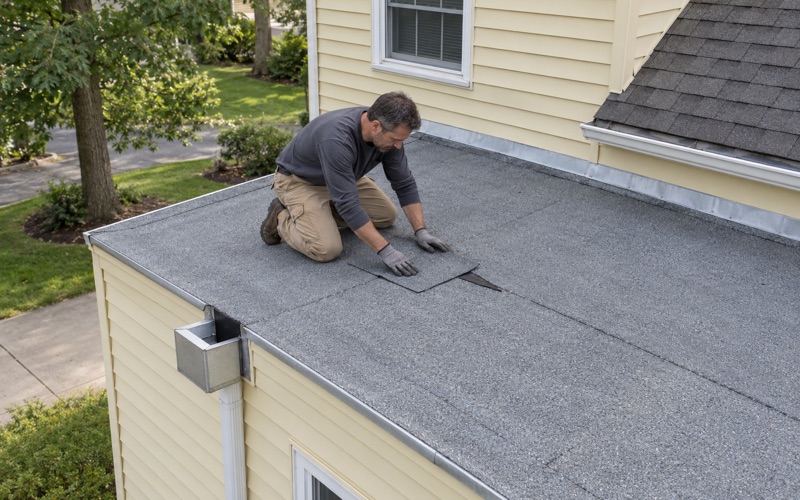
Our first visit looks at the roof from both sides. We go into the attic as well as onto the shingles, trace any leak to the spot where water actually gets in, and tell you plainly whether the roof can be repaired before replacement is ever on the table. When a tree is part of the problem, we say so, and we say which part of the fix is ours and which belongs to a tree company.
Berkeley Heights’ 2024 Tree Ordinance and the Six-Inch Line
Why a Roofer Talks About Trees Here
Berkeley Heights is a Union County township on a ridge in north central New Jersey, with 305 acres of the Watchung Reservation inside its borders. Most of its homes are owner-occupied detached houses, and on a wooded lot the roof and the trees around it tend to need attention in the same season, which is why tree questions come up at nearly every estimate we write in town.
The township amended its tree rules with Ordinance 8-2024, adopted April 30, 2024, and its Trees page says the amendment applies to commercial, residential and school properties alike. For a homeowner planning a new roof, that means the tree work that often has to come first now carries its own paperwork, its own fees and its own follow-up obligations.
Where the Permit Line Falls
A tree removal permit is required to take down any tree over six inches in diameter at breast height, the standard trunk measurement taken about four and a half feet off the ground. For a street tree in the right-of-way the line is lower, at 2.5 inches. Permits are issued by the township’s Zoning Officer, and the Trees page notes that violators are subject to a fine.
Six inches across is not a large tree. A young maple or oak that has grown up beside a garage over the last decade can pass that line without looking like much from the street, so it is worth putting a tape around the trunk before assuming a removal is too small to matter.
What the Fees Look Like
Fees are counted per tree across a calendar year. The first three trees cost $25 each, the fourth through the tenth cost $75 each, and every tree after that costs $250. An owner taking down two trees to clear a roof pays $50 in permit fees, while one removing twelve along a property line pays $1,100 before any tree company sends an invoice.
The fee schedule is rarely the expensive part of the decision. The larger cost sits in the replanting rule that follows a removal, which is why we raise it before a roof contract is signed rather than after the trees are already on the ground.
Looking for roofing closer to Branchburg? See Roofing Services in Branchburg.
Replacement Trees, Sized to What Comes Down
How the Replacement Table Works
Section 12.16.070 of the township code, added by the same ordinance, requires replacement trees when a deciduous tree of six inches or more, or a street tree of 2.5 inches or more, is removed, unless the tree is exempt under a separate section of the code. Replacements are planted at 2 1/2 to 3 inch caliper, and how many are owed depends on how big the tree was and how many came down.
For a single deciduous tree between 6 and 12.99 inches, the requirement is one replacement; remove two or more in that size and it is two for each. Between 13 and 22.99 inches it is one for a single tree and three each for two or more. Between 23 and 32.99 inches it is two, or four each, and over 33 inches it is two, or five each.
Evergreens and Flowering Trees
Evergreens follow their own scale and are replaced with 6-foot trees: one for an evergreen 8 to 12 feet tall, two for one between 12 and 30 feet, and three for evergreens over 30 feet. Flowering trees over 2 inches in diameter are replaced one for one, so even an ornamental beside the porch carries a replanting obligation once it is gone.
A tall spruce crowding a roof is exactly the kind of tree an owner might want gone before a re-roof, and under this table it becomes a three-tree decision. On a modest lot, finding room for three new trees that will stay clear of the house and the new roof as they grow takes real planning.
Planting Deadlines and Two Years of Watching
Replacements must go in within four months of the removal or during the next planting season. They come from the Environmental Commission’s recommended list, must meet New Jersey urban and community forestry guidelines and the nursery standard, and at least half must be native species. The ordinance then requires the new trees to be monitored for two years.
In practice, one afternoon of tree work becomes a commitment that runs well past the roof job. We suggest owners price the replacement trees and their planting alongside the roof estimate, so the full cost of clearing a roof is visible on the first day rather than surfacing four months later.
Clearing Limbs Before a Roof Replacement
Why Overhanging Limbs Come First
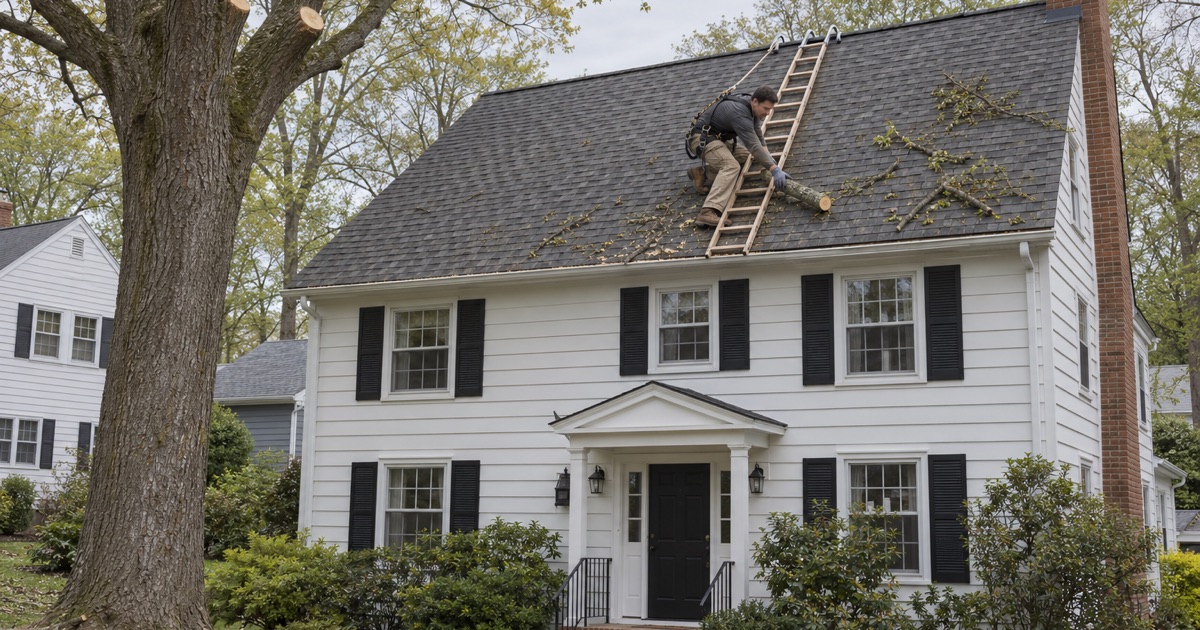
Limbs over a roof are a scheduling problem on replacement day. Branches resting on the shingles scrape the new surface, drop debris into fresh valleys, and get in the way of tear-off and material loading. Heavy shade and leaf litter also hold moisture on the roof and fill the gutters, which shortens the life of any roof living under a dense canopy.
That does not always mean a tree has to come down. Often the better answer is cutting back the limbs that reach over the roof and leaving the trunk where it is. The ordinance has a separate section on exemptions, and what it covers is the Zoning Officer’s to explain, so we point owners there rather than guessing about any particular tree.
What We Look For Under a Canopy
On a roof under trees, our inspection covers the damage trees usually leave behind: shingles worn by rubbing limbs, granules washed into the gutters, moss or staining on shaded slopes, and cracks where branches have dropped. We also go into the attic, because water entering at a limb-damaged spot can run along a rafter and show up several feet away.
Inside, we check attic ventilation on every replacement we quote. A shaded roof that cannot breathe holds moisture against the underside of the deck, and a roof in that condition ages from underneath no matter how good the shingles on top are. Fixing intake and exhaust is part of the scope, not an add-on discovered later.
Damaged Decking and Flashing Under the Old Roof
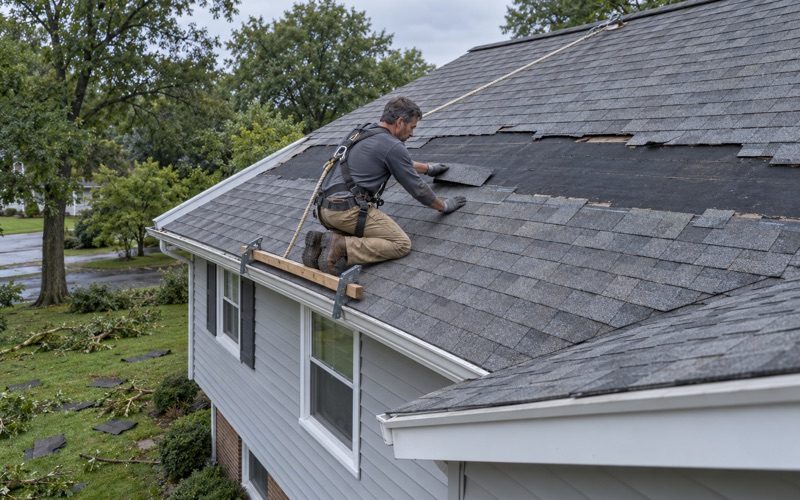
Years of wet leaves and a limb that sat on the roof through a few winters can leave soft decking under shingles that look fine from the yard. When tear-off exposes damaged sheathing, we photograph it and show you before anything is replaced, at a per-sheet price already written into the contract.
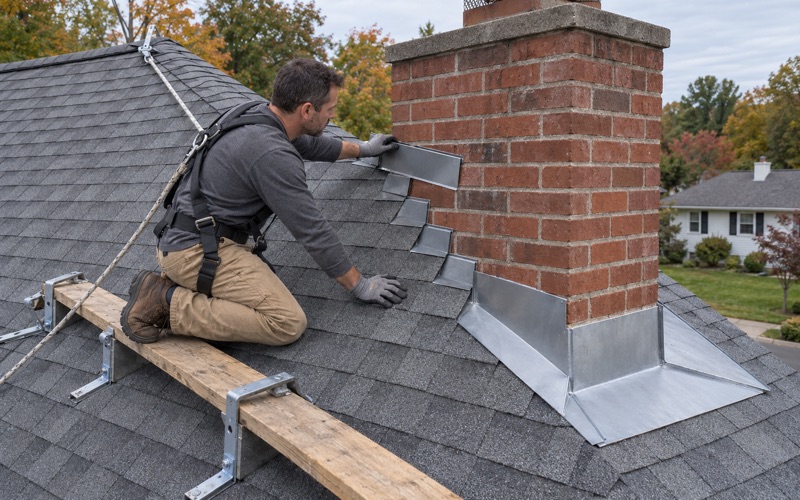
Step, counter and chimney flashing is replaced with the new roof rather than reused, and gutters and leaders are sized and pitched as part of the same job. Under a canopy that matters even more, because gutters packed with leaves overflow and send water toward the foundation instead of carrying it away from the house.
Who Does the Tree Work and Who Does the Roof
The Tree Company Fills In the Permit
We are a roofing company, not a tree company, and the township’s permit process reflects that split. The tree removal permit application asks for a lot sketch with the trees marked, how they will be marked, the reason for removal, and the tree company’s New Jersey Board of Tree Experts registration number along with its tree expert or tree care operator license number.
The state’s Tree Expert and Tree Care Operators Licensing Act requires tree businesses to register with that board, so the owner hires the tree company directly and that company supplies those numbers. Our part is telling you which limbs or trees actually affect the roof, and by what date they need to be dealt with.
Putting the Work in the Right Order
The sequence that tends to work is simple. We inspect and write the roof scope first, the owner decides with the tree company what comes down or gets cut back, the permit is issued, the tree work is done, and then the roof goes on. Replacement trees are planted away from the new roofline within the ordinance’s deadline.
Doing it the other way round, roof first and tree later, risks a felling crew working over brand-new shingles. Our written scope lists tear-off, decking, underlayment, flashing, ventilation and gutters as separate lines, so if the tree work moves a start date, nothing on the estimate has to be guessed at again.
What the Roof Itself Needs on Paper
The tree permit is a township rule and stands apart from the roof. Replacing the roof covering on a detached one- or two-family house is ordinary maintenance under New Jersey’s construction code, and every estimate we write says plainly whether the job in front of us is permit work under the state code.
Contracts follow New Jersey’s home improvement rules, including the three-day cancellation notice. At the end of each work day the driveway, yard and gutters are cleaned and the lawn gets a magnet sweep for roofing nails, which on a lot that has just lost a tree is one less mess for the owner to sort out.
- 20+ Years on Roofs
- Itemized Written Scopes
- Attic-First Leak Checks