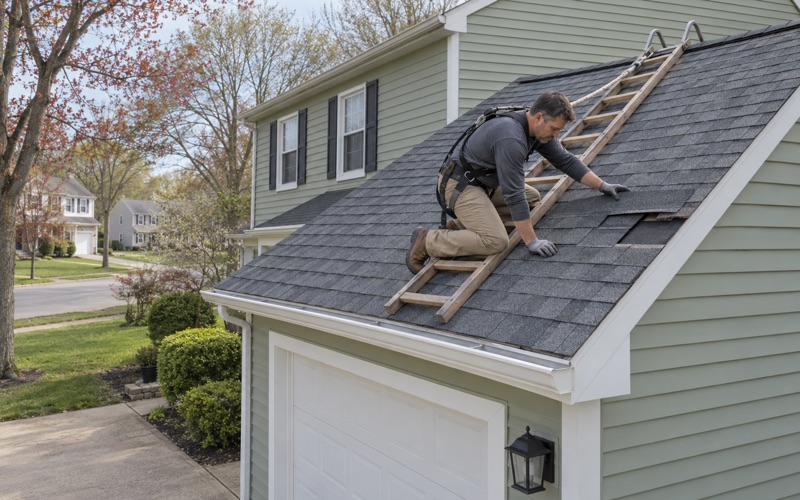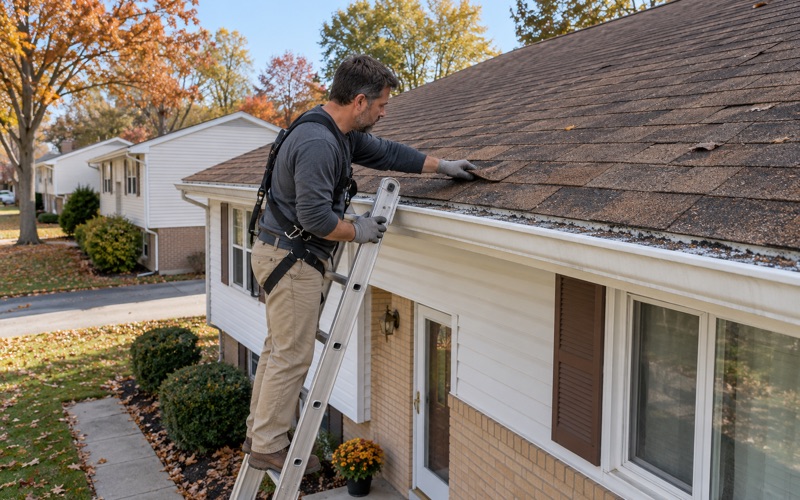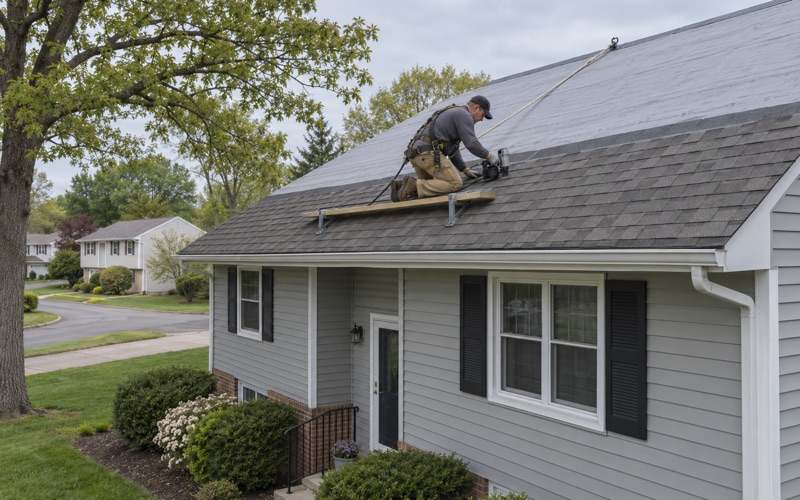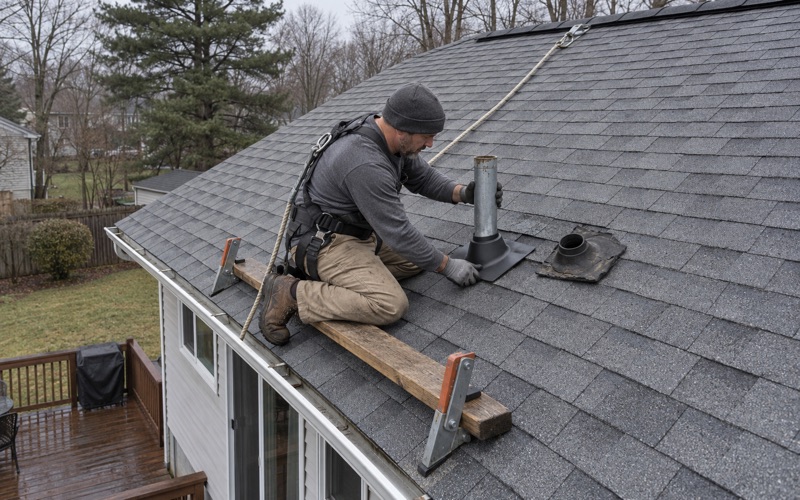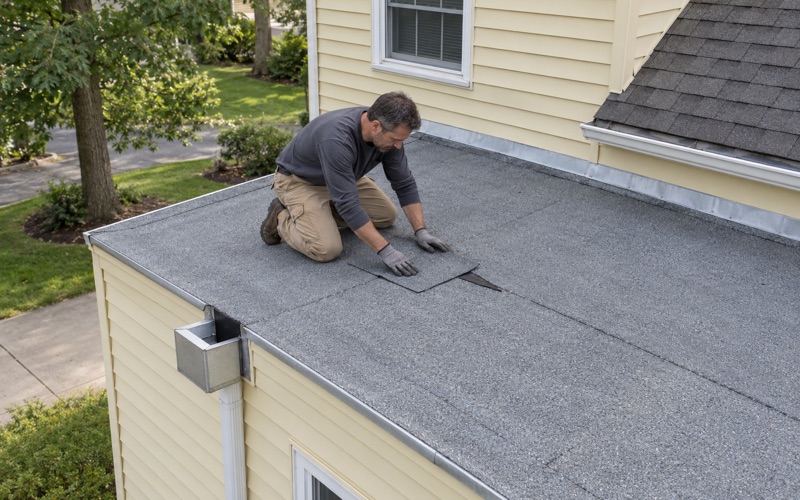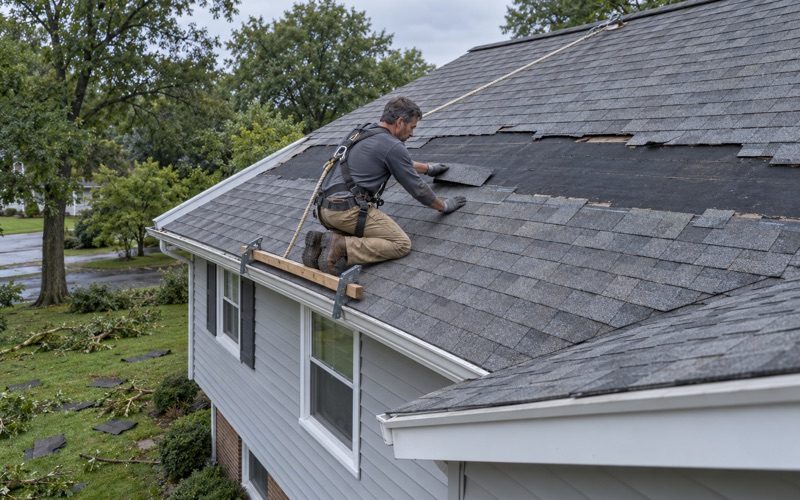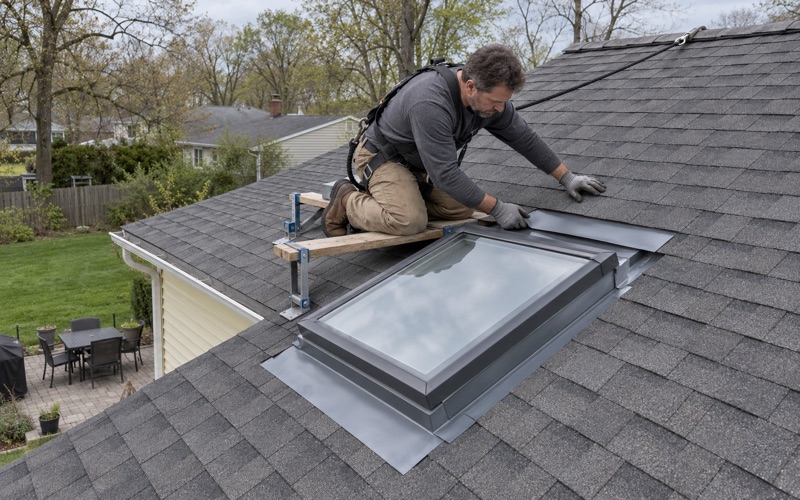
East Brunswick has spent more than 20 years on roofing in Branchburg and across central New Jersey, and the work here comes with a question most towns never raise. Before we price a tear-off on a house near the river branches, we want to know where the lot sits on the flood map, because the township reviews roof work differently inside a regulated flood hazard area.
That question gets sharper this fall. New flood map panels for the township take effect on November 13, 2026, and an estimate written now should account for both the map in force today and the one replacing it. We read the panels, the township’s floodplain article and the state construction code side by side, so the paperwork attached to a roof is settled before anyone picks a shingle color.
None of this changes what a good roof needs. We still trace a leak from the attic before pricing a fix, still tell an owner honestly when a repair will do, and still write every scope line by line. The flood review simply adds one more thing to confirm at the start rather than discover halfway through a tear-off.
Branchburg’s Flood Maps Change on November 13, 2026
What FEMA Published
FEMA published its final flood hazard determination for Somerset County in the Federal Register on August 6, 2026. The notice states that November 13, 2026 has been established as the effective date for the new flood insurance rate map, along with the supporting flood insurance study report where one applies. Branchburg is listed with Bedminster, Bridgewater and Hillsborough under the same county dockets.
The notice names the Municipal Building, Engineering Department, at 1077 US Highway 202 North as the township’s repository for the map and report. The federal text also explains why the date matters locally: these maps are the basis for the floodplain rules a community must keep in effect to stay in the National Flood Insurance Program.
The Panels Being Replaced
The panels in force today date to September 28, 2007, and belong to the county flood insurance study revised November 4, 2016. Branchburg’s floodplain article adopts that study and those panels, and it also names the preliminary panels dated March 26, 2021 as best available data wherever they are more restrictive. A lot can therefore already be governed by a line newer than the effective map.
Once November 13 arrives, the newer panels become the effective map rather than advisory data. For an owner planning a roof, whether a lot sits in a regulated flood hazard area should be checked against the map in force on the day the work is reviewed, not the one in force when the estimate was printed.
Where the Water Runs
Branchburg takes its name from the meeting of the branches of the Raritan River. The North Branch, the South Branch and the Lamington River are all part of the township’s geography, and Neshanic Station grew up beside the South Branch, where its lenticular truss bridge still crosses the water inside the historic district.
We do not know which parcels gain or lose a flood zone on the new panels, and we will not guess. What we can say is that a house near any of these rivers deserves a map check before a roof estimate is final, and that check takes a few minutes at the start of a job rather than a delay at the end of one.
Looking for roofing closer to Roselle Park? See Roselle Park Roofing.
Why a Re-Roof Goes to the Floodplain Administrator
Ordinance 2024-1467 and Ordinary Maintenance
Branchburg added its floodplain management article to the land development ordinance on March 25, 2024, through Ordinance 2024-1467. Section LDO8-1.5 takes work the construction code calls ordinary maintenance and minor work, including replacement of windows, doors, flooring and roofing, and sends it to the township’s Floodplain Administrator for review through a floodplain development permit.
The ordinance’s own definition of ordinary maintenance names replacements of roofing and siding outright. Roofing is not a borderline case the township might or might not count. Inside a regulated flood hazard area, a new roof is plainly part of what the Floodplain Administrator is asked to look at, whatever the material or the size of the house.
No Construction Permit, but a Separate Floodplain Review
The state construction code treats the repair or replacement of roof covering on a detached one- or two-family house as ordinary maintenance, and ordinary maintenance needs no construction permit. Nothing in Branchburg’s floodplain article changes that. A typical shingle tear-off on a detached house outside the flood hazard area moves forward without a filing of any kind.
Inside the flood hazard area, the floodplain development permit is a different instrument with a different purpose. It is not a building permit and does not inspect nail patterns or underlayment. It exists so the township can track what is spent on a building in the floodplain. Our estimates say plainly which review, if either, applies to the house in front of us.
Who Reviews What
The Floodplain Administrator handles the floodplain development permit, and Section LDO8-3.14 has that office work with the Construction Official on the cost calculation. Branchburg Building and Code Enforcement sits at the same municipal address on US Highway 202 North, so the two reviews are close neighbors on paper and in person.
For an owner, the practical point is that one office does not stand in for the other. We keep the two straight in every scope, so a homeowner is never told a construction filing is needed when the state code says otherwise, and never told nothing is needed when the floodplain article asks for a look.
Roofing Costs and the 50 Percent Test
How the Substantial Improvement Test Works
Section LDO8-3.14 has the Floodplain Administrator include the cost of ordinary maintenance and minor work when deciding whether a project amounts to substantial improvement or substantial damage. The test compares that cost to the market value of the building, with the line at 50 percent, and the township notifies the applicant of its finding in writing.
We never tell an owner that a re-roof by itself crosses that line, and we never promise it cannot, because the answer depends on the market value the township uses and on what else is being done to the house. A roof often travels with other work, such as siding, windows or storm repairs, and the township counts those costs together.
Per Project, Not Over Years
The ordinance text we read measures each improvement against market value. It does not set up a multi-year window that adds projects together across a span of years, which some other municipalities use. We hold Branchburg to its own wording rather than a neighbor’s rule, and we recheck the article whenever the township amends it.
That makes the scope of each project worth thinking through. If an owner is planning a roof this year and siding next spring, how each job is described and dated is a conversation to have with the Floodplain Administrator, not a decision a roofing crew should make on its own.
A Scope the Township Can Read
Our written scopes list tear-off, decking, underlayment, flashing, ventilation and gutters as separate lines. That habit started as a way for owners to compare two estimates item by item, and it happens to be exactly what a floodplain cost review needs: a clear figure for each part of the job instead of one lump sum.
Decking is the one cost nobody can see in advance. When rotted sheets turn up under the old roof, we photograph them and show the owner before replacing anything, at the per-sheet price already set in the contract. The final invoice then matches what was reviewed, with any added decking documented on its own line.
Checking the Lot Before We Price the Roof
Old Panel, New Panel
Before we finalize an estimate on a Branchburg house near the North Branch, the South Branch or the Lamington, we look at where the lot falls on the 2007 panels, the 2021 preliminary panels and the final panels taking effect November 13. If all of them leave the house clear of a flood hazard area, the job is ordinary maintenance and nothing more needs filing.
If any of them puts the house inside a flood hazard area, we say so in the estimate and leave room in the schedule for the floodplain development permit. Owners are not surprised by the review halfway through a tear-off, and the township is not surprised by a roof it was entitled to see first.
Elevation and Freeboard
Branchburg’s local design flood elevation is the best available flood elevation plus one foot of freeboard. That figure matters most for new construction and substantial improvement, but an owner whose house sits near a mapped line should know it exists. An elevation certificate, if the house already has one, is the document that ties the building to that number.
We do not survey elevations, and we do not tell owners what their flood insurance will do under the new map. Those are questions for a surveyor and an insurance professional. What we can do is flag early that a house sits close enough to the water to make those conversations worth having before the roof goes on.
The Rest of the Paperwork
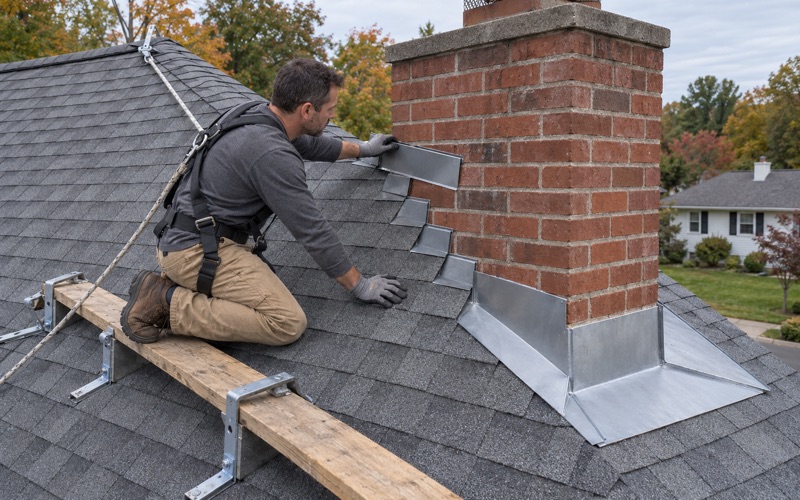
Every replacement contract is written to New Jersey’s home improvement rules, including the three-day cancellation notice. A new roof is exempt from sales tax with Form ST-8, while repair work is taxable, and our quotes show which treatment applies. Attic ventilation is checked on every replacement, and step, counter and chimney flashing is replaced rather than reused.
If a storm reaches the house before or after the map change, we photograph the damage and write it up for the owner’s own claim, and we will meet the adjuster on site when asked. At the end of each work day the driveway, yard and gutters are cleaned, with a magnet sweep for roofing nails, whether or not the lot sits in a flood zone.
- 20+ Years on Roofs
- Itemized Written Scopes
- Attic-First Leak Checks