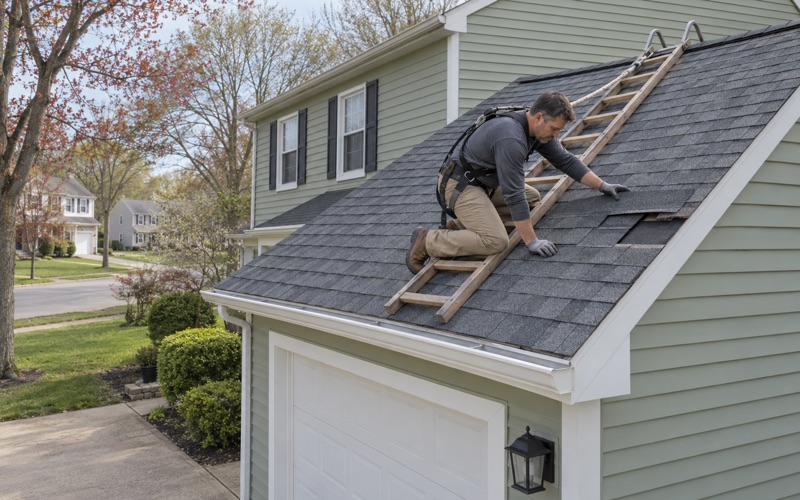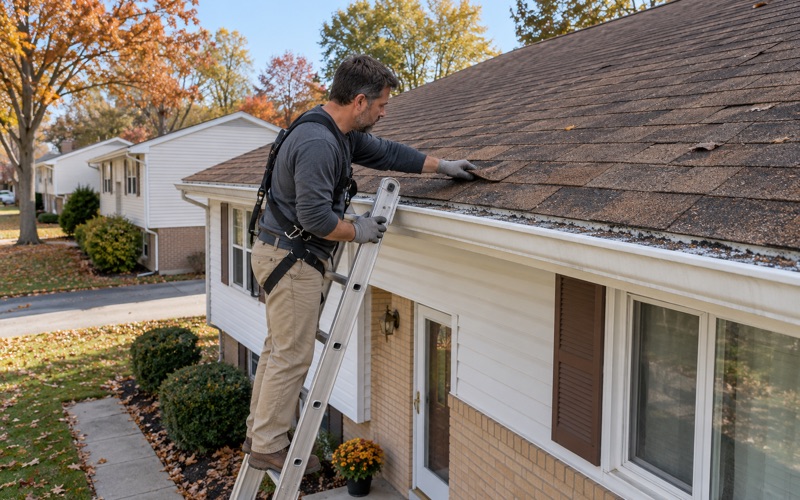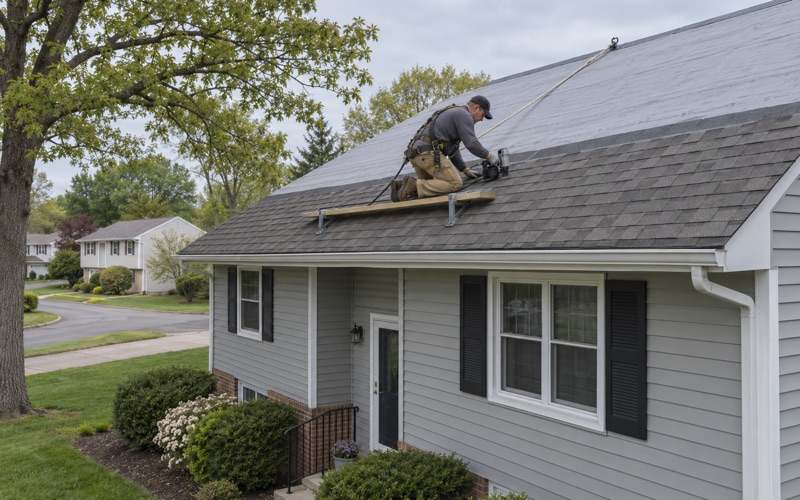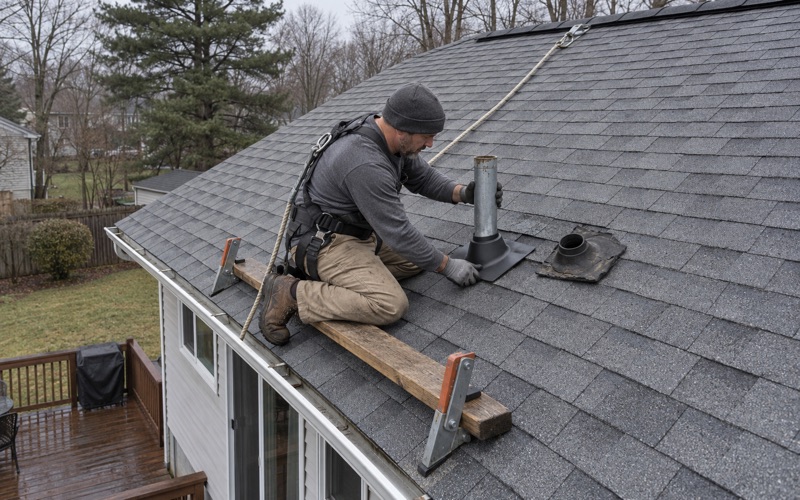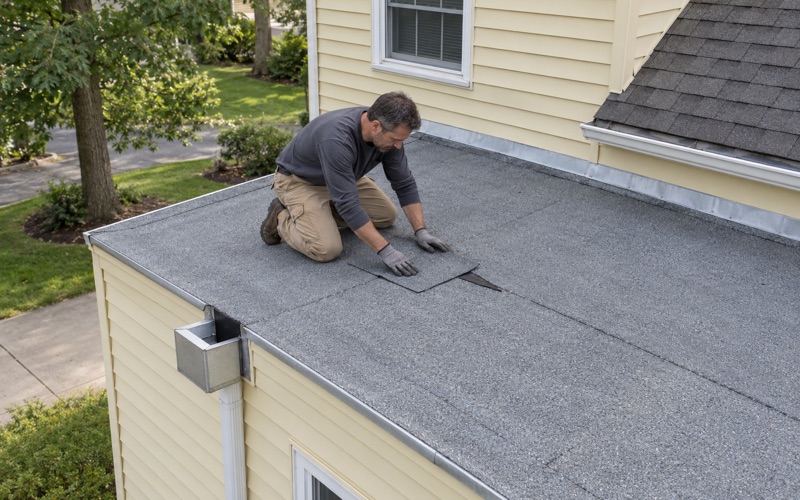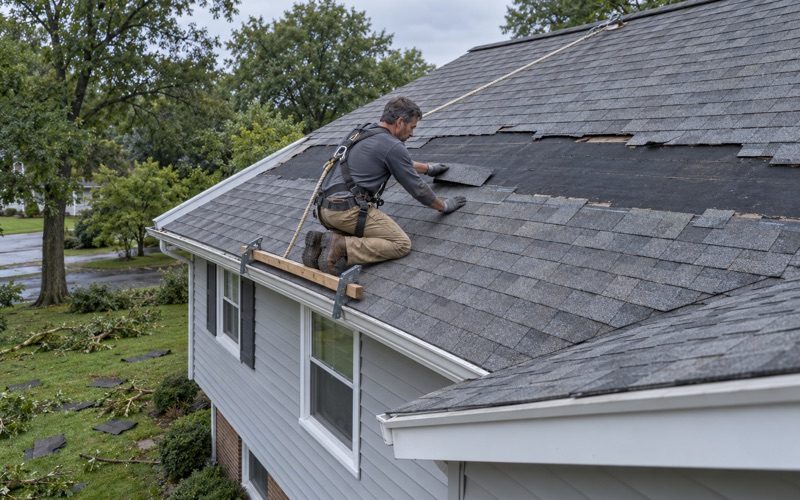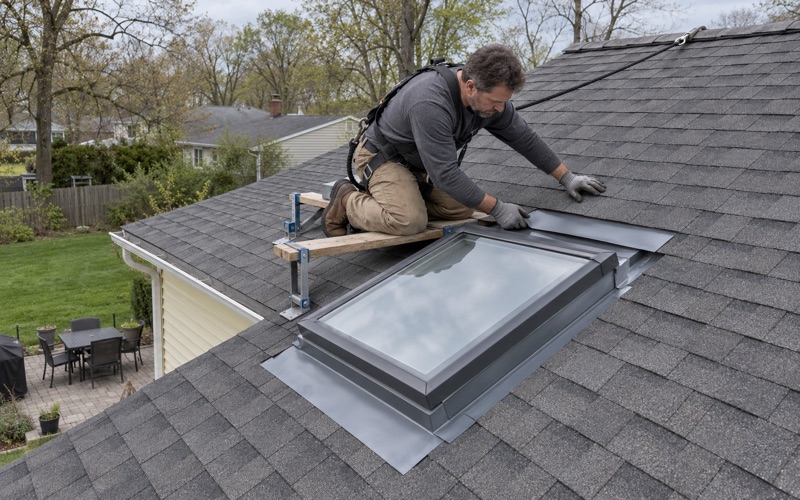
East Brunswick handles roofing in Chatham Township with more than 20 years of work behind every estimate, and on this page the conversation starts where a lot of roof jobs end: at the gutters and leaders. A roof sheds every drop that lands on it, and where that water goes next is part of the job we price, not an add-on.
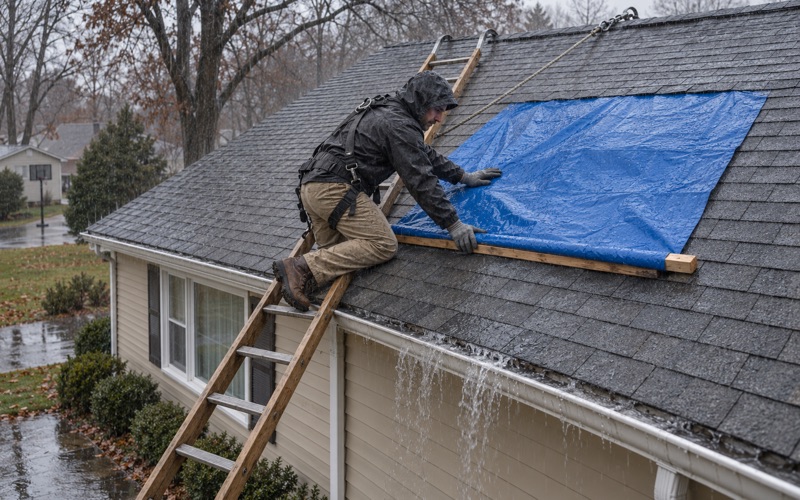
Every leak call starts with two looks, one from the attic and one from the roof surface, so we know where water actually enters before any number goes on paper. If a repair will hold, we say so plainly and stop there. Replacement comes up only when the roof has earned it, and the estimate shows why.
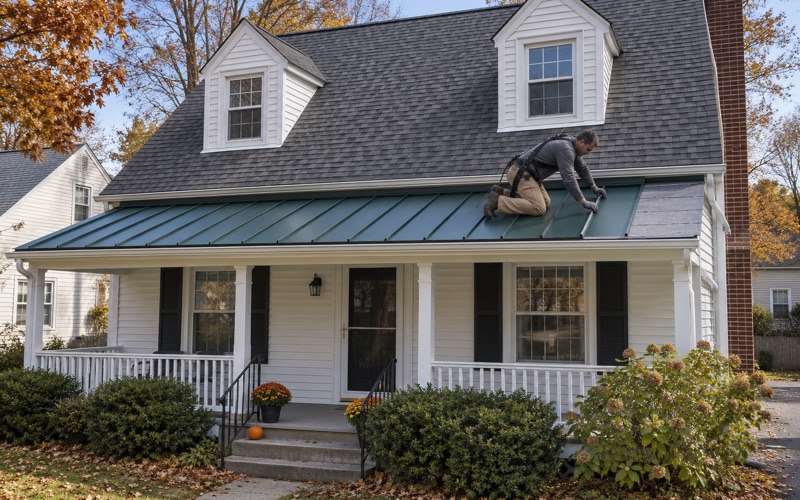
When a full replacement is the right call, our written scope breaks the job into separate lines for tear-off, decking, underlayment, flashing, ventilation and gutters. That lets an owner hold two bids side by side and compare them one item at a time, instead of weighing one lump sum against another and guessing what each one left out.
Chatham Township’s Own List of Drainage Problems
Plenty of towns have wet backyards. Fewer have written their trouble spots down by street name. Chatham Township did, in its section of the Morris County Hazard Mitigation Plan Update, published in July 2020. That annex is the township’s own account of where water causes problems, and it is the reason this page treats drainage as a roofing topic.
Four Backyard Swales Called Undersized
Under a heading of additional identified vulnerabilities, the annex lists four backyard drainage swales that are ‘not at sufficient capacity’. They sit on Candace Lane, Runnymede Road, Susan Drive and Sunset Drive. A drainage swale is a shallow, graded channel meant to carry surface water across or between lots, and an undersized one holds or overflows water it was supposed to move along.
The annex gives no cause for the shortfall, and it does not mention roofs at all. We are not going to invent one. What it does establish is that, on those four streets, the township considers the backyard channel already short of the capacity it needs, which is worth knowing before anyone decides where a roof’s water ends up.
Why a Roofer Pays Attention to a Swale
The link we draw between leaders and swales is an inference, and we label it as one. Every leader on a house drops a concentrated stream at one spot on the lot. Where that spot sits relative to a backyard channel, a foundation wall or a property line is decided by whoever installs the gutters, and that is often the roofing crew.
Regrading a yard or rebuilding a swale is site work, outside what a roofing company does. What sits inside our work is the gutter system feeding the ground: how much water it collects, how many leaders carry it down, and where each one lets go. On a lot near a channel the township already calls undersized, those choices deserve a deliberate answer.
Looking for roofing closer to Hopewell Township? See Hopewell Township Roofing.
A Roof Is the Largest Hard Surface on Most Lots
Rain soaks into lawn and planting beds. It runs straight off a roof. On a typical single-family lot the house covers more ground than the driveway or the patio, so the roof is usually the biggest area that cannot absorb anything. All of the water landing on it leaves through the edges, and the gutters decide which edge.
Ordinance 2023-04 and Roofed Structures
Chatham Township put this idea into its own code. Ordinance 2023-04, adopted April 25, 2023 on the Municipal Engineer’s recommendation, amended the land development definitions. Impervious surfaces on a single-family residential lot in residence districts now ‘Shall mean buildings, roofed structures, pavement, driveways’, along with parking areas, sidewalks, patios and porous construction material. Decks and the surface area of swimming pools are excluded.
In plain terms, the township counts the roof over a house, a garage or a covered porch the same way it counts asphalt: as ground that no longer takes in water. That is the frame we use when we talk with an owner about runoff, because it is the township’s own frame rather than one we brought with us.
Replacing a Roof Adds No New Coverage
A new roof covering over the same footprint adds nothing to a lot’s impervious area. Tearing off old shingles and installing new ones leaves the house exactly as large as it was, so a re-roof is not a coverage question. What can change is how well the gutters keep up, if the old system was undersized from the start.
Where the math does change is a new roofed porch, a covered entry or an addition. Under the 2023 definition, those roofed structures count toward coverage, and an owner planning one should raise it with the township before the work is designed. Our part is making sure the new roof area drains into gutters sized for it and leaders placed with intent.
Gutters, Leaders and the Spot Where Water Lands
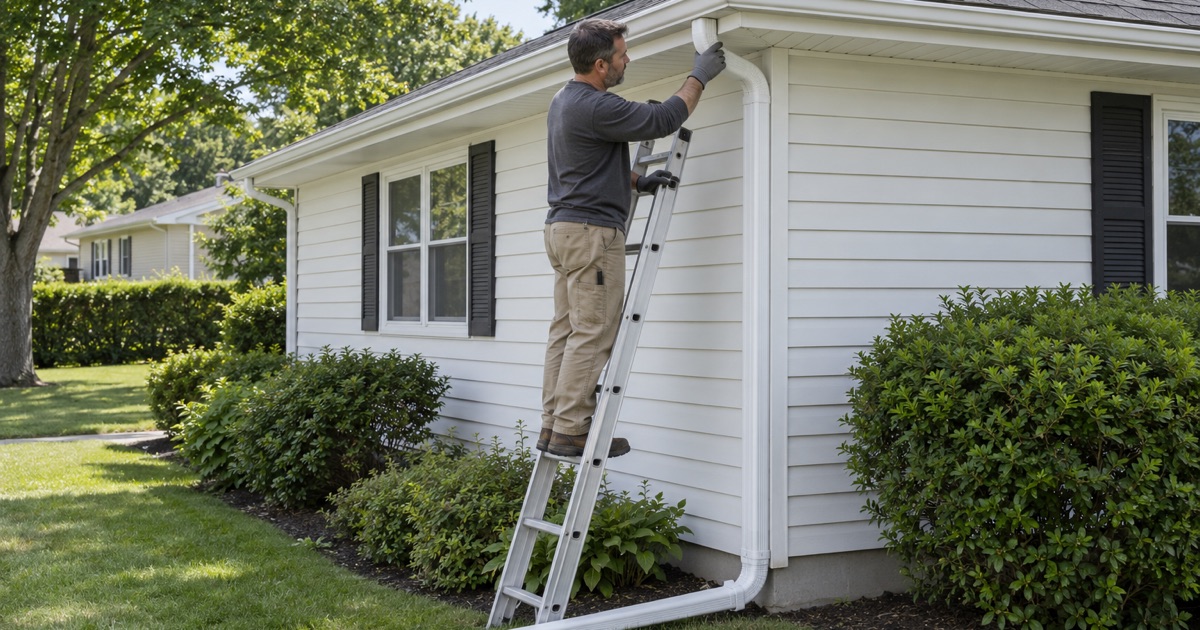
In New Jersey the vertical pipe that carries water down from a gutter is usually called a leader, and the word matters here because the leader is where a roof’s runoff becomes a stream on the ground. A gutter run collects the water from one slope. Each leader decides where that slope’s share is released, and how far from the house.
Sizing Gutters to the Roof Above Them
Gutter size should follow the roof it serves: the area of each slope, how steep it is, and how far the water travels before it reaches the eave. A long, steep rear slope can overwhelm a standard seamless aluminum gutter during a hard rain, spilling over the front lip and dropping water straight down beside the foundation.
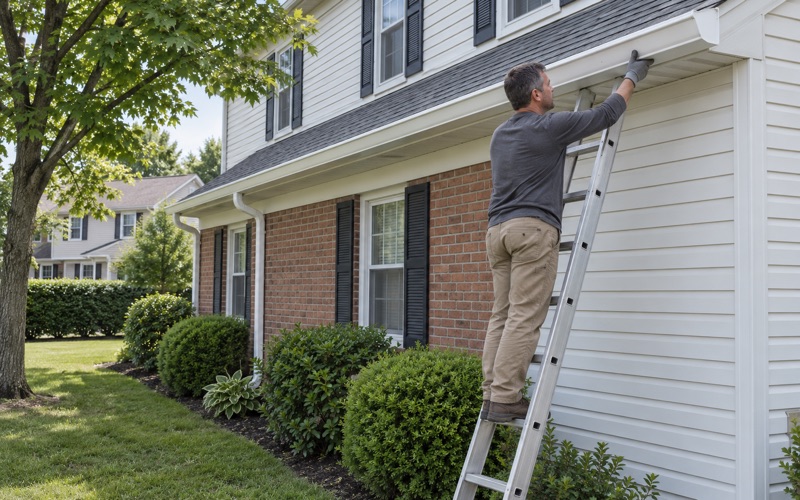
When we replace a roof, we check whether the existing gutters are keeping up or overflowing, and we look for staining on fascia and siding that shows where they have spilled. If a wider profile or an added leader would help, it goes on the written scope as its own line, priced separately so the owner can decide on it.
Leader Count, Pitch and Placement
A gutter only drains as well as its pitch and its outlets allow. Too little slope and water sits in the trough; too few leaders and one corner of the house takes the whole run. We set pitch toward each outlet and look at whether a long run would work better split, with a second leader at the far end.
Placement is the decision that matters most on a Chatham Township lot. A leader that empties at a back corner may send water toward a neighbor’s yard, into a low spot near the foundation, or across a lawn toward a backyard swale. We walk the lot with the owner and look at where each outlet points before anything gets fastened.
Downspout Extensions and Where They End
Downspout extensions, splash blocks and buried lines all move water away from the wall, and which one fits depends on the slope of the yard. We did not find a township rule on leader discharge, so we do not quote one. What we can do is keep each outlet clear of the foundation and point it somewhere the ground can take it.
Owners on the four streets the annex names, or anywhere a backyard channel already backs up, have a reason to think this through carefully. Sending more water toward a channel that is short of capacity is not a fix. Where the yard itself needs regrading or new drainage, that is a job for a site contractor or engineer, and we say so.
Loantaka Brook, Black Brook and Green Village
The same 2020 annex looks beyond backyards. Citing the 2010 preliminary FEMA Flood Insurance Study, it says flooding occurs in the Green Village and Britten Road area from Loantaka Brook, with floodwater spreading into the Great Swamp between Britten and Meyersville Roads. It also says Black Brook ‘floods regularly in the vicinity of several houses as it crosses Green Village Road’.
Green Village is the township’s long-established hamlet, and the Great Swamp National Wildlife Refuge lies along that side of the township. Low, wet ground there is part of the landscape, not a defect in anyone’s yard. For a homeowner near either brook, the roof’s job is narrower: shed water cleanly and release it where the lot drains best.
Flood Insurance in the Township
Chatham Township is NFIP community 340504, with a current effective flood map dated July 19, 2001. The annex counts 45 flood insurance policies in force, 22 total loss claims, 11 of them closed without payment, and $104,523 paid, plus one repetitive-loss property. It also notes the flood damage prevention ordinance was last amended in 2004.
Those numbers describe brook and surface flooding, not roofs. Flood damage is a separate matter from roof damage, and we never present one as the other. A roof that keeps rain off the house is one piece of the picture; the grading of the lot and the behavior of the brooks are another, and neither is something a new roof changes.
Storm Damage, Photographed and Written Up
When wind or hail damages a roof here, we photograph what we find and write it up so the owner has a record for their own claim. If the owner asks, a member of our crew will meet the insurance adjuster on site to walk the roof. The claim itself stays with the owner; we document the roof and answer questions about it.
Those photographs also help later, when an owner wants to know whether a stain on the ceiling is new or old. The write-up stays plain: what failed, where, and what a repair or a replacement would involve. If a repair will hold, the write-up says that too, because the honest answer is the useful one.
What Comes With a Replacement
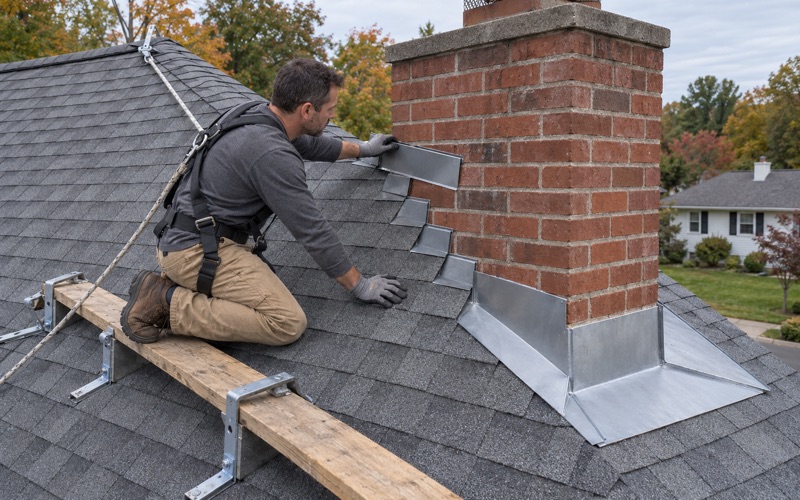
Step, counter and chimney flashing is replaced with the roof rather than reused, and any rotten decking found under the old shingles is photographed and shown to the owner before it is replaced, at the per-sheet price written into the contract. Attic ventilation is checked on every replacement, since a roof that cannot breathe wears out from below.
The contract follows New Jersey’s home improvement rules, including the three-day cancellation notice, and the quote states sales tax the way the state treats the job: taxable on a repair, exempt on a new roof with Form ST-8. At the end of each work day the driveway, yard and gutters are cleaned, with a magnet sweep for nails.
- 20+ Years on Roofs
- Itemized Written Scopes
- Attic-First Leak Checks