East Brunswick offers roofing in Clark backed by more than 20 years in the trade, and our first question on any call here is what kind of building sits under the roof. A detached house and a three-story apartment building can stand a few blocks apart, yet New Jersey writes their roof rules in different codes. That one distinction decides the paperwork, the schedule and who has to sign off before work starts.
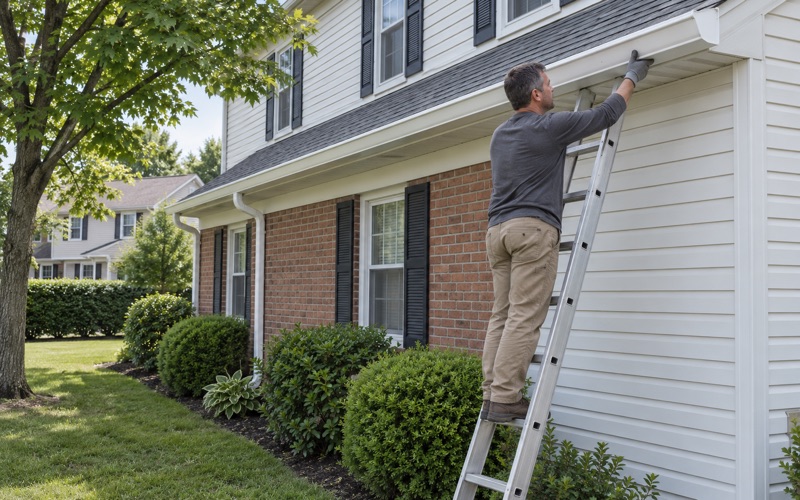
Whatever the building, a leak call begins the same way. We go into the attic or the top-floor ceiling space as well as onto the roof, so the water is traced to the spot where it actually enters before any number is written down. Then you get a plain answer on whether the roof can be repaired, and replacement only comes up if repair genuinely will not hold.
This page is mostly about the larger buildings, because that is where the rules change the most. Owners, property managers and boards will find what the state expects of a multiple dwelling roof, why a re-roof on one is permit work, and how we plan repairs around people who keep living in their units while the crew is overhead.
Clark’s Apartment Buildings Are Multiple Dwellings
Three Units Is the Line
Under New Jersey’s Hotel and Multiple Dwelling Law, any building holding three or more dwelling units is a multiple dwelling. The label is not a matter of size or style, so a modest walk-up and a large senior rental community land in the same category. Once a building crosses that line, its roof answers to the state’s maintenance code rather than to the rules most homeowners know.
That matters for roofing because the house rules people repeat to each other simply do not apply. An owner who assumes a re-roof works the way it did on a family home can end up with the wrong scope, the wrong schedule and no permit. We sort the building into its category before we measure anything, and the estimate says which set of rules it is written under.
Woodcrest at Clark on Westfield Avenue
The clearest example in town is Woodcrest at Clark, a 55+ rental community at 1500 Westfield Avenue run by Garden Communities. The company describes it as four buildings of one- and two-bedroom residences, with a clubhouse, a fitness center and covered parking. Rental listings put it at three stories and 330 units, built in 2014.
We mention Woodcrest because it shows the scale of the category, not because we know anything about its roofs. Their type, age and condition are not something we have looked at, and decisions about them belong to the owner and its management company. What the community does illustrate is that a recent, well-kept building is still a multiple dwelling, with every obligation that brings.
The Township’s Larger Buildings in Numbers
Clark is mostly detached houses, but its apartment stock is larger than many people expect. The Census Bureau’s 2024 five-year survey counts 679 units in buildings of 20 or more units, 355 in buildings of 20 to 49 and 324 in buildings of 50 or more. Those buildings house most of the township’s renters outside of single houses and two-family homes.
The same survey counts 363 units built between 2010 and 2019, a decade that added more housing here than any since the 1970s. Newer buildings tend to have one owner, an on-site office and a roof that has not yet needed major work. When it does, the job will arrive with tenants in place and a state code already attached to it.
Looking for roofing closer to Millstone Township? See Roofing in Millstone Township.
N.J.A.C. 5:10: Roofs That Keep Water Out, and the Five-Year Inspection
The Leakage Standard
The state’s maintenance code for hotels and multiple dwellings is N.J.A.C. 5:10, and its section on leakage, drafts and infestation is short and direct. Exterior walls, roofs, windows, skylights, doors and foundations must be maintained to keep out water. A stain spreading across a top-floor ceiling is not just a nuisance for the tenant; it is a building out of step with that standard.
For an owner, the practical reading is that a known leak is a code matter, not a deferred maintenance line. We write up what we find in plain terms, with photographs from the roof and from inside, so a property manager has a record of the condition and of the repair that answers it. That record is useful whether the next visitor is a tenant, an inspector or a buyer.
Worn Material Gets Repaired or Replaced
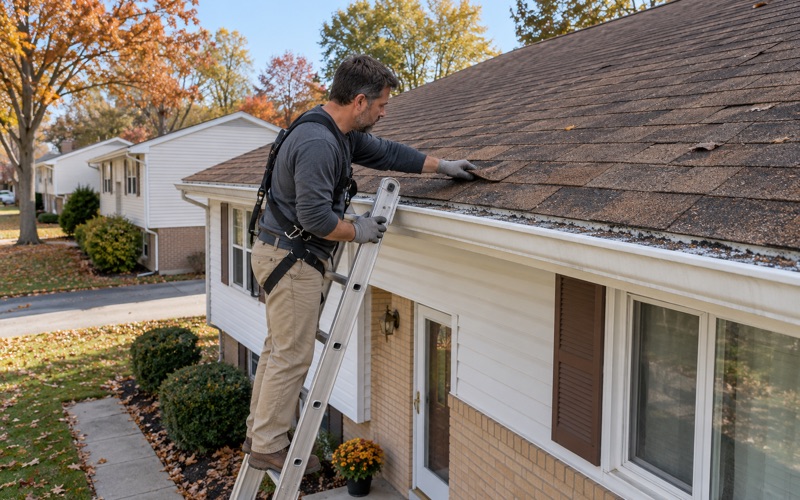
The same section goes further than leaks already showing. Damaged or badly worn material has to be repaired or replaced, which reaches the shingles, membrane, flashing and skylight curbs before water ever makes it inside. A roof that is technically dry but visibly failing does not meet the rule as written.
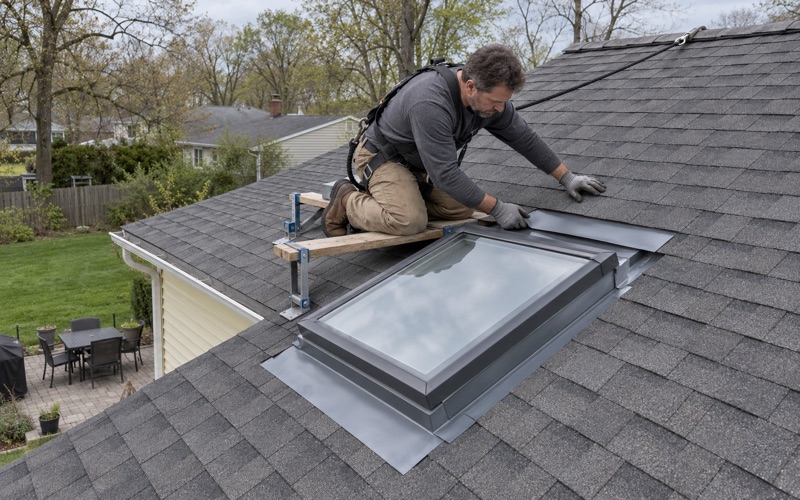
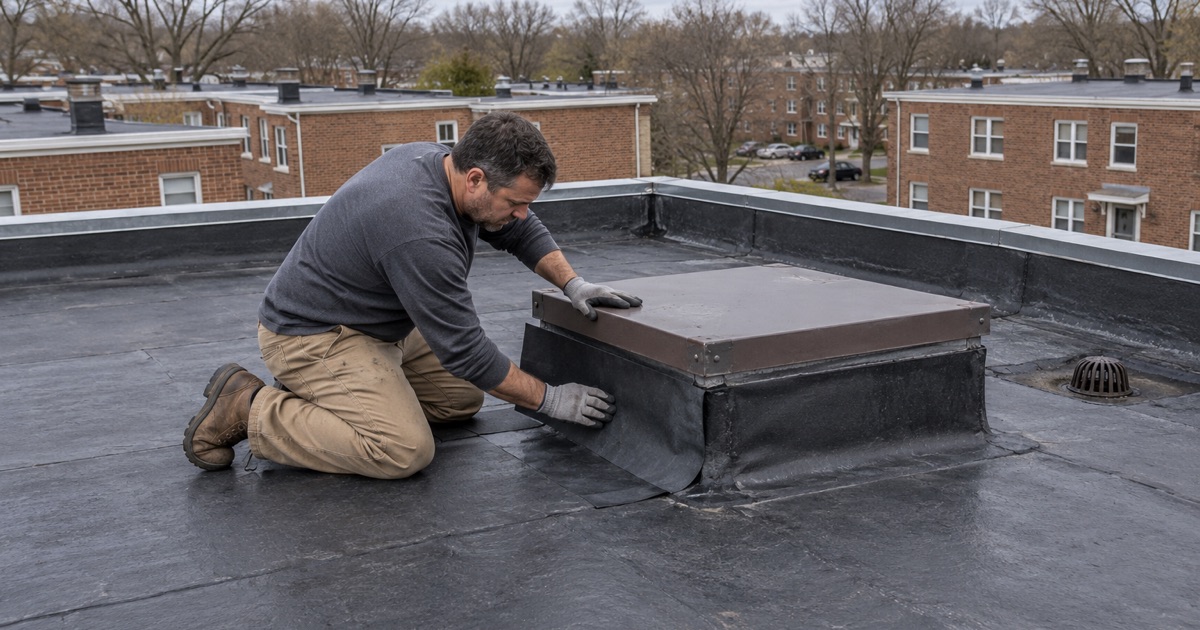
Skylights deserve particular attention on apartment roofs, because they are a common way water reaches a top-floor unit. We check the curb, the flashing around it and the seal between frame and glass, and we say whether the unit can be resealed or needs replacing. Curb-mounted and deck-mounted units are flashed differently, so the scope names which kind is on the building.
Registration and the Five-Year Cycle
Multiple dwellings are registered with the Bureau of Housing Inspection in the New Jersey Department of Community Affairs, and the program inspects them on a five-year cycle. An owner therefore knows a review is coming and can plan roof work around it rather than reacting after a finding. We cannot say how any particular Clark building fared in its own inspections, and we do not guess.
What we can do is look at the roof the way a maintenance standard does. That means walking the field, the edges, the penetrations and the drainage, then listing what is sound, what is worn and what is failing. Owners who want the roof in order before the next cycle can use that list to set priorities and spread the cost over a budget year.
Why an Apartment Re-Roof Is Permit Work in Clark
Houses and Apartment Buildings Are Treated Differently
New Jersey’s construction code lets the owner of a detached one- or two-family house replace roof covering as ordinary maintenance, with no permit. That rule is narrow on purpose. It does not reach attached dwellings, and it does not reach a building of three or more units, so a re-roof on one of Clark’s apartment buildings goes through the permit process.
Every estimate we write says plainly whether the job is permit work under the state code, instead of repeating an outdated rule of thumb about percentages. For a house that line usually reads no permit for the covering. For a multiple dwelling it names the permit, and the schedule allows for the review and inspections that come with it.
A Scope You Can Compare Line by Line
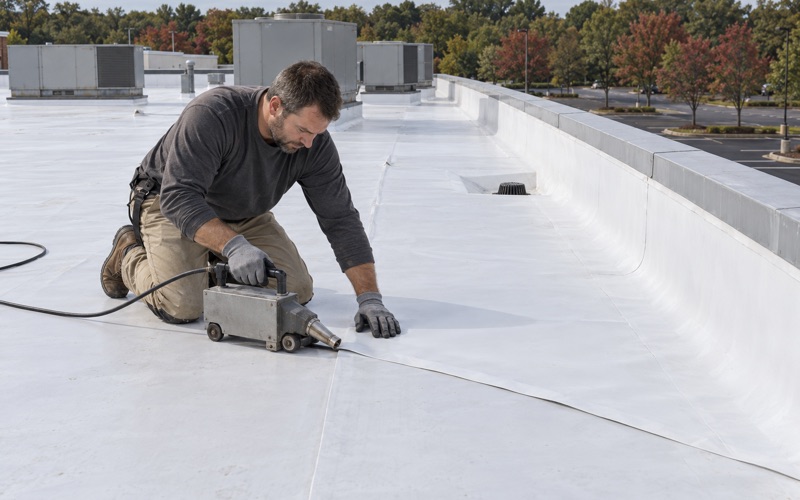
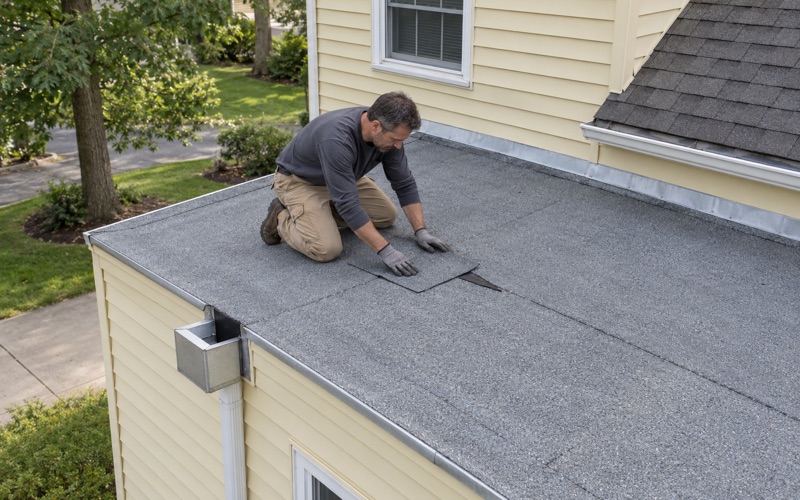
Apartment roofs are often flat or low-slope, which brings in materials a house rarely uses, such as TPO, PVC, EPDM rubber or modified bitumen. Our written scopes list tear-off, decking, underlayment or insulation board, flashing, ventilation and gutters as separate lines. A board or management company can then put two bids side by side and see exactly where they differ.
Damaged decking only shows itself once the old roof is off. When we find it, we photograph it and show the owner before replacing it, and the price per sheet is already fixed in the contract. Nobody gets a surprise total at the end, and the photographs go into the building’s file with the rest of the job record.
Who Holds the Roof
In a rental community, the owner and its management company decide on the roof, not the residents. In townhouse, condominium and 55+ communities that are owned rather than rented, the answer can be less obvious. We check the governing documents to confirm who is responsible for the roof before any estimate is written, so the right party is signing.
The tax treatment follows the type of work, and our quotes state it the way New Jersey does. A repair is taxable. A new roof that qualifies as a capital improvement is exempt when the owner provides Form ST-8, and the quote says which of the two applies before anyone signs.
Roof Repairs With Residents in Place
Finding the Leak From Inside
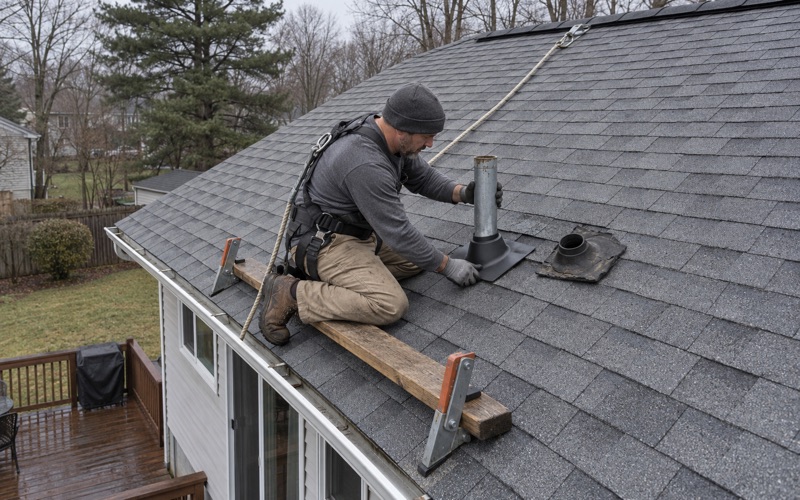
In an occupied building, the tenant who reports a ceiling stain is often two or three floors from where the water entered. We follow it upward through the top-floor ceiling or attic space before pricing anything, because a membrane seam, a pipe boot and a parapet flashing can all produce the same stain. The repair targets the real entry point, not just the nearest spot on the roof.
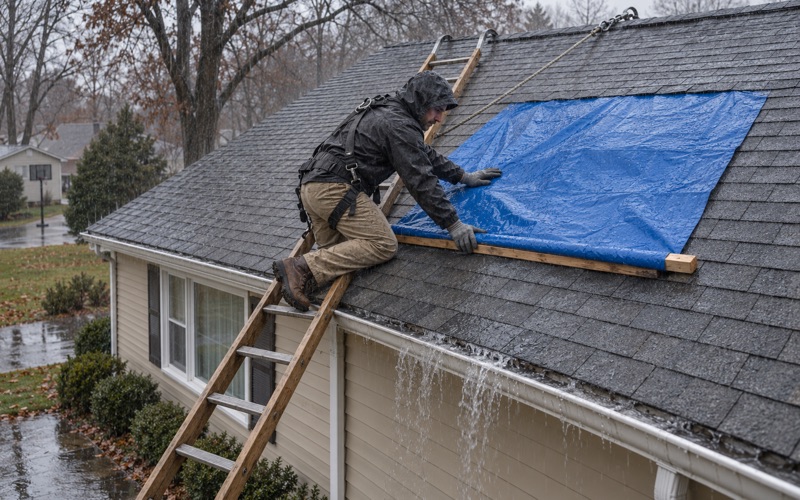
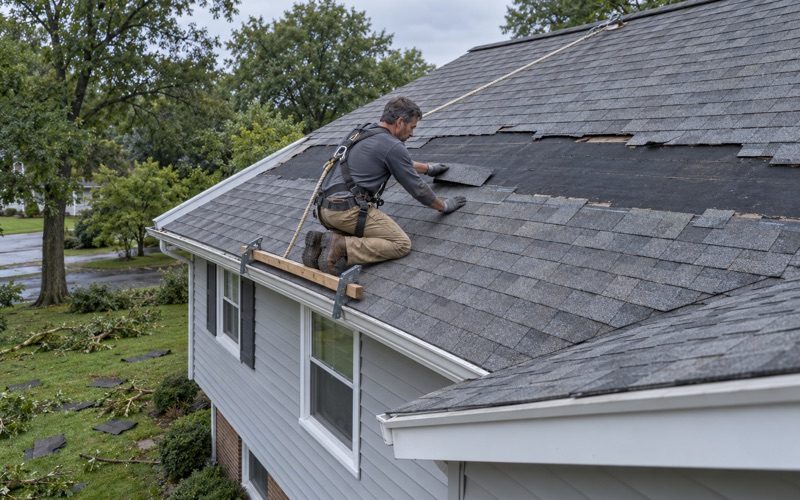
Storm damage gets the same careful treatment. We photograph it and write it up for the owner’s own insurance claim, and when asked, our crew will meet the adjuster on site to walk the roof. The claim itself stays between the owner and the insurer, and we never handle or negotiate it.
Keeping the Grounds Safe for Residents
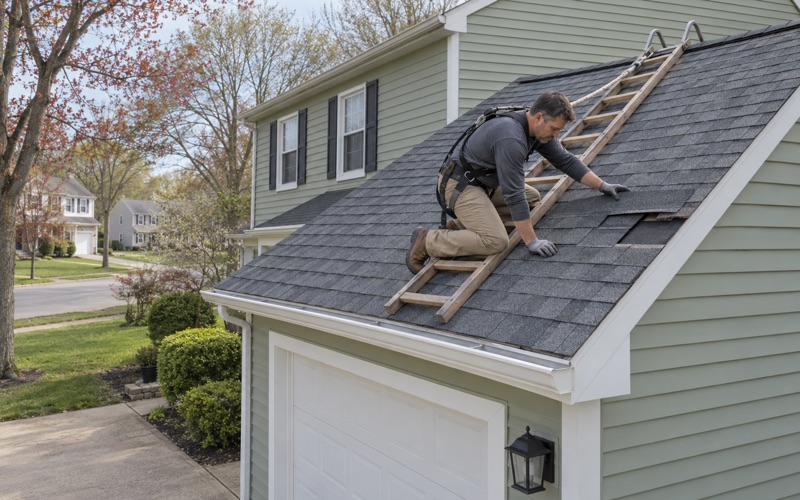
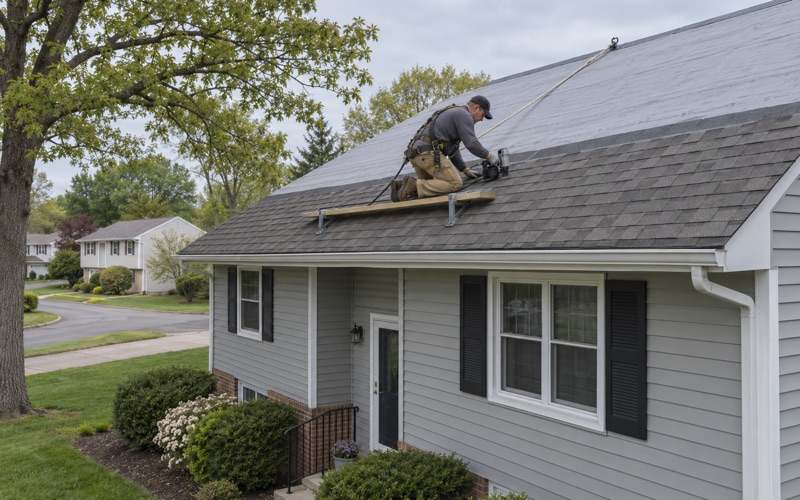
A roof job on a lived-in building means people walking beneath the work every day, and in a 55+ community many of them move carefully. We set up fall protection, keep the drop zones fenced and plan material deliveries around parking and entrances. Residents should be able to reach the door without stepping around a dumpster or a pallet.
At the end of each work day the walks, lawns and gutters are cleaned, and a magnet sweep picks up stray roofing nails. On a building with covered parking and private patios, that sweep covers every surface a resident is likely to use. Notices go to the management office ahead of noisy days so tenants are not caught off guard.
Flashing, Ventilation and Drainage
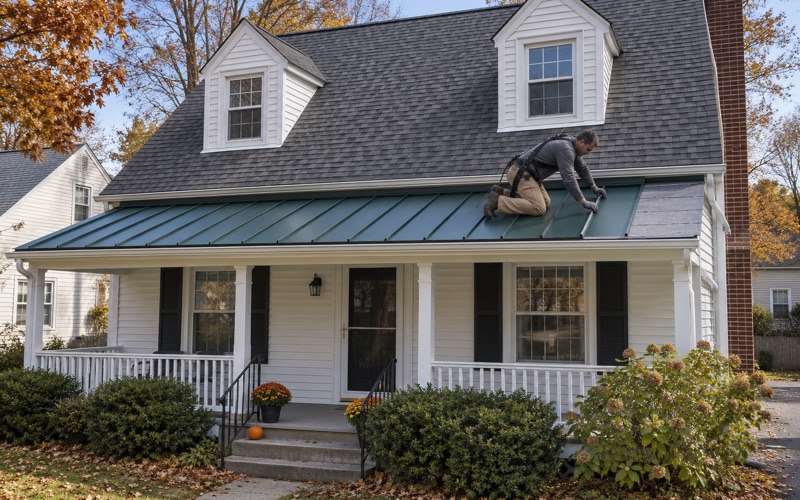
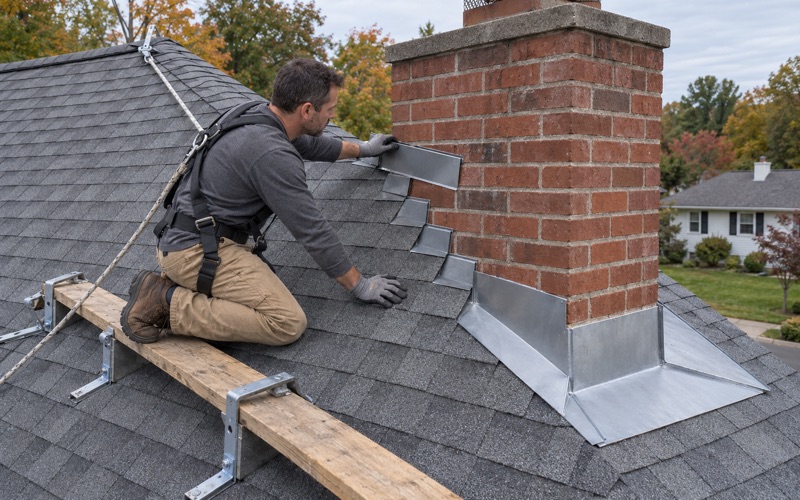
Step, counter and wall flashing is replaced with the roof rather than reused under new material. Old flashing tucked beneath a new membrane or shingle field is one of the most common reasons a fresh roof leaks early. On a building with several roof planes and penetrations, that rule alone removes a long list of weak points.
We check attic or plenum ventilation on every replacement, because a roof that cannot breathe ages from underneath and drives moisture into top-floor units. Gutters and leaders are sized and pitched with the roof so water leaves the building and its walkways. The state code names roofs, skylights and walls together for good reason, and a dry building depends on all three working as one system.
- 20+ Years on Roofs
- Itemized Written Scopes
- Attic-First Leak Checks