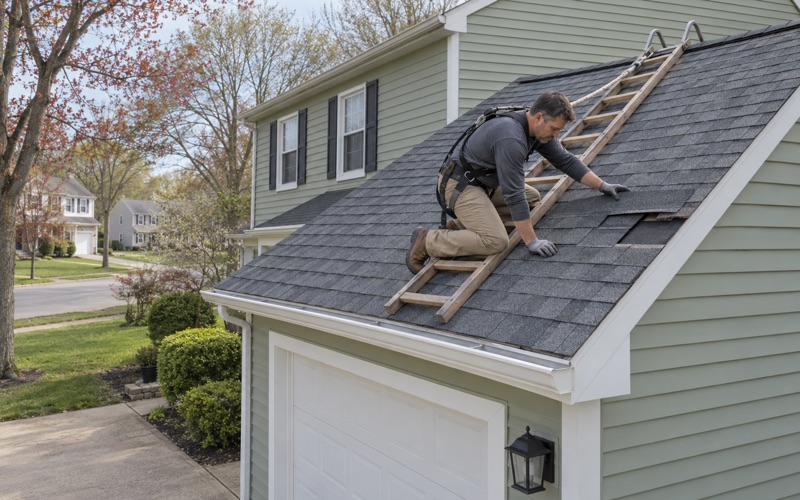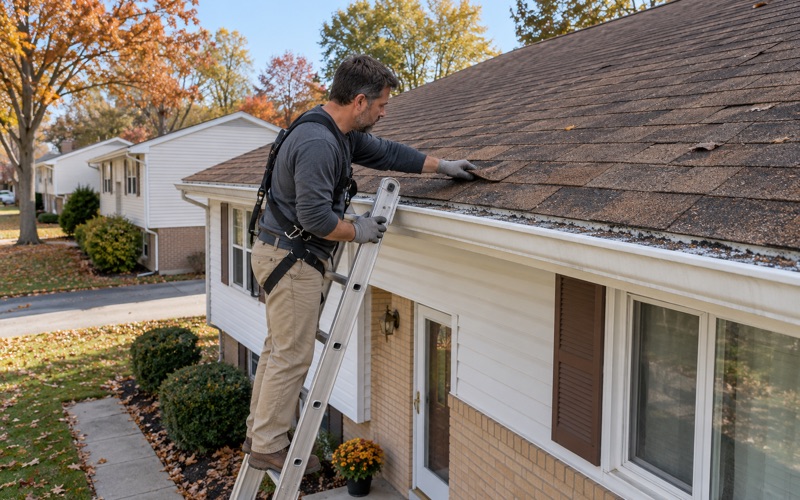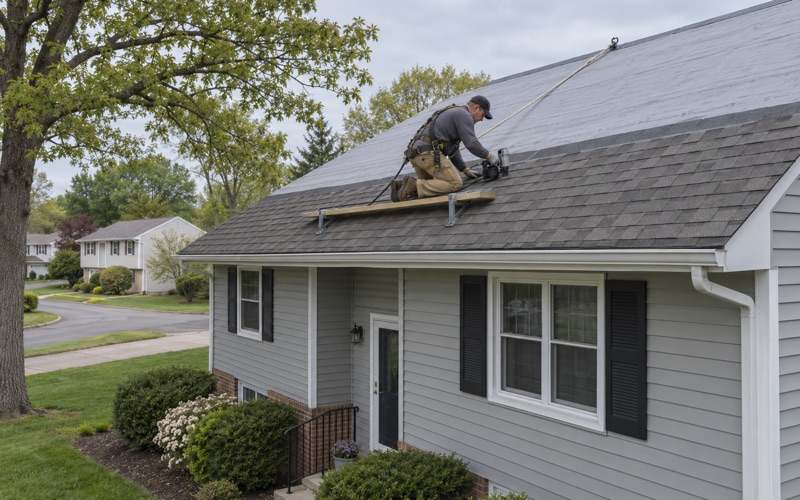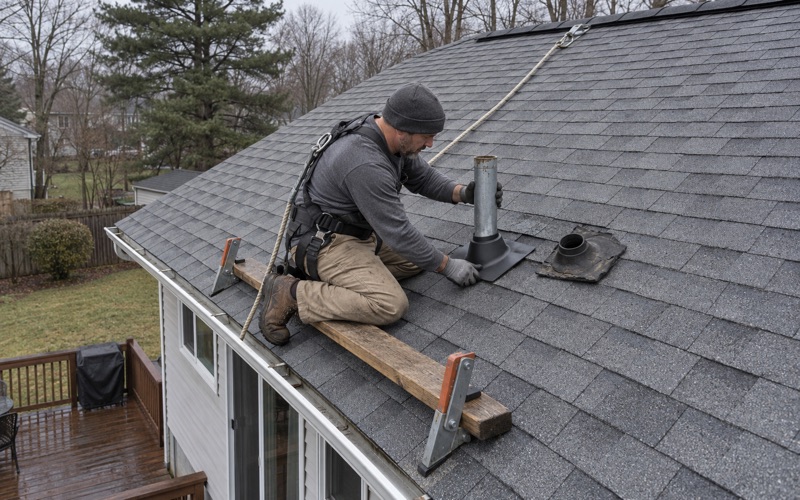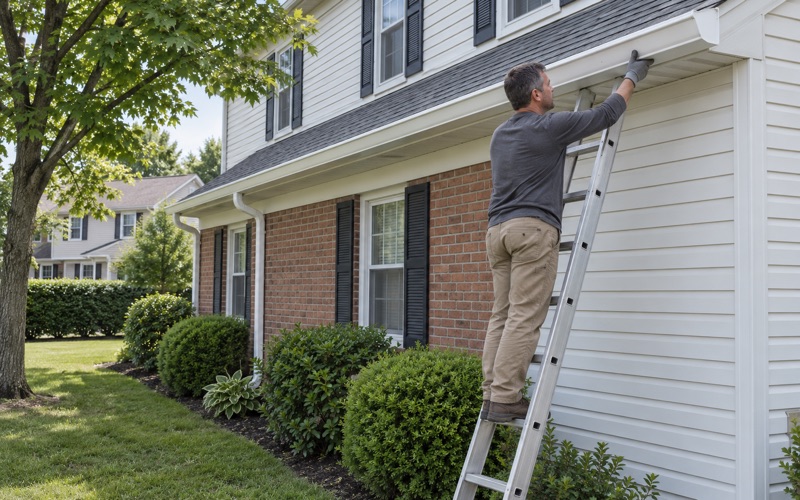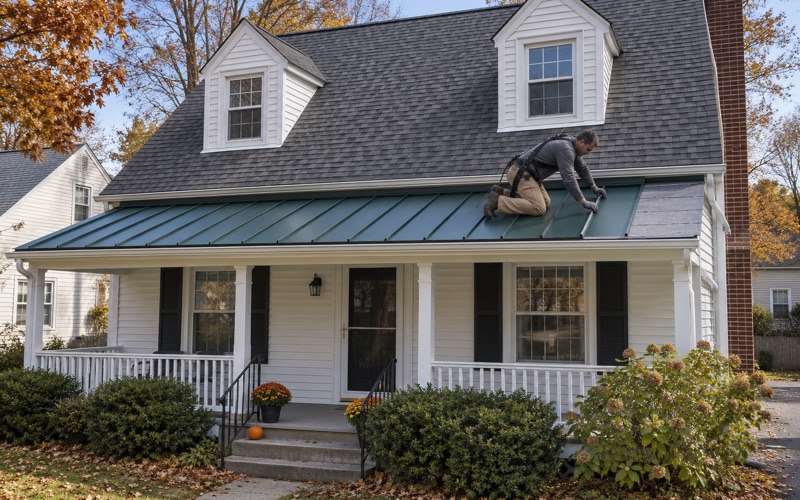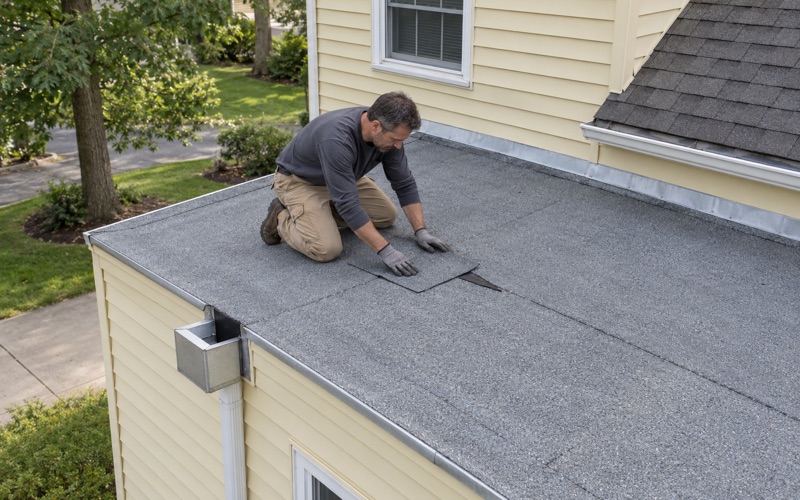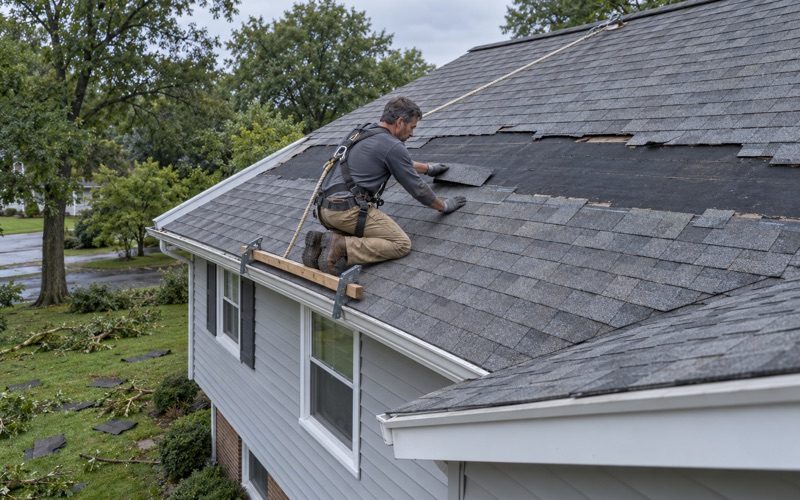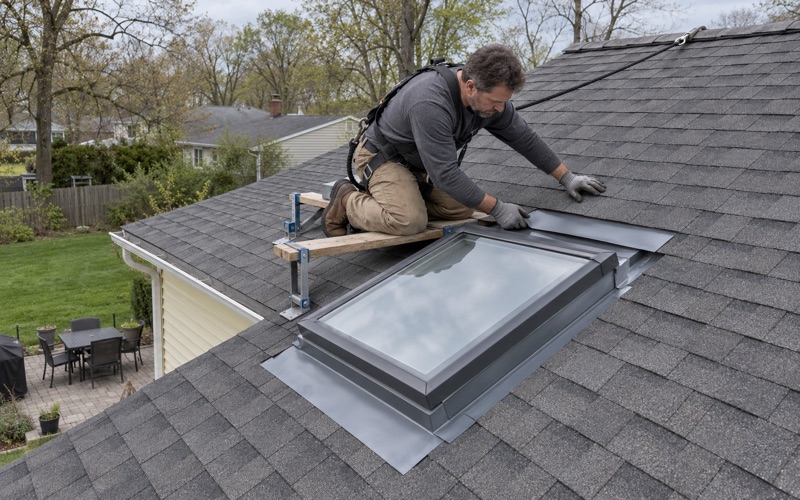
East Brunswick brings more than 20 years of work to roofing in Clinton Township, and the first thing we do on a visit is look past the shingles. The ground around a house can decide which shingle belongs on it and how that shingle should be fastened, so we size the job to the lot as well as to the roof before a number goes on paper.
A leak call starts in the attic as much as on the roof. Water tends to show up a few feet from where it actually gets in, and following it back to the real entry point is what lets us tell you plainly whether a repair will hold. Replacement only comes up after that question has an honest answer.
When a new roof is the right call, the written scope gives tear-off, decking, underlayment, flashing, ventilation and gutters their own lines. You can lay our estimate next to anyone else’s and compare the work item by item instead of guessing what a single total covers. Every estimate also says plainly whether the job is permit work under the state construction code.
Roofing Next to Clinton Township’s Preserved Farms
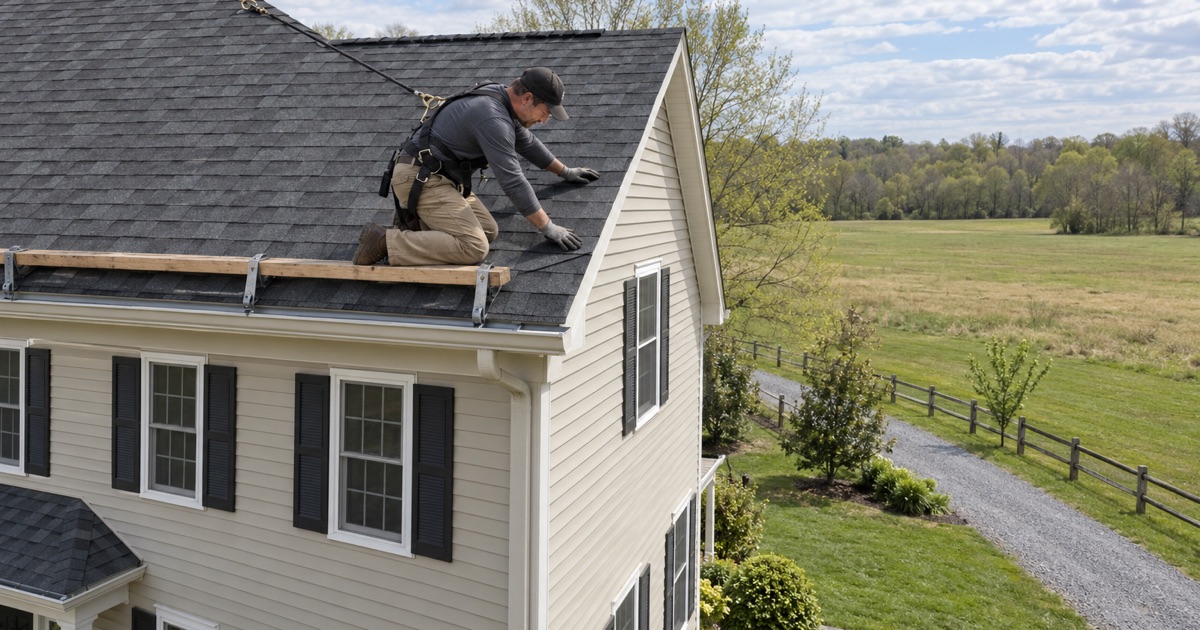
Clinton Township in Hunterdon County holds a lot of land that has been set aside for good. The Highlands Council’s response on the township’s plan conformance put preserved lands at some 8,109 acres, or 37.4% of the township, with 825 of those acres in preserved farmland. For a homeowner, the practical point is simple: some of the fields beside houses here are not waiting to be developed.
Ten Preserved Farms on the Township’s List
The township’s Open Space Advisory Committee lists ten preserved farms by name, acreage and road. The Smith farm covers 221 acres on both sides of Route 629 and Payne Road, the Herr farm runs 202 acres off Stanton Mountain Road, and the Weppler farm holds roughly 157 acres on Cokesbury Road. The Muckelman farm adds 126 acres on the west side of Route 629 and Molasses Hill Road.
The smaller farms on the list matter just as much to the houses beside them. Sutton covers 103 acres at Route 639 and David Post Road, Teets about 57 acres on Route 639, and Le Compte about 129 acres at Valley Crest and Allerton Roads. Spencer and Romano sit on Spencer Lane off Petticoat Lane, and Schmitt holds about 25 acres on Kiceniuk Road.
Conservation Parcels Beyond the Farms
The same committee page lists eight conservation and recreation parcels alongside the farms. Windy Acres is the largest at 292 acres off Main Street, land the township owns and describes as once being two working farms. Prostak Farm is listed at 153 acres at Route 626 and Stanton Mountain Road, and Bray’s Hill, Hackett’s and Bundt Park fill out more of the map.
Why Preserved Means Open for Good
A hayfield on an ordinary lot can turn into a subdivision, and the wind picture next to a house changes when it does. A deed-restricted farm is different, because the open side of the lot is expected to stay open. That is our reading of what preservation means for a neighboring roof, not a code statement, but it is why we treat the field next door as a lasting condition.
Looking for roofing closer to Somerville? See Roofing Services in Somerville.
Wind Exposure B and C Beside an Open Field
New Jersey’s one- and two-family dwelling subcode, built on the 2021 International Residential Code, sorts a building site into wind exposure categories. The category feeds into the design wind loads a roof has to resist. Most homeowners never hear the term, yet on a lot that faces open ground it can change what a sound roofing proposal looks like.
What the Code Assumes by Default
Under section R301.2.1.4, Exposure B is assumed unless a site meets the definition of another category. Exposure B describes suburban and wooded terrain with plenty of houses and trees breaking up the wind. Exposure C covers open terrain with scattered obstructions generally under 30 feet tall, extending more than 1,500 feet from the building site in any quadrant.
The code also settles which category wins when a site sits between two kinds of ground. In a transition zone, the category that produces the largest wind forces applies. That rule leans toward caution, which is the right instinct for a house that has trees on three sides and a long open field on the fourth.
The 600-Foot Rule for an Open Side
The part that matters most beside a preserved farm is the adjacency test. A house in Exposure B terrain moves to Exposure C when it sits directly beside open Exposure C terrain for a distance of more than 600 feet in any quadrant. Flat open country and grassland are named as examples, which describes a large share of working farmland.
We have not measured any lot beside these farms, and nothing on this page assigns a category to a road, a farm edge or a neighborhood. Whether a particular house meets the 600-foot test depends on where it stands, how far the open ground runs and what sits between them. That is a question for each address, answered on site and confirmed with the right office.
Each Wind Direction Is Judged Separately
Exposure is set for each wind direction, not as one label for the whole property. A house can be sheltered by woods to the north and east and still face an unbroken field to the west. One open quadrant is enough to raise the question, so we walk the lot and note what lies in every direction before talking about materials.
Shingle Wind Ratings and Nailing for an Exposed Lot
Once the exposure question is on the table, the material choice follows from it. A shingle that is fine on a lot surrounded by trees may not be the best fit on a house that catches wind across a long field. We match the product and the installation method to the lot, then write both into the scope so you can see what you are paying for.
Reading the Wind Rating on the Bundle
Asphalt shingles carry wind ratings from standard tests. ASTM D3161 Class F and ASTM D7158 Class H are the two classifications we look for on an exposed lot, and most architectural (laminated) shingles from the major makers carry one or both. GAF Timberline HDZ, Owens Corning Duration and CertainTeed Landmark are common examples of that laminated style.
A rating on the wrapper only holds when the shingle is installed the way the manufacturer tested it. That means the right starter strip at the eaves and rakes, the sealant strips allowed to bond, and fasteners driven in the correct zone. On an estimate we name the product and its rating so the comparison with another bid is like for like.
Nail Count and Placement
Most shingle manufacturers publish a high-wind application that calls for more nails per shingle than the standard pattern, often six instead of four. Placement counts as much as the count, because a nail driven high misses the double layer the shingle was designed to hold through. On a lot that may face open ground, we plan for the high-wind pattern and say so in writing.
Warranty terms tie into this as well. Lifetime warranty eligibility from makers such as GAF and Owens Corning is generally written for owner-occupied, single-family detached homes and depends on following their installation instructions. A nailing shortcut can weaken the shingle and the paperwork behind it in the same stroke.
Edges, Ridges and Flashing
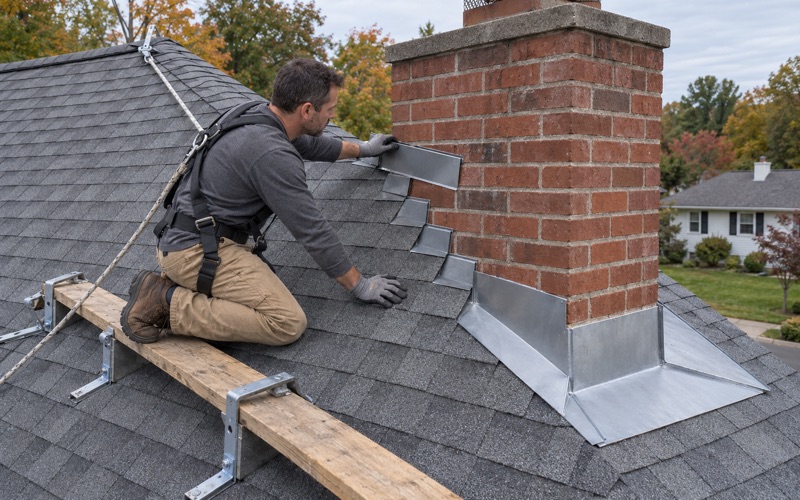
Wind usually starts its work at the edges, so drip edge at the eaves and rakes goes on with every replacement. Step, counter and chimney flashing is replaced with the roof instead of being reused under the new material. A ridge vent paired with soffit intake keeps the attic breathing, and we check ventilation on every replacement because a roof that cannot breathe ages from underneath.
Checking Your Own Address Before the Roof Is Priced
The state’s Department of Community Affairs treats exposure and design wind speed as address-specific in its Bulletin 19-1. That fits what we see on the ground: two houses on the same road can sit in very different conditions. Before we price a roof here, we look at the lot itself and at whatever borders it.
Looking at What Borders the Lot
On an estimate visit we note open fields, tree lines and any long stretch of open ground beside the house. If one side faces a preserved farm or a conservation parcel such as Windy Acres or Prostak Farm, we write that down along with the rough distance the open ground runs. That observation shapes the shingle, nailing and edge details in the scope.
The official answer belongs to Clinton Township itself, whose municipal building is at 1225 Route 31 South in Lebanon. The Town of Clinton is a separate municipality with its own offices, so it is the wrong place to ask about a township address. Where a question about exposure needs a firm answer, we point you to the township office instead of guessing.
Decking, Cleanup and the Contract
If the old roof comes off and the decking underneath is damaged, we photograph it and show you before any sheet is replaced. The per-sheet price is set in the contract ahead of time, so there is no surprise figure on the last day. The driveway, yard and gutters are cleaned at the end of every work day, including a magnet sweep for roofing nails.
Our contracts follow New Jersey’s home improvement rules, including the three-day cancellation notice. Repair and replacement quotes also state sales tax the way the state treats each one: taxable on a repair, and exempt on a new roof with Form ST-8. Gutters and leaders are sized and pitched along with the roof so water runs away from the foundation.
After a Storm Passes Through
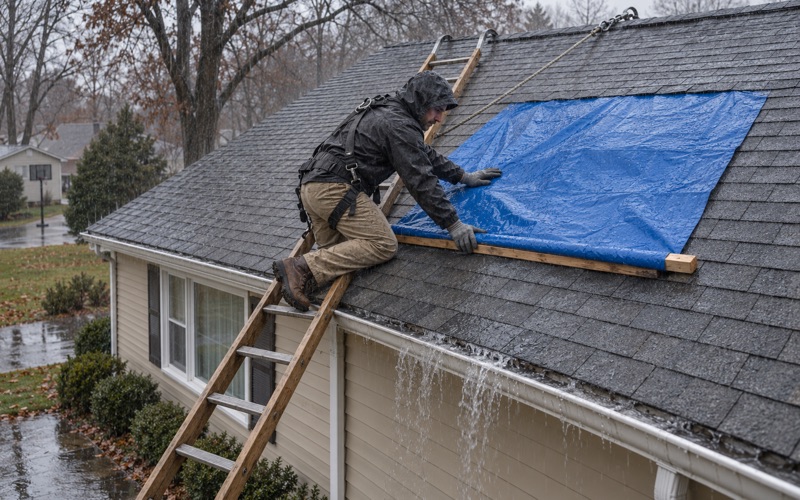
If a storm lifts shingles or tears off a ridge cap, we photograph the damage and write it up so you have a clear record for your own claim. When you ask, our crew will meet the insurance adjuster on site to walk the roof together. The claim itself stays yours, and the write-up is there to help you make it.
- 20+ Years on Roofs
- Itemized Written Scopes
- Attic-First Leak Checks