
East Brunswick provides emergency roof repair in East Brunswick, NJ, serving surrounding cities including East Hanover, Highland Park, South Amboy, Metuchen and Aberdeen. When a windstorm peels back shingles, a limb punches through the deck or water starts pouring through a ceiling, the first job is stopping the water. In more than 20 years of roofing, we have learned that a fast, well-secured tarp prevents far more damage than a rushed repair done in the rain.
An emergency visit has a narrow goal: make the house watertight and safe until a permanent repair can be done properly. We secure the opening, photograph the damage before covering it and check the attic for water that has already spread. The lasting fix is priced afterward, in daylight and in writing.
That separation protects you. Decisions made at night under pressure tend to be expensive, and a clear written estimate on a calm day lets you compare options and involve your insurer if the storm caused the damage.
What Counts as a Roofing Emergency
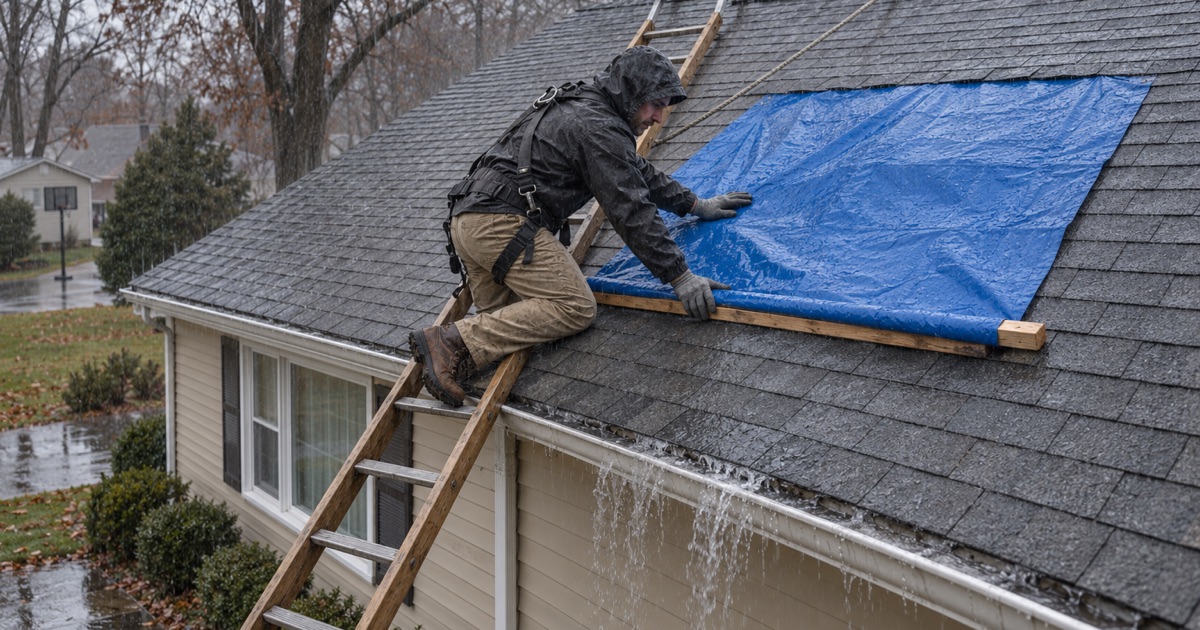
Open Decking After Wind or Falling Limbs
When wind tears away shingles and underlayment, or a limb breaks through, the deck is exposed to rain. Water then soaks sheathing, insulation and ceilings quickly. These openings need covering as soon as it is safe to get on the roof.
If a tree or large limb is still on the roof, it must come off before the roof can be covered. We coordinate with tree crews where needed, especially when limbs are tangled with power lines that only the utility should handle.
Active Leaks Through Ceilings
Water dripping through a light fixture or a sagging ceiling needs attention right away. Even when the roof looks intact from the ground, a failed flashing or boot can let in a large volume of water during a heavy storm. We locate the entry from the attic and cover it temporarily.
Inside, a ceiling holding water is a safety risk. Draining it into a bucket through a small hole is safer than letting it give way, and keeping power off to nearby fixtures avoids electrical hazards.
Ice Dam Leaks in Winter
Ice dams can force meltwater under shingles at the eaves, sending water down inside exterior walls. When that happens during a thaw, the immediate step is opening channels through the ice so water can drain. Chipping at ice with hammers or shovels damages shingles, so we avoid it.
After the emergency, we look at attic insulation and ventilation, which are the root causes of ice dams. Fixing those prevents the same leak from returning every winter.
Flat Roof Failures
Low-slope roofs can fail suddenly when a seam opens, a drain clogs during a downpour or wind lifts the membrane edge. Ponding water then finds its way inside fast. Emergency work focuses on clearing drains and sealing open seams or edges temporarily.
On commercial buildings, we coordinate with the owner or manager to protect tenants and inventory below. The permanent membrane repair follows once the surface is dry.
How an Emergency Visit Works
Safety First
Nobody goes on a roof during lightning, high wind or ice. When conditions are too dangerous, we advise on protecting the inside of the house and get on the roof as soon as it is safe. OSHA requires fall protection for roofing work at six feet, and storm conditions make that protection even more important.
Photographing Before Covering
Before any tarp goes on, the damage is photographed from several angles. Those photos show the condition of the roof immediately after the storm, which helps your insurance claim. Once a tarp is in place, that evidence is hidden until the permanent repair begins.
We also note the inside damage we see in the attic. Wet insulation, soaked sheathing and water paths are recorded so the full extent of the problem is clear.
Tarping That Holds
A tarp that blows off in the next storm is worse than none. We use heavy tarps extended over the ridge where possible and fastened with battens so wind cannot get under the edges. The tarp covers the full damaged area with generous overlap onto sound roof.
On smaller failures such as a lifted shingle or failed boot, a temporary patch may be enough. We choose the simplest measure that will reliably keep water out until the permanent repair.
Checking the Attic
Water rarely stays where it enters. During the emergency visit we check the attic for soaked insulation and wet sheathing that can lead to mold if left. Pulling out badly soaked insulation helps the area dry faster.
We also look at framing near the opening. A limb strike can crack a rafter or split decking well beyond the visible hole, and that damage has to be known before anyone stands on the area again. Anything structural is noted in the write-up so the permanent repair addresses it.
Gutters and Debris
Storms that damage roofs often bend gutters, tear leaders loose and pile debris along the eaves. A blocked or torn gutter can send water into the same wall the roof leak just soaked. During the emergency visit we clear debris that is trapping water and note gutter damage for the permanent estimate.
After the Emergency
A Written Repair Estimate
Once the house is protected, we write up the permanent repair with each item listed. That might be replacing a section of decking, rebuilding flashing or replacing shingles across a slope. If the roof is near the end of its life, we say so plainly and price both repair and replacement.
Working With Your Insurer
If a storm caused the damage, the photos and written description support your claim. When you ask, a member of the crew will meet the insurance adjuster on site. The claim remains yours to manage, since New Jersey allows only licensed public adjusters to negotiate claims for homeowners.
Keeping Receipts
Insurers usually ask for proof of temporary repairs. We provide a receipt for the emergency work along with the photos, which makes it easier to show you acted to prevent further damage. Keep these with your claim paperwork until it is settled.
- 20+ Years on Roofs
- Itemized Written Scopes
- Attic-First Leak Checks