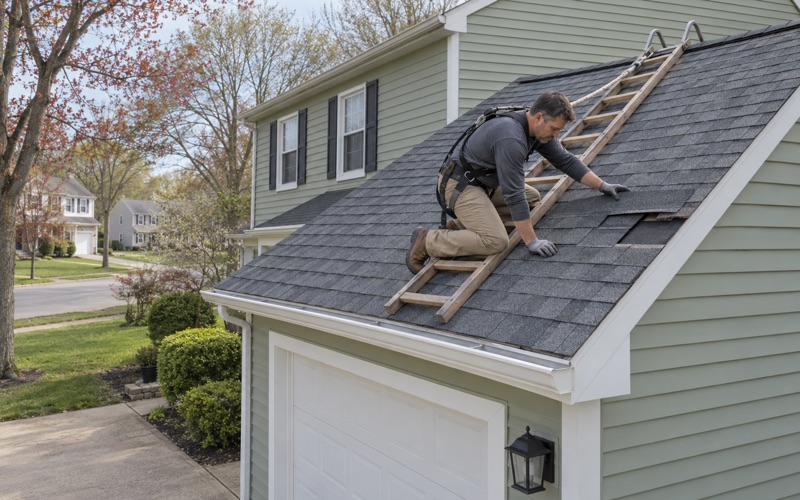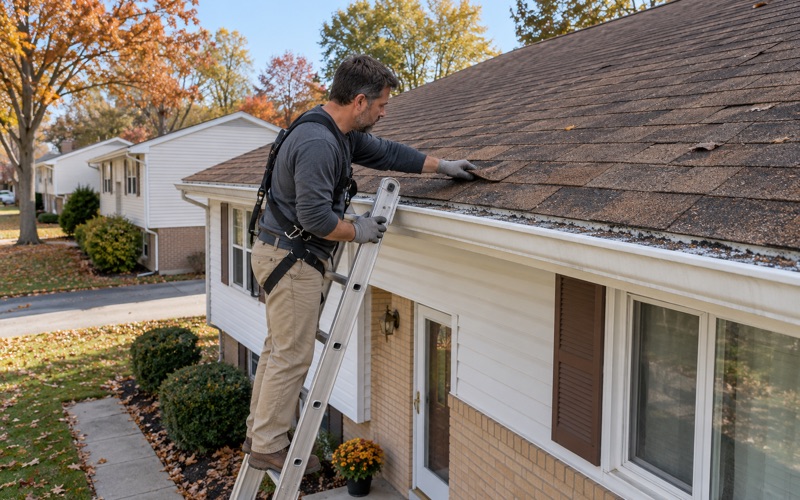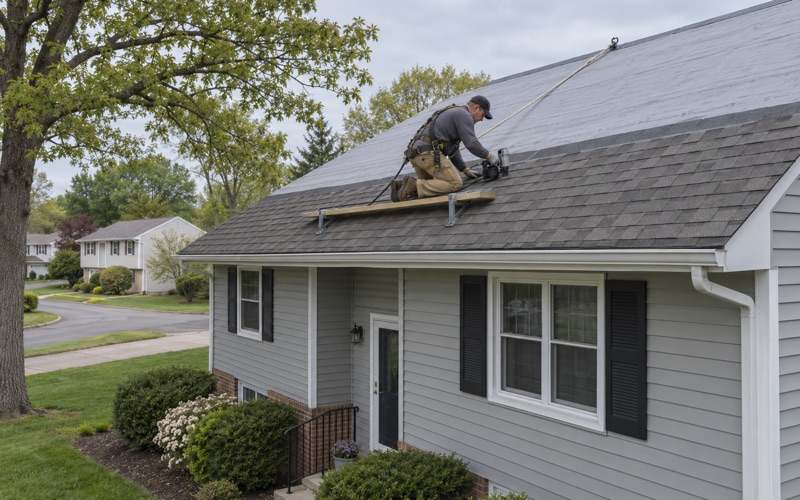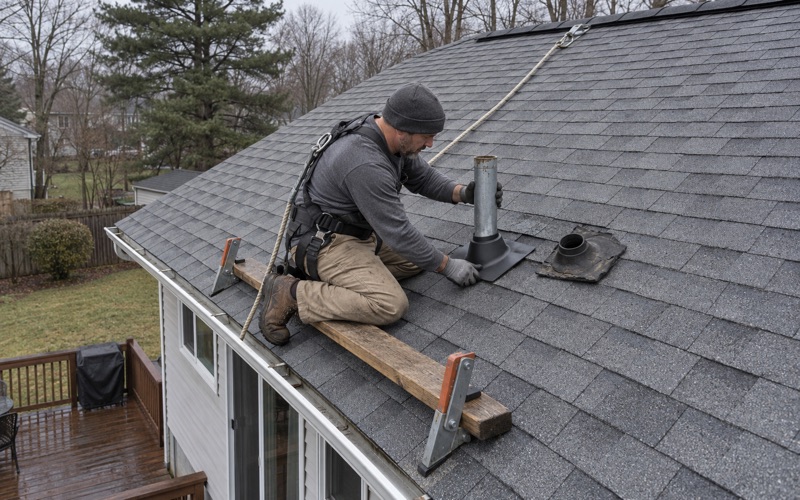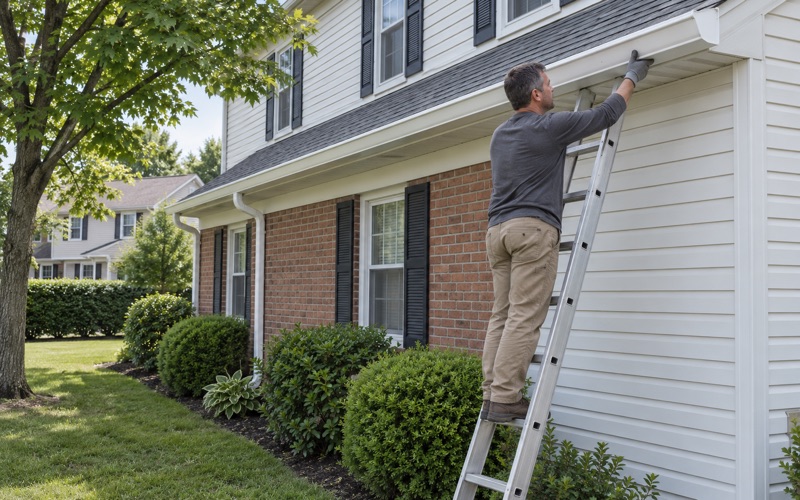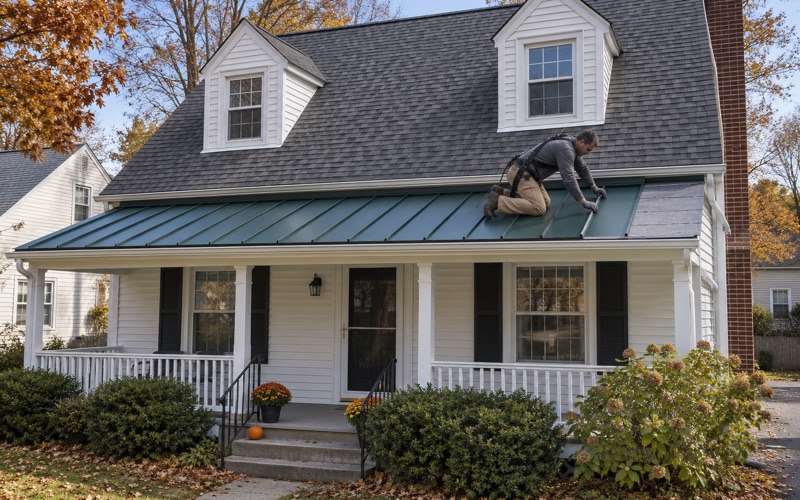
East Brunswick has handled roofing in Florham Park for more than 20 years, and the borough really asks for two different kinds of roofer. One works the detached houses and townhomes on residential streets, where a shingle roof wears out on a familiar schedule. The other works the low-slope roofs over offices and apartment buildings, where the covering is foam or membrane and most of the work is inspection and coating.
This page is about the second kind, because that is where Florham Park differs most from the towns around it. A commercial roof is not a bigger version of a house roof. It drains differently, fails differently and is kept alive by a different routine, and the paperwork around it follows its own path through the state construction code.
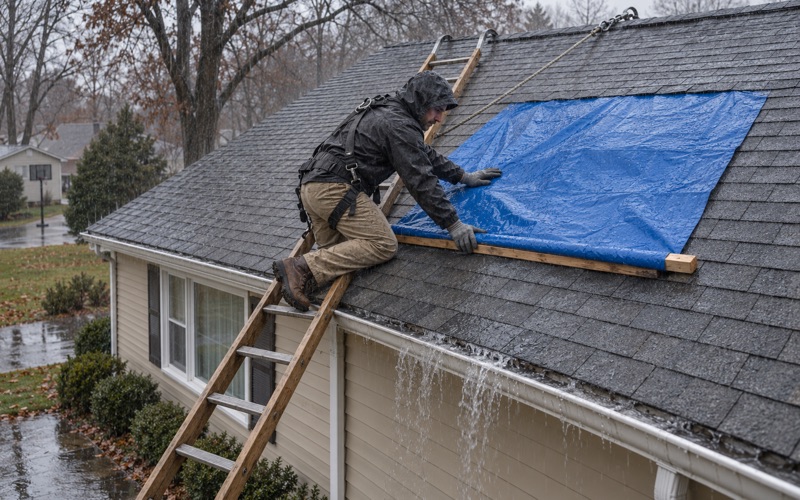
Whatever the roof, our first visit starts the same way. On a leak call we look at the underside of the deck as well as the surface, so the water is followed to where it actually enters before anyone talks about price. If a repair will hold, we say so plainly before a replacement is ever raised.
Office Roofs on Florham Park’s Corporate Land
The largest roofs in this Morris County borough are not on houses. They sit over office buildings on corporate land, and that land has a habit of changing hands and changing uses. Each change brings a roof that has to be understood on its own terms rather than treated like the one that came before it.
The Former ExxonMobil Research Campus
The Green at Florham Park is a 268-acre master-planned development built on the former ExxonMobil research center off Park Avenue. Its first office building was the BASF North American headquarters, and according to NJBIZ reporting at the dedication, the master plan for The Green carried another 550,000 square feet of office space beyond it.
For a roofer, that history matters less as a story than as a clue. A campus planned around large office floors produces wide, flat or nearly flat roofs with internal drains, parapet walls and rooftop equipment. Those roofs are walked, inspected and maintained on a schedule, and the questions an owner or property manager asks about them are not a homeowner’s questions.
What Changes on a Low-Slope Roof
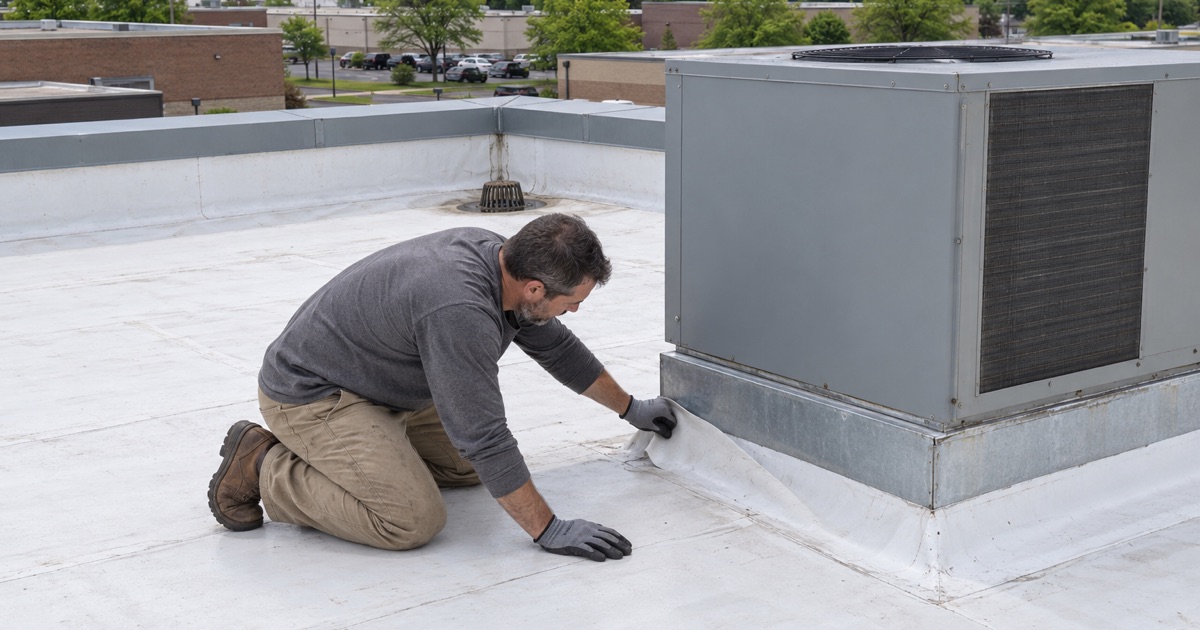
A shingle roof sheds water by gravity and overlap. A low-slope roof has to hold water out with a continuous surface, so every seam, penetration, drain and parapet edge becomes a point to check. Rooftop units, conduit runs and equipment curbs add more of them, and foot traffic from mechanical trades slowly wears paths across the surface.
That is why we treat a commercial leak call as a tracing job before a pricing job. Water on a low-slope roof can travel a long way under the covering before it shows on a ceiling tile, and the stain inside rarely sits under the actual opening. We find the entry point first, then write up what it takes to close it.
Looking for roofing closer to Bordentown Township? See Roofing in Bordentown Township.
BASF at The Green: A Sprayed-Foam Roof on a LEED Platinum Building
The building that set the tone at The Green is the BASF North American headquarters at 100 Park Avenue. It is worth describing here because it shows, in one well-documented example, the kind of roofing system that office land in Florham Park can carry.
What the Developer Lists
The Rockefeller Group, which developed the building, describes it as 325,000 square feet, completed during 2012, and the largest office building in New Jersey certified LEED Platinum by the US Green Building Council. BASF dedicated it on May 4, 2012. Among the features the developer lists are SPF roofing systems and a rooftop rainwater collection system feeding an onsite cistern.
NJBIZ reported at the opening that more than 100 products made by BASF or containing its chemicals went into the building, roof materials and paving among them. We have read nothing about that roof’s installer, age, area or condition, so we describe none of them. We have done no work there either; the building is simply the clearest local example of the system.
What SPF Means
SPF stands for spray polyurethane foam. It goes down as a liquid that expands and cures in place, forming a seamless layer over the deck with no laps or seams for water to find. Because it is sprayed, it can be built up thicker in low spots to help drainage, and it wraps around penetrations instead of being cut and flashed around them.
Foam on its own does not stand up to sunlight, so a finished SPF roof carries a protective coating over the top. The foam supplies the insulation and the waterproof body, while the coating shields the foam. Most of the long-term care of the system is really care of that coating layer.
A Roof That Also Collects Water
A rooftop rainwater collection system changes how a roof is looked after. When rain is gathered and stored for reuse rather than sent straight to storm drains, the drains, leaders and collection points become part of a building system. Maintenance on a roof like that is planned around its plumbing as well as its surface, and products applied up top are chosen with that use in mind.
Low-Slope Roofs: Foam, Membrane and Coatings
Not every office or apartment roof is foam. A low-slope roof can be sprayed foam, a single-ply membrane or a modified bitumen system, and the right upkeep depends on which one is up there. We identify the system before recommending anything, because the wrong repair material on the wrong roof can shorten its life.
Inspection and Recoating Instead of Tear-Off
A coated foam roof is usually kept up by inspection and recoating rather than by tearing it off. Over the years the coating weathers and thins, and a recoat restores the protective layer before the foam beneath it is exposed. Small damage, such as a puncture from a dropped tool, is cut out, filled with fresh foam and coated over.
The value of that approach depends on catching the coating before it wears through. Once sunlight reaches bare foam, the surface degrades and moisture can follow, and a simple recoat turns into a larger repair. A regular walk of the roof, with notes and photographs, is how an owner knows which of those situations they are in.
TPO, PVC, EPDM and Modified Bitumen
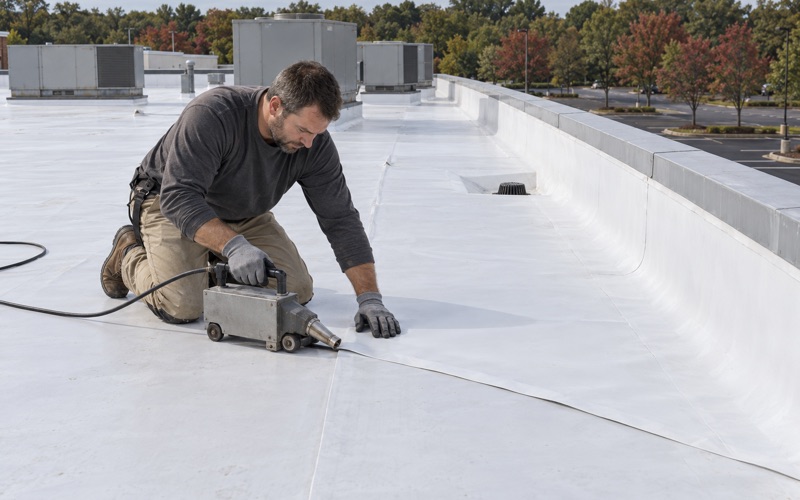
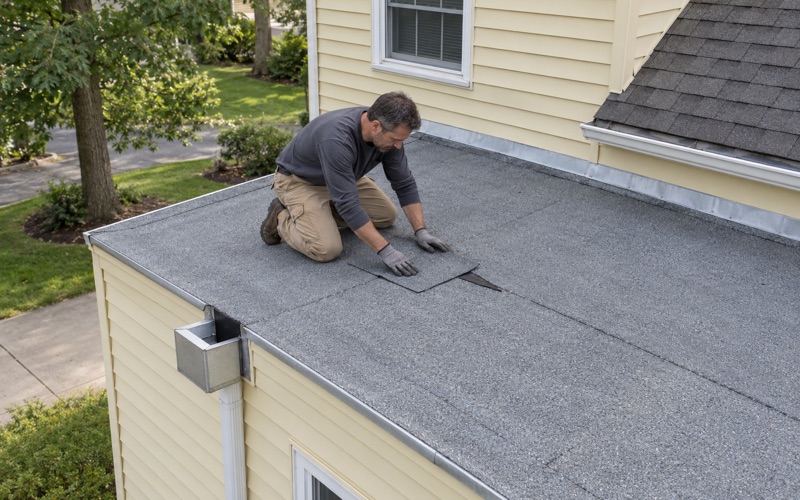
Single-ply membranes such as TPO, PVC and EPDM rubber come in large sheets joined at seams, either heat-welded or adhered depending on the material. Torch-down SBS and APP modified bitumen goes on in layers. Each has its own weak points, usually seams, flashings at curbs and walls, and the edges where the roof meets a parapet or the drip edge.
On these systems we check seam integrity, flashing height at walls and equipment, ponding near drains and the condition of pipe boots and pitch pockets. A membrane that has shrunk or pulled away from its terminations tells a different story from one with a single failed seam, and the written scope says which of those we found.
Written Scopes That Can Be Compared
Our estimates break the work into separate lines, so two proposals can sit side by side and be compared item by item. On a low-slope job that means removal, deck repair, insulation, the membrane or coating, flashings, edge metal and drainage each appear on their own. If decking proves damaged once the old roof is off, we photograph it and show the owner first, at a per-sheet price fixed in the contract.
From Office Building to Apartments, and Why These Re-Roofs Are Permit Work
Office land in Florham Park is not only being built on. Some of it has been turned into housing, and that shift changes who lives under the roof and which rules apply to working on it.
147 Columbia on Columbia Turnpike
On the site of a former office building at 147 Columbia Turnpike, Garden Communities built 147 Columbia, with 126 one- and two-bedroom apartments spread across two buildings. The first building was fully leased by July 2024. We have not read what kind of roof either building carries, and we do not guess at it.
What the project does show is the direction of travel. A site that once held a single commercial tenant now holds dozens of households, and a roof problem there is no longer an inconvenience for one business. It reaches every apartment beneath it, which is why multifamily owners tend to want a leak documented and closed quickly.
Commercial and Multifamily Re-Roofs Need a Permit
New Jersey treats roof work differently depending on the building. Replacing the roof covering on a detached one- or two-family house is ordinary maintenance under the state construction code. A re-roof on an office building, an apartment building or another commercial or multifamily property is permit work, and every estimate we write says plainly which side of that line the job falls on.
In Florham Park, that review runs through the Building and Code Enforcement department at 111 Ridgedale Avenue, Second Floor, open Monday through Friday. Applications are taken at the department window and by mail, and inspections are requested by email or through the SDL Portal. Building that review into the schedule keeps roof work on a busy property from stalling partway through.
What Owners Get From Us in Writing
Commercial owners and property managers usually need paper as much as they need a dry roof. When storm damage turns up, we photograph it and write it up for the owner’s own claim, and we will meet the insurance adjuster on site when asked. The claim itself stays the owner’s to manage.
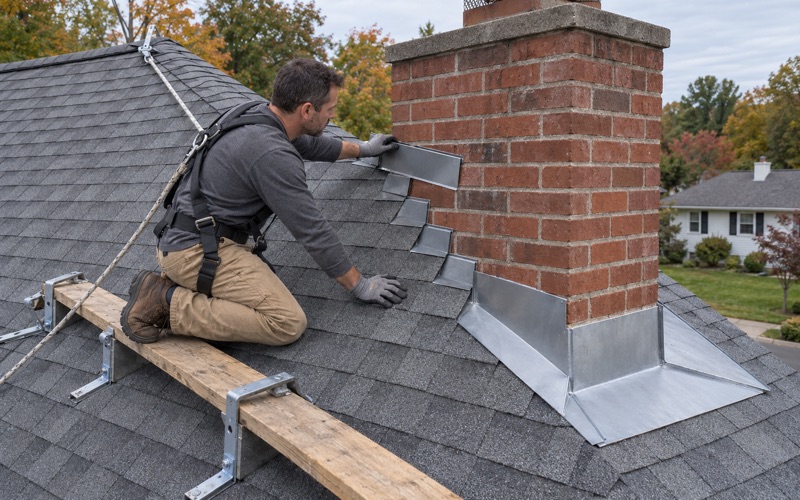
Flashing is replaced with the roof rather than reused under new material, whether it is counterflashing at a parapet wall or step and chimney flashing on a pitched section. The crew also cleans up at the end of every workday, including a magnet sweep for nails along drives and walks, which matters on a property where tenants come and go all day.
- 20+ Years on Roofs
- Itemized Written Scopes
- Attic-First Leak Checks