
East Brunswick handles gutter installation in East Brunswick, NJ, serving surrounding cities including East Hanover, Highland Park, South Amboy, Metuchen and Aberdeen. We treat gutters as part of the roof, not an accessory bolted on afterward. In more than 20 years of roofing, many of the leaks, rotted fascia boards and damp basements we have traced started with a gutter that was too small, pitched wrong or emptying beside the foundation.
Every gutter system we install is sized and pitched with the roof it serves. That means measuring the roof area draining to each run, counting where valleys concentrate water and placing leaders where they can carry it away. The goal is simple: water should leave the roof, travel the gutter and end up well away from the house.
We install seamless aluminum gutters formed on site to each eave, with drip edge set so runoff lands in the trough rather than behind it. Fascia that has rotted is replaced before new gutters go up, so the hangers have solid wood to hold.
Gutters for Houses and Commercial Buildings
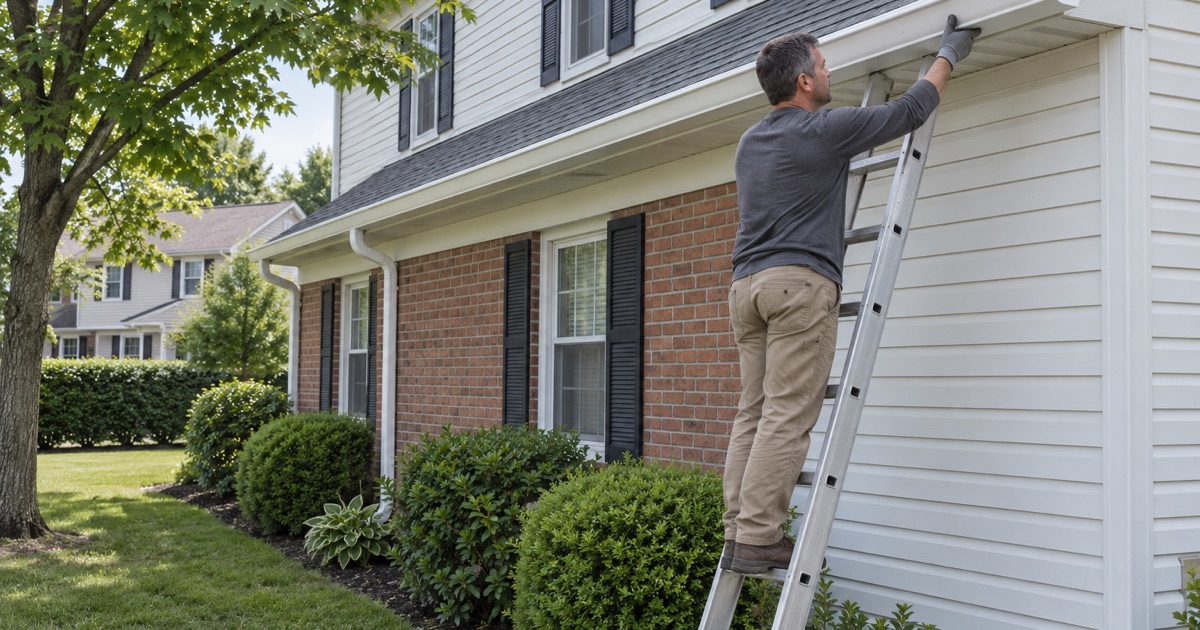
Residential Gutter Installation
Most homes here use K-style seamless aluminum gutters, which hold more water than half-round profiles of the same width and fit the look of most colonials, split-levels and ranches. We match color to trim or roofline so the gutters read as part of the house. Leaders are placed at corners and along long runs where water volume demands it.
On older houses, the fascia behind the gutter is often original painted wood. If the house was built before 1978, that paint may contain lead, and disturbing it falls under the EPA’s lead-safe renovation rule. We plan fascia work accordingly, which protects the yard, the family and the crew.
Commercial and Multifamily Gutters
Commercial buildings and apartment buildings carry more roof area per downspout, and low-slope roofs often drain through scuppers into collector boxes and leaders. Those systems have to be sized for heavy flow, because overflow there can damage storefronts, entrances and walkways. We size scuppers, boxes and leaders to the roof area they serve.
New Jersey’s maintenance code for multiple dwellings requires owners to keep roofs and leaders in good repair. A properly sized and maintained gutter system is part of meeting that requirement, and we document the installation for the owner or property manager.
Sizing, Pitch and Materials
Sizing Each Run to Its Roof
A gutter’s job depends on how much roof drains into it. A long, steep rear slope with a valley emptying into one corner sends far more water to that gutter than a short front porch roof. We measure each section and size gutters and leaders to the volume they will actually carry, rather than putting the same size everywhere.
Undersized gutters overflow during heavy downpours, spilling water down siding and into the soil at the foundation. Upsizing the gutter or the leaders on a problem run is often the cheapest fix for a wet basement corner.
Pitch That Actually Drains
A gutter needs a slight, consistent slope toward each outlet so water does not sit in the trough. Too little pitch leaves standing water that breeds mosquitoes and freezes in winter, while too much makes the gutter look crooked against the roofline. We set pitch with a line and level, not by eye.
Long runs are often pitched from the middle toward leaders at both ends. That keeps the gutter closer to the roof edge along its whole length and moves water off the roof faster.
Seamless Aluminum and Hangers
Seamless aluminum is light, does not rust and is formed on site to each eave, leaving joints only at corners and outlets. We fasten gutters with hidden hangers screwed into the fascia at close spacing, which resists sagging under ice and snow far better than old spike-and-ferrule fastening.
Corners and outlets are riveted and sealed, and end caps are secured so they do not work loose with temperature changes. These details are where older gutters usually fail first, so they get extra care.
Drip Edge and Fascia
Drip edge is a metal strip along the roof edge that directs water off the shingles and into the gutter. Without it, water curls back under the shingles and runs behind the gutter onto the fascia. We install or adjust drip edge with every gutter job so the two parts work together.
Where fascia boards have rotted, we replace them before installing new gutters. Fastening new gutters to soft wood guarantees they will pull away within a few winters, and the cost of replacing fascia is small compared to doing the job twice.
Leaders, Discharge and Guards
Leaders Sized for Heavy Rain
Leaders, also called downspouts, are often the bottleneck in a gutter system. A gutter can only empty as fast as its outlets allow, so we use oversized leaders on runs that collect a lot of water. Placing leaders where valleys concentrate flow keeps the gutter from overflowing at the corners.
Leaders are strapped securely to the wall and routed so they do not cross walkways or driveways where water could freeze. Elbows are kept to a minimum, since each bend slows the flow.
Moving Water Away From the Foundation
The point of a gutter is lost if the leader empties right beside the basement wall. We extend discharge with extensions or splash blocks so water flows away from the house. Where grading or space is tight, underground lines can carry water further across the lot.
We look at where the water will go before choosing an approach. Discharging onto a neighbor’s property or a walkway causes new problems, so the plan follows the natural slope of your lot.
Gutter Guards Under Heavy Trees
Homes under mature oaks, maples and pines fill gutters quickly, and clogged gutters overflow just like undersized ones. Gutter guards keep most leaves and twigs out of the trough. We recommend them where tree cover makes regular cleaning a real burden.
Guards still need occasional attention, since fine debris can build up on top. We install guards that can be removed for cleaning and explain what maintenance to expect, rather than promising a gutter that never needs looking at.
Gutters in Winter
Snow and ice put weight on gutters that summer rain never does. Close hanger spacing keeps the trough from bending under a frozen load, and correct pitch keeps meltwater from sitting and refreezing inside it. Where ice dams form at the eaves, the gutter is a symptom rather than the cause.
In those cases we look at attic insulation and ventilation along with the gutter, since heat escaping through the roof is what melts the snow in the first place. Fixing that cause protects both the gutter and the roof edge above it.
Gutters With Roofing Work
Installing Gutters With a New Roof
Replacing gutters during a roof replacement lets us set drip edge, ice barrier, fascia and gutter together so every piece fits. The old gutters come off before tear-off, fascia is repaired, and the new gutters go up once the roof edge is finished. That sequence avoids damaging new gutters during roofing.
When gutters are in good condition, we can remove and rehang them instead. Either way, gutters appear as their own line in the roofing scope so you can see the cost clearly.
Townhouses and Shared Gutter Lines
Townhouse rows often share long gutter runs across several units, with leaders between doors. Replacing one unit’s section means tying into the neighbors’ gutters cleanly. In many communities the association maintains gutters, so we check who is responsible before quoting.
Gutter Repairs and Adjustments
Not every gutter problem needs a new system. Sagging sections can be rehung, leaky corners resealed and pitch corrected. We tell you whether repair will solve the problem or whether the gutter is undersized for the roof, in which case replacement is the better value.
- 20+ Years on Roofs
- Itemized Written Scopes
- Attic-First Leak Checks