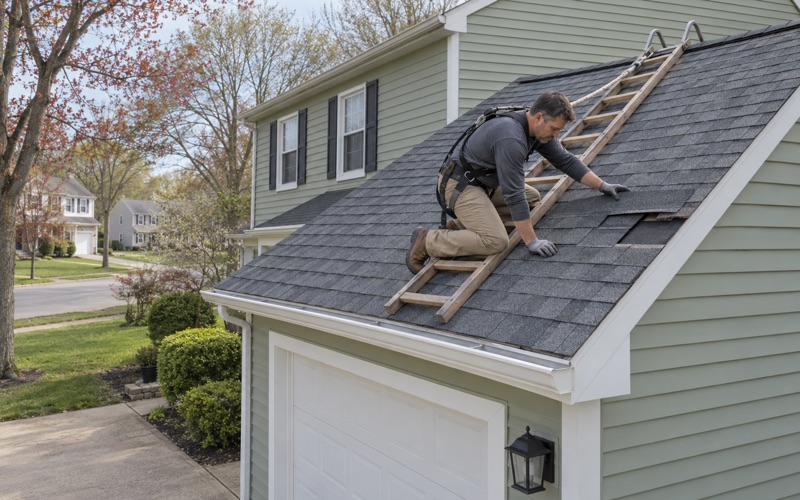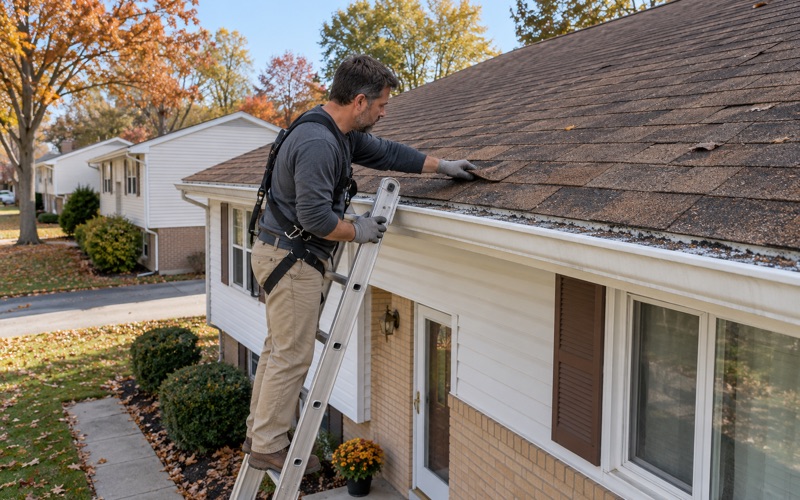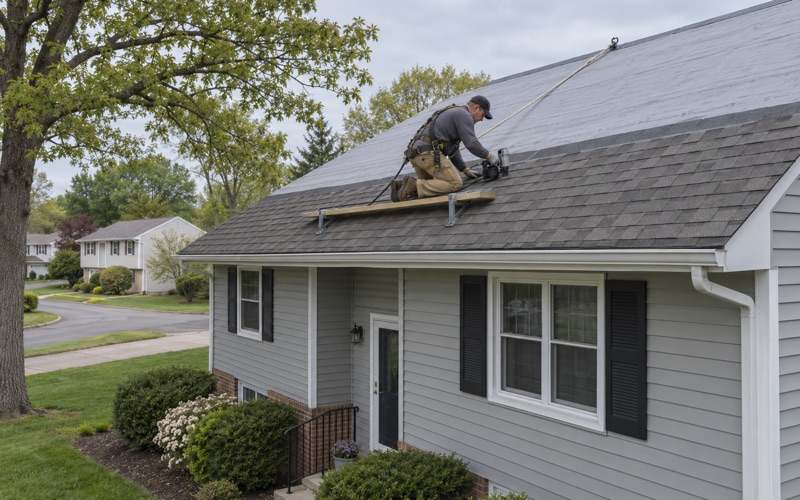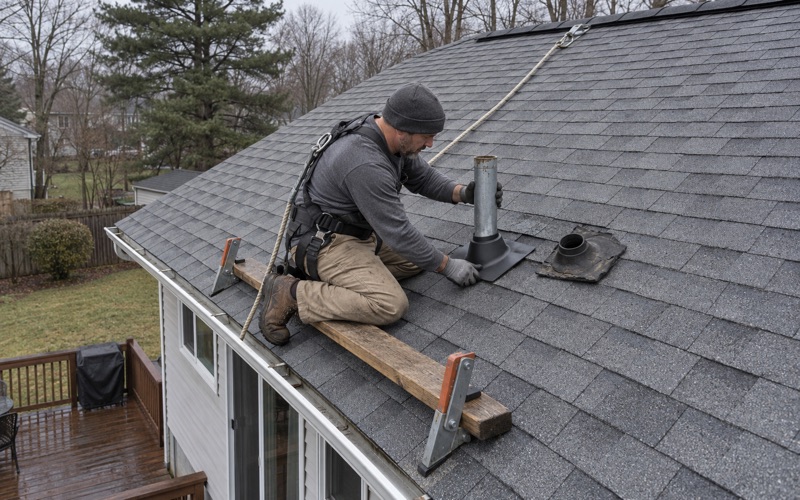
East Brunswick has handled roofing in Highland Park for more than 20 years, and on an older house the first question we answer is rarely about shingles. It is about the painted wood that frames the roof. Fascia, soffit, rake boards and porch trim often sit under decades of paint, and when a roof job has to remove or replace that wood, the nature of the work changes.
Federal lead rules treat that painted trim very differently from the roof covering itself. A tear-off that leaves the trim alone is ordinary roofing. A tear-off that also swaps rotted fascia along two long eaves can cross into renovation work under EPA’s Renovation, Repair and Painting rule, with containment, cleanup and record keeping attached. We tell you which side of that line your job falls on before you sign anything.
That answer goes into the written estimate as its own line, next to tear-off, decking, underlayment, flashing, ventilation and gutters. You see how much painted surface the plan disturbs, which lead-safe steps that triggers and what it adds to the price. A second estimate can then be compared on the same terms instead of on a single bottom-line number.
Older Houses and the EPA 20-Square-Foot Exterior Limit
How Old the Borough’s Housing Is
Highland Park covers 1.83 square miles on the north bank of the Raritan River in Middlesex County, and most of its houses were standing long before modern trim materials arrived. Census Bureau survey figures for 2024 date 4,033 of the borough’s 6,759 housing units to before 1970. Another way to read the same table: 1,854 units were built in 1939 or earlier.
The survey’s age brackets do not break at 1978, the year federal lead rules use as their cutoff, so there is no clean count of houses on either side of it. What the figures do show is that a large share of the borough’s roofs sit on houses built while lead-based exterior paint was still being sold and brushed onto trim.
Target Housing and What Only Testing Settles
Federal regulations define target housing as housing built before 1978. That date tells you a house may carry lead paint on its trim; it does not tell you that it does. Only testing settles whether a given fascia board, soffit panel or porch cornice holds lead, and several later coats can hide an original layer nobody has seen in decades.
When a house predates 1978 and nobody has tested the trim, we plan the edge work as though lead may be present. Planning that way costs far less than finding out halfway through a tear-off that the paint chips scattered across the lawn should have landed on plastic sheeting instead.
The Limit Counts the Whole Exterior
EPA’s rule exempts exterior minor repair and maintenance only when the work disturbs 20 square feet or less of painted surface and uses no prohibited practices. That limit is cumulative. EPA’s own answer on gutter installation says a job stays exempt only if, combined with other renovation work on the outside of the building, it disturbs no more than those 20 square feet.
On a roof job this matters because the trim is rarely the only thing being touched. Replacing a run of fascia, fastening new drip edge and rehanging gutters on the same painted boards all count toward one total. We add those areas together while the estimate is being written, not on the morning the old boards come down.
Looking for roofing closer to South Amboy? See South Amboy Roofing.
Fascia, Soffit, Rake Boards and Porch-Roof Trim
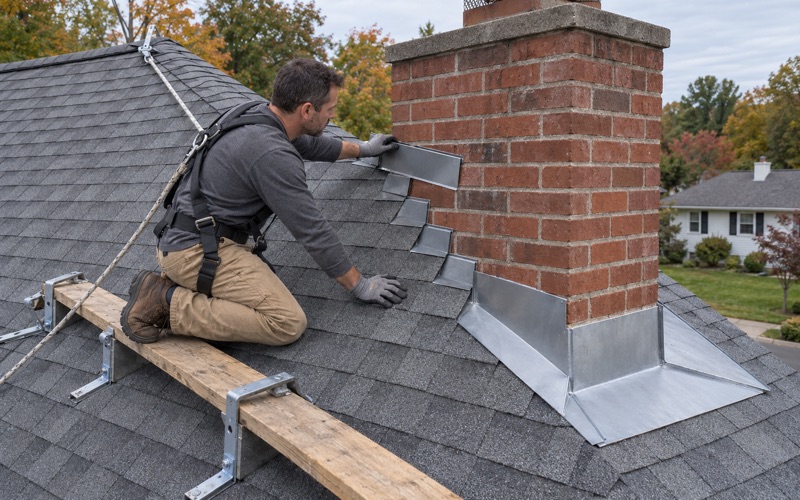
The shingles are not the issue here. Asphalt shingles, underlayment and roof decking are not painted surfaces, and stripping them is roofing work rather than disturbance of paint. The question is what happens at the edges, where the roof meets the painted wood that finishes the house and carries its gutters.
Fascia and Rake Boards
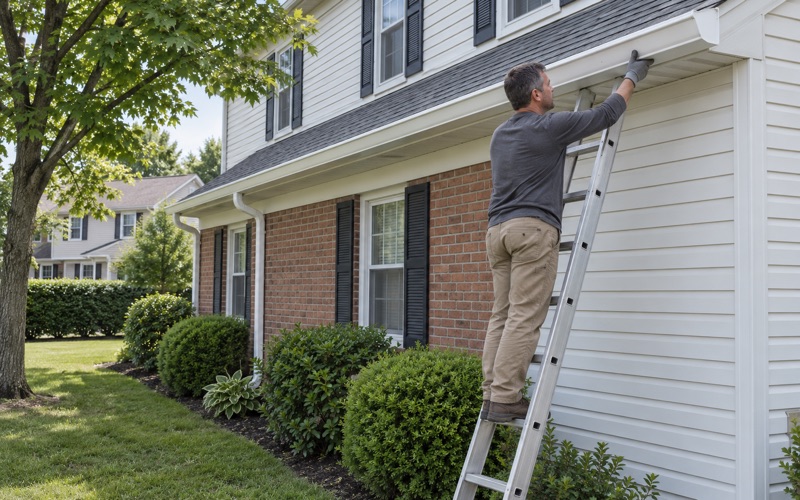
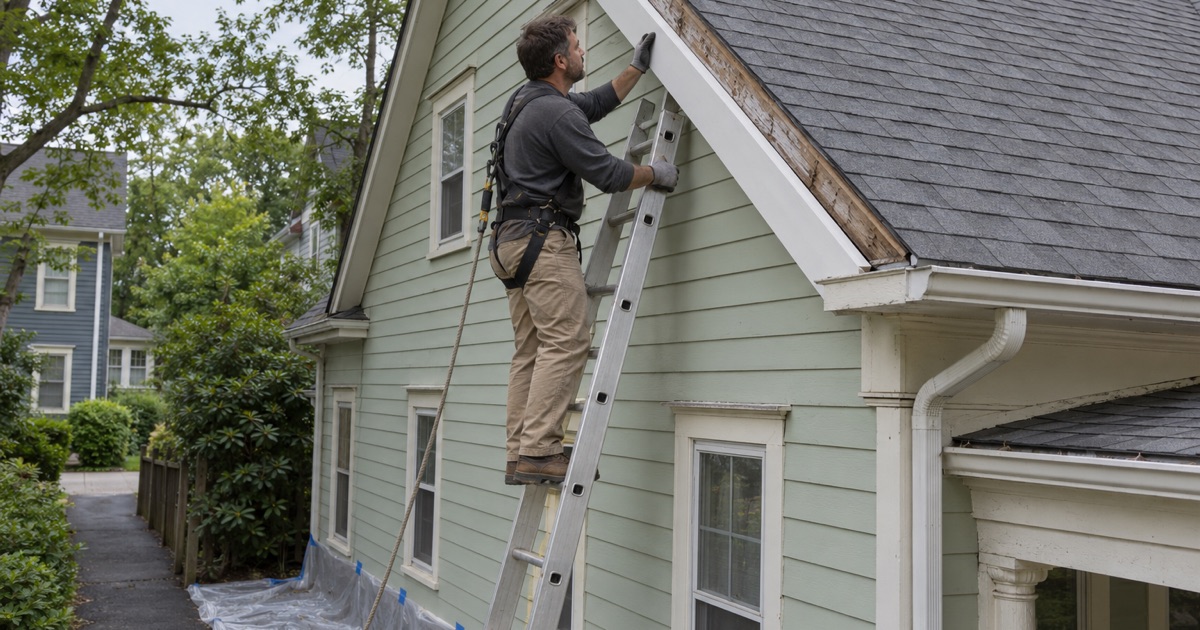
Fascia boards hold the gutters and take the water that overshoots a worn drip edge, so on an older house they are often the first wood to rot. Rake boards along the gable ends weather the same way. A soft section found during tear-off is photographed and shown to you, along with the painted area involved, before anything is cut out.
A few feet of rotted fascia may stay well under the limit. Replacing every eave board on a large house, plus both rakes, usually will not. We measure the painted surface that comes off and the surface that gets cut, drilled or scraped in place, and that combined total decides how the job is run.
Soffit Panels and Attic Intake
We check attic ventilation on every replacement, because a roof that cannot breathe ages from underneath. On older houses the fix often means cutting continuous intake vents into painted wood soffits so a ridge vent has air to draw from. That cutting disturbs paint, so it goes into the painted-surface total with the rest of the trim work.
Skipping the intake to stay under the limit would trade a cleaner job for a shorter roof life. We would rather show you both numbers, the ventilation the attic needs and the lead-safe work it brings, and let you decide with the full picture in front of you.
Porch Roofs and Their Trim
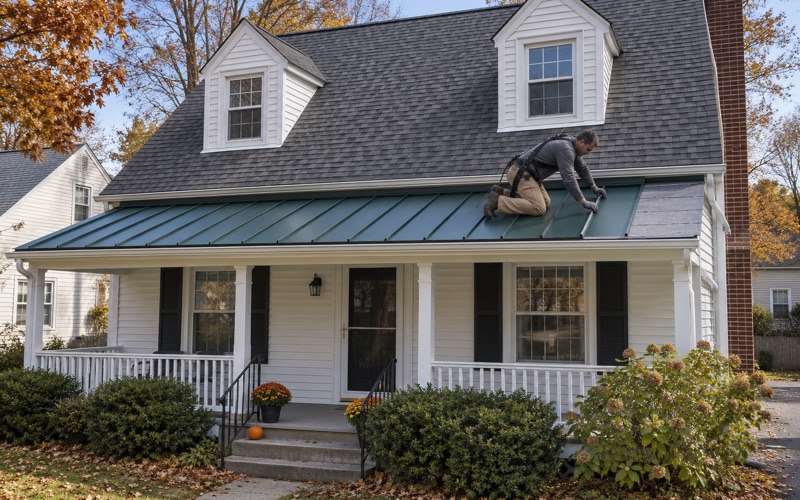
Many older houses in Highland Park carry a porch roof, and porch roofs tend to age faster than the main roof because they sit at a low slope and catch runoff from above. The porch roof covering can be replaced without touching paint. The ceiling boards, cornice and boxed trim around it are another matter.
When the porch trim is sound, we leave it in place and flash the new porch roof to it carefully. When it is rotted, we price its replacement as lead-safe work from the start, so the porch is not opened under one plan and finished under another once the extent of the damage shows up.
Containment, Cleanup and Records on an RRP Roof Job
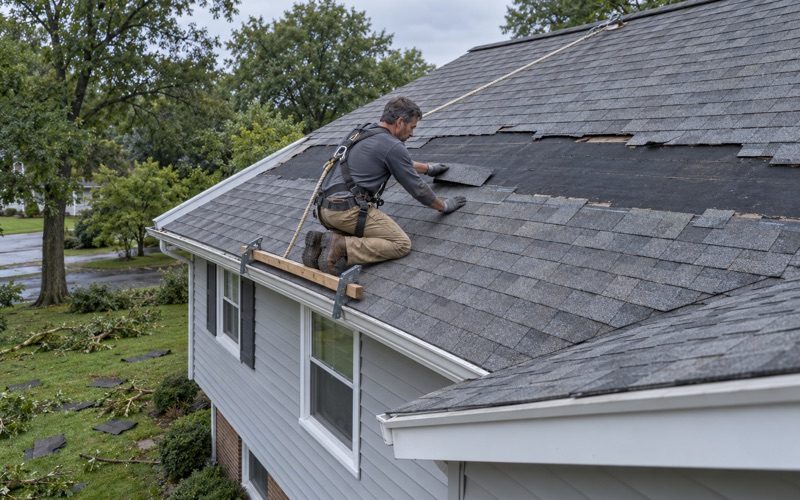
Once the painted surface involved passes 20 square feet, the trim work is renovation under the RRP rule rather than minor maintenance. That changes how the work area is set up, how debris leaves the property and what paperwork exists when the crew drives away. The roof itself is still torn off and installed the usual way; the edges get the extra care.
Setting Up the Work Area
Exterior lead-safe work starts with plastic sheeting on the ground beneath the trim being removed, run out from the wall and weighted down, with the area marked off so children and pets stay clear. Nearby windows and doors are kept shut. The rule also bars prohibited practices such as open-flame burning of paint and uncontrolled power sanding.
Trim that can come off whole comes off whole. Cutting fascia into short pieces in place, or scraping old paint so a board can be reused, spreads fine dust that the sheeting then has to catch. Removed boards are wrapped before they travel to the dumpster rather than dropped loose from the eaves.
Cleanup at the End of Every Day
Our crews clean the driveway, yard and gutters at the end of each work day and run a magnet sweep for roofing nails on every job. On a lead-safe job the daily cleanup goes further. Debris on the sheeting is misted, folded inward and bagged, and the sheeting is reset before work resumes the next morning.
That routine keeps paint chips from sitting in the grass overnight, where a mower or a dog can scatter them across the yard. It also means the property looks finished each evening, which matters when the trim work runs a day or two past the roof itself.
Records You Keep
Before renovation work begins, the owner receives EPA’s Renovate Right pamphlet, and the job leaves a paper trail worth keeping on an older house. Our estimate and closing notes list which trim was disturbed, how much painted surface was involved and which work practices applied, so nothing depends on anyone’s memory later.
If you sell the house down the road, those notes sit well beside the written roof condition report we prepare for sellers to hand to a buyer’s inspector. Together they answer the two questions a buyer asks about an older roof edge: what was replaced, and how it was handled.
Rental Units and the Borough’s Lead-Paint Inspections
Ordinance 22-2065 and Its Schedule
Since December 20, 2022, Ordinance 22-2065 has required Highland Park to inspect rental units for lead-based paint hazards every three years or at tenant turnover, whichever comes first. The ordinance sits in Chapter 303 of the borough code and follows a state law directing municipalities to inspect rental dwellings for lead hazards.
That inspection concerns lead hazards in the rental unit, and we do not describe it as a roof inspection. Nothing in it makes the roofer part of the process. What it does mean is that anyone who owns rental property in the borough already deals with lead paint on a fixed schedule and will recognize the care the trim work calls for.
Timing Trim Work on a Rented House
Where an owner plans a re-roof and trim replacement on a rented house, we schedule the trim days with tenant access in mind and keep the marked-off area closed while it is open. The sheeting stays down until cleanup is finished, whatever else the calendar holds that week.
We also note in the scope which trim was replaced and how, so the owner has a written account of the exterior work. How that paperwork fits the owner’s own lead records is the owner’s call; our part is making sure the account is complete and accurate.
Repairs First, and Permits Stated Plainly
A leak call starts with a look in the attic as well as on the roof, so the water is traced to where it actually gets in. You hear whether the roof can be repaired before replacement is ever raised, and on an older house a repair that leaves the trim alone avoids the lead-safe question entirely.
Every estimate also says plainly whether the job is permit work under the state construction code. Replacing the roof covering on a detached one- or two-family house is ordinary maintenance in New Jersey and needs no permit. Work outside that goes to the Highland Park Building & Construction Division, and our contracts follow the state’s home improvement rules, including the three-day cancellation notice.
- 20+ Years on Roofs
- Itemized Written Scopes
- Attic-First Leak Checks