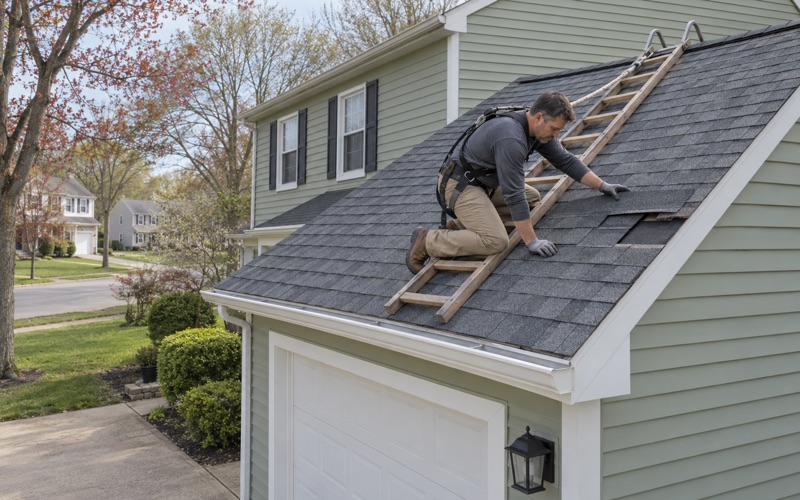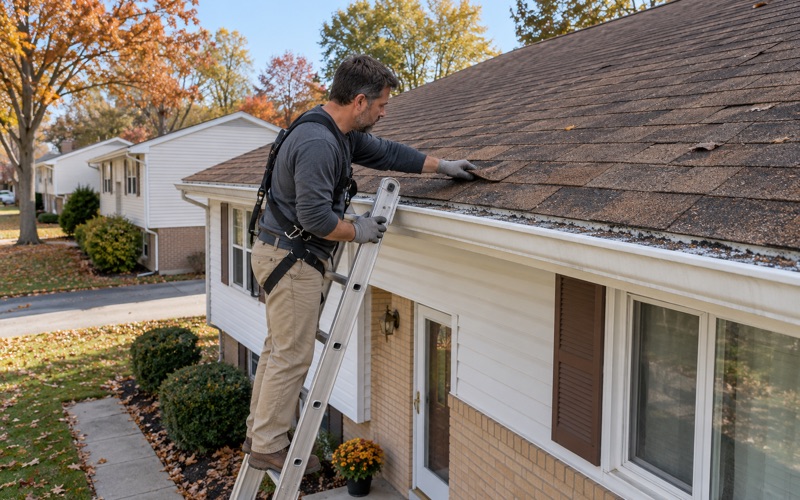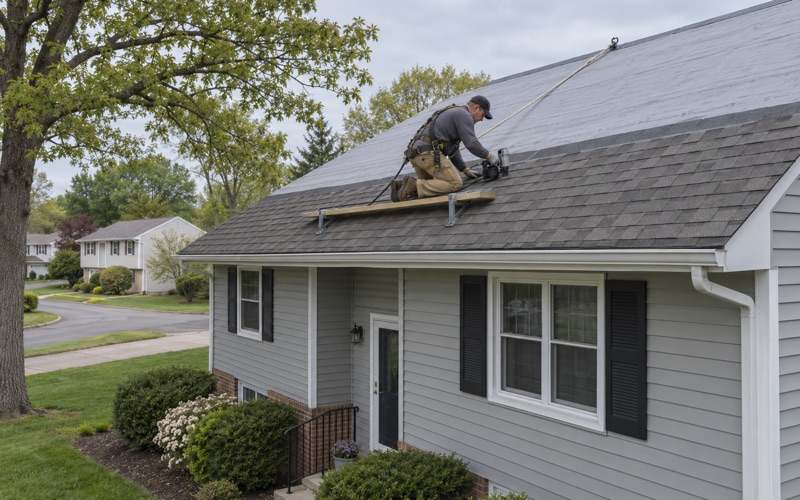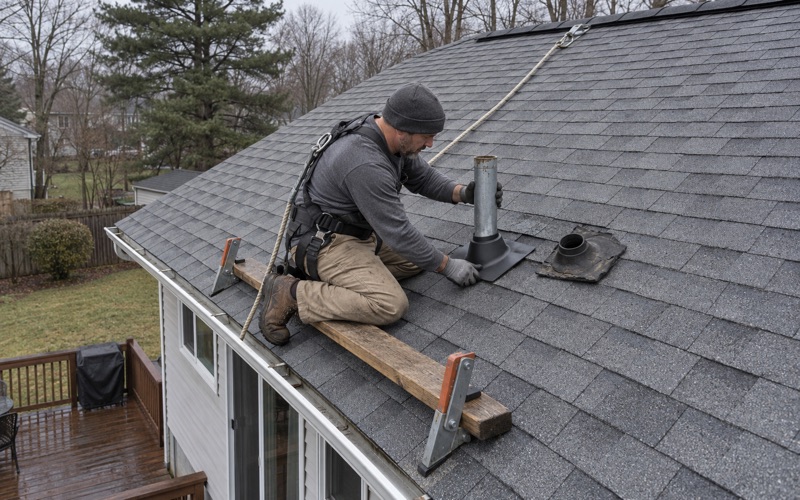
East Brunswick has been doing roofing in Hopewell Township and across central New Jersey for more than 20 years, and the question we hear most often here is a simple one: patch it again, or replace it? We answer that plainly, and we answer the repair question first. Sometimes the honest finding is a handful of new shingles and a fresh pipe boot, and that is what we quote.
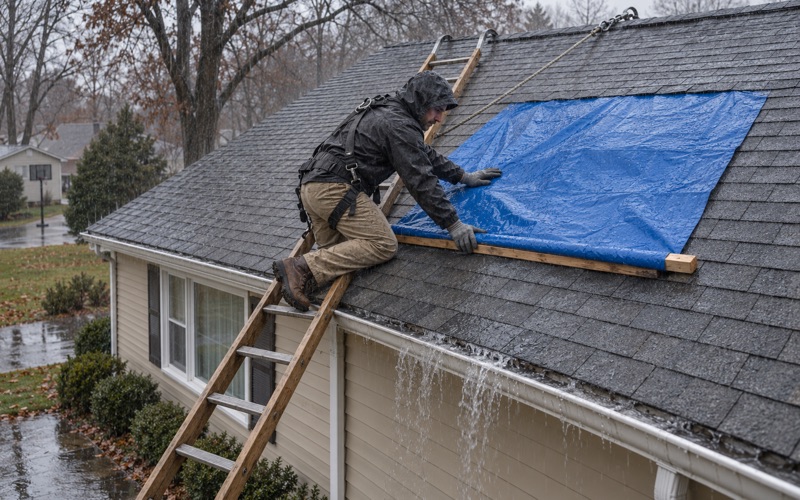
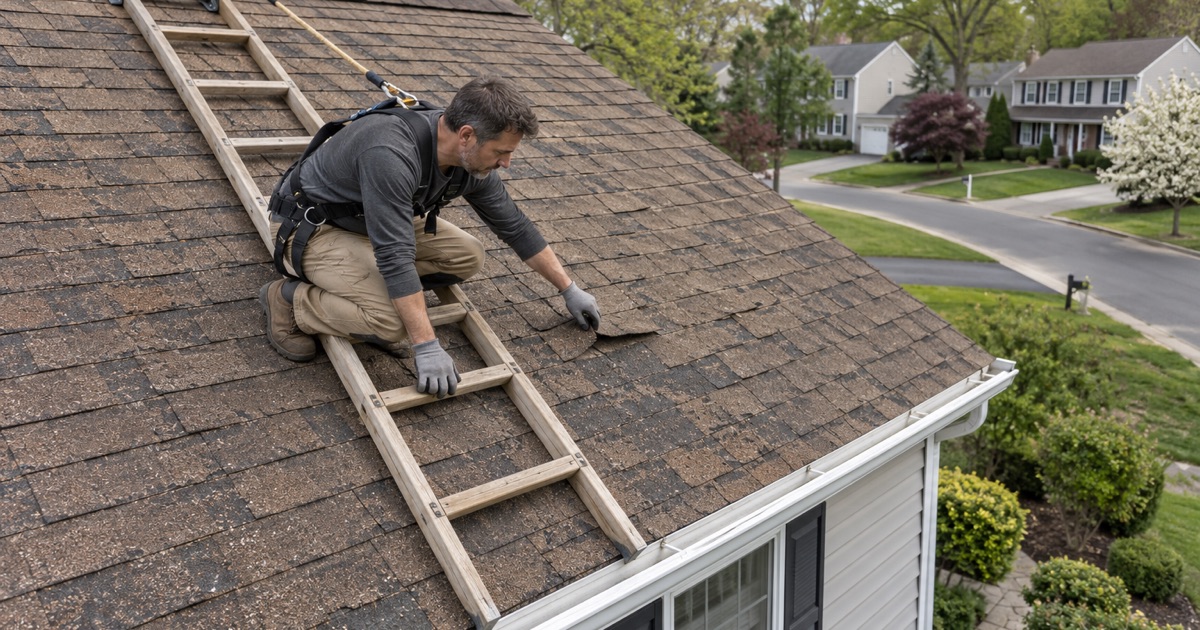
Every leak call gets two looks, one on the roof and one in the attic, because water rarely shows up on a ceiling directly below where it got in. Following the stain back to the real entry point keeps the repair aimed at the cause instead of the symptom. It also tells us whether the decking and rafters around it have stayed wet long enough to matter.
When a roof has genuinely run its course, our written scope breaks the job into separate lines for tear-off, decking, underlayment, flashing, ventilation and gutters. That lets an owner lay our estimate beside anyone else’s and compare it line against line. The rest of this page walks through how we judge an aging roof, using a decision a whole school district just made in public.
Hopewell Valley’s 2025 Vote to Re-Roof Its Schools
What the referendum approved
On November 4, 2025, voters in the Hopewell Valley Regional School District approved Question 1, about $58.4 million for critical infrastructure repairs across every existing school, with roofing and HVAC systems named among the work. The unofficial Mercer County count was 5,917 to 4,145. A second question, about $25.8 million for additions at Bear Tavern and Toll Gate, also passed, 5,410 to 4,611.
This was a regional vote rather than a single-town decision. The district serves Hopewell Township, Hopewell Borough and Pennington, and residents of all three cast ballots. A broader version had failed in 2024, so the 2025 questions were a second attempt at funding the same aging buildings. Reports of the state aid differ, one giving $19.9 million and another $20.2 million, so neither number should be treated as final.
The schedule the district laid out
The first round of roof replacements was planned for Hopewell Valley Central High School, Timberlane Middle School and Stony Brook Elementary, with an estimated finish of summer 2026. Bear Tavern, Hopewell Elementary and Toll Gate were placed in a later round set for 2027. The project architect called the timeline preliminary, so those dates describe a plan rather than a promise.
Our company has no role in that work, and we do not know which roof systems the district selected. What matters to us as roofers is the reasoning the district gave voters. It is the same reasoning a homeowner in Titusville or anywhere else in the valley runs through on a smaller roof, with a smaller budget and nobody holding a public hearing about it.
Looking for roofing closer to Verona? See Roofing in Verona.
Roofs at the End of Their Useful Life
What the district told voters
Superintendent Rosetta Treece said the roofs proposed for replacement were “at the end of their useful life.” The district had been patching them, she explained, but the patches were “no longer a viable solution” and were “causing damage inside the buildings.” A district official put the roofs at 20 to 25 years old, and she noted they had not been covered by the last approved referendum.
The coverage gave one concrete example. A leak at the Bear Tavern media center needed frequent patches, the kind of recurring repair that keeps a room usable while the larger problem goes on underneath it. Any facilities manager or homeowner who has called someone back to the same ceiling stain three times will recognize the pattern.
Why patching eventually stops working
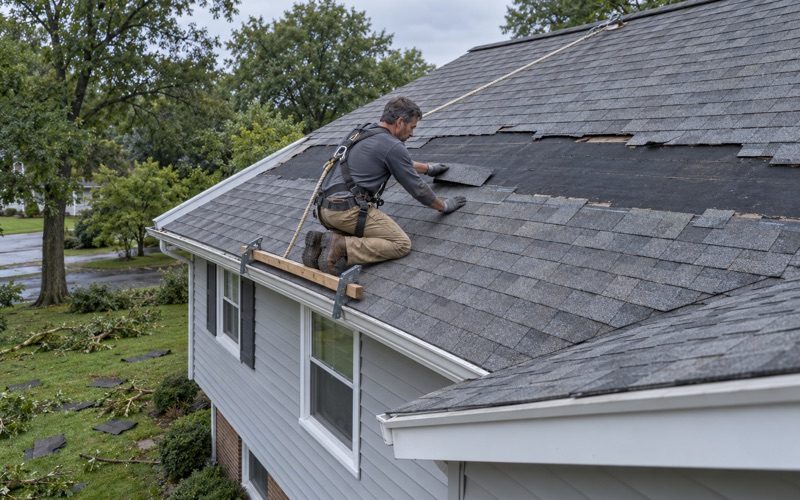
A patch works when the rest of the roof is sound and the failure is local, such as a lifted shingle, a cracked pipe boot or a gap in step flashing. Once the covering is aging everywhere at once, each repair seals one spot while water finds the next weak seam. The roof is no longer failing at a point; it is failing as a surface.
The damage the superintendent described is the expensive part. Water that gets past a tired roof soaks insulation, stains drywall, swells sheathing and can rot the top edge of the rafters before it ever drips into a room. By the time a ceiling shows it, the wet area inside is usually larger than the stain, which is exactly why we check the attic on every leak.
Weighing the same choice on a house
Twenty to 25 years is also the stretch where many Hopewell Township homeowners start weighing patching against replacement. That age alone settles nothing. Plenty of roofs that old still have years left, and some younger ones are done early because of poor ventilation or a bad original install, so we judge the roof in front of us rather than the year on an old receipt.
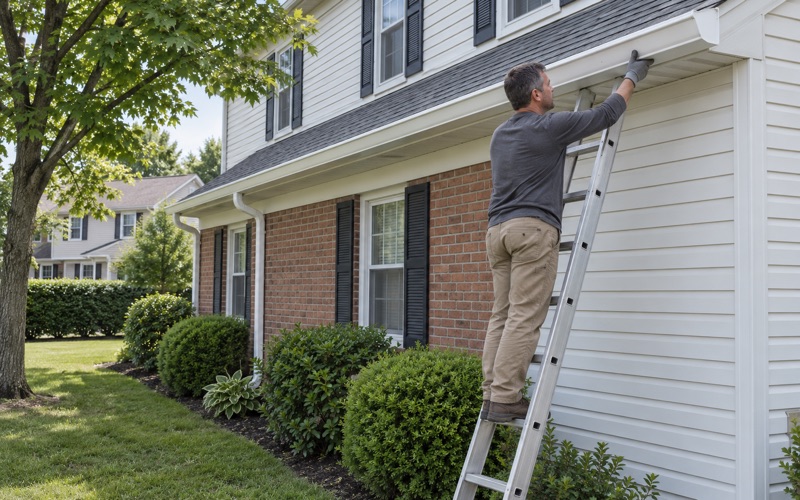
What we look at is concrete: granule loss in the gutters, curling or cracked tabs, brittle seal strips, worn flashing and how many separate leaks the roof has produced. From the attic we check for daylight, damp sheathing and old water lines. If one repair will buy real years, we say so; if the roof is behaving like the district’s, we say that instead.
What replacement includes
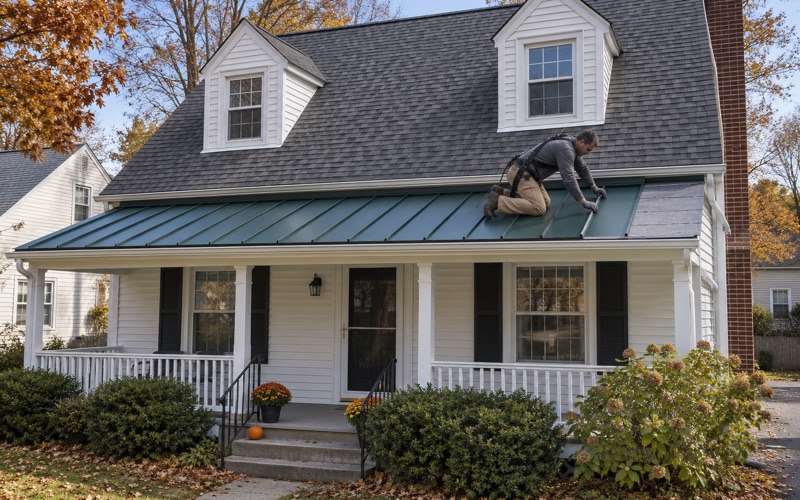
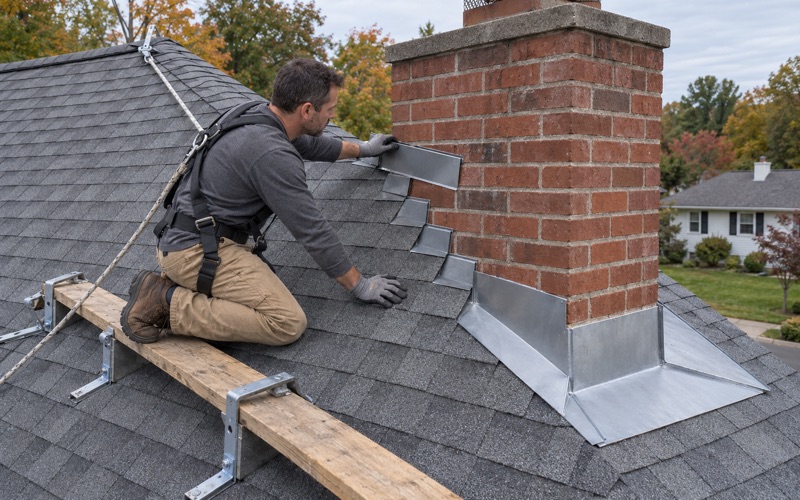
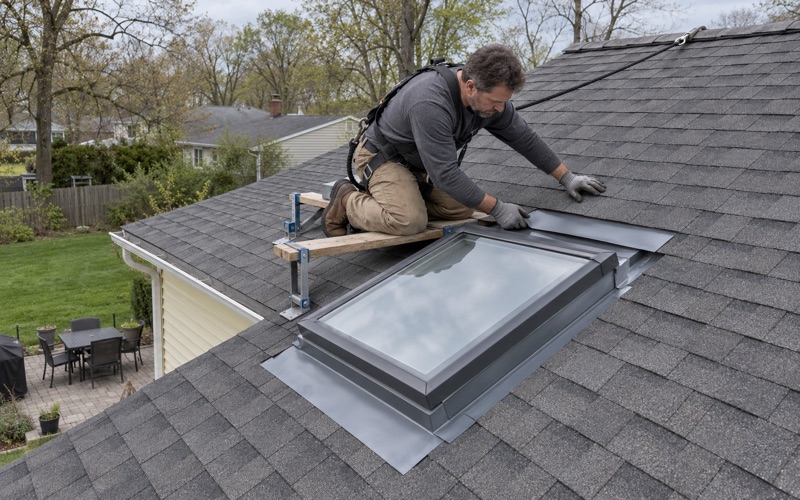
When replacement is the answer, flashing comes off with the old roof. Step, counter and chimney flashing are replaced rather than bent back into place under new shingles, because reused metal is a common source of the next leak. Drip edge goes on at the eaves and rakes, and a chimney cricket is added where the chimney width calls for one.
Decking problems only show once the tear-off is done. Any damaged sheets we find are photographed and shown to the owner before they are replaced, at a per-sheet price already written into the contract. Nobody gets a surprise invoice for wood they never saw, and the owner decides with the evidence in hand.
When a Roof Warranty Runs Out
The district’s deadline
Warranties were part of the district’s case. One district piece said the roofing areas set for replacement had warranty expiration years of 2026 or earlier, and an official said what remained of those warranties would cover only a fraction of the cost. A roof near the end of its life and near the end of its coverage is a roof whose repair bills land entirely on the owner.
Houses follow the same arithmetic. As a residential warranty ages, manufacturer coverage is often prorated, so it pays a shrinking share of material cost, while the installer’s workmanship promise is separate and frequently shorter. Reading both documents before deciding between another patch and a new roof shows who would actually pay if the next leak turns out to be a failure rather than wear.
Coverage on a new roof
Enhanced manufacturer warranties, such as the lifetime programs from GAF and Owens Corning, carry eligibility rules, including single-family detached and owner-occupied requirements. Products like GAF Timberline HDZ, Owens Corning Duration and CertainTeed Landmark each come with their own registration steps. We explain which coverage a given job qualifies for in writing, before the contract is signed.
Most of those warranties also assume the roof was installed with the underlayment, flashing and ventilation the manufacturer specifies. That is why our scopes list those items separately, so the owner can see each requirement accounted for. A warranty that depends on details nobody wrote down is a weak warranty, whatever the brochure says.
Ventilation and how long a roof lasts
We check attic ventilation on every replacement, because a roof that cannot breathe ages from underneath. Trapped summer heat bakes shingles from below, and trapped winter moisture condenses on the sheathing. Balancing ridge vent exhaust against soffit intake by net free area is one of the cheapest ways to help a new roof reach the age the district’s roofs did.
Roof Repair and Replacement in Hopewell Township
Storm damage and the insurance claim
After wind or hail, we photograph the damage and write it up so the owner has documentation for their own claim. If asked, our crew will meet the insurance adjuster on site and point out what we found. New Jersey’s Public Adjusters’ Licensing Act keeps contractors from negotiating a claim, so the claim stays between the owner and the insurer, and we stick to describing the roof.
Contracts, sales tax and permits
Our contracts follow New Jersey’s home improvement rules, including the three-day cancellation notice, and we carry the state’s home improvement contractor registration. Quotes show sales tax the way the state treats each job: taxable on a repair, exempt on a new roof with Form ST-8. Every estimate also states plainly whether the work is permit work under the state construction code.
Sales, associations and solar
Owners preparing to sell can get a written roof condition report to hand to the buyer’s inspector, which often settles questions before they turn into renegotiation. In townhouse and condominium communities, we check the association’s documents to confirm who holds the roof before writing any estimate. Roofs under solar panels are scheduled with panel removal and reinstallation built into the plan.
Gutters and the end of each day
Gutters and leaders are sized and pitched together with the roof, so water leaves the house rather than collecting at the foundation. Seamless aluminum gutters are the usual choice when the old ones are worn out. At the close of every work day, the driveway, yard and gutters are cleaned, and a magnet sweep picks up stray roofing nails before anyone walks or drives across them.
- 20+ Years on Roofs
- Itemized Written Scopes
- Attic-First Leak Checks