East Brunswick has spent more than 20 years on roofing in Madison and across this part of New Jersey, and on a house inside one of the borough’s historic districts the job starts somewhere other than the roof. Before a single shingle comes off, the owner has a review to schedule. We plan the work so that step happens first, with the material and color already chosen and written down.
That order matters because a re-roof changes how a house looks from the street, and the borough treats anything that changes a building’s exterior as something its preservation commission sees. We help owners arrive at that review with a clear proposal, then build the schedule around the outcome rather than around a guess.
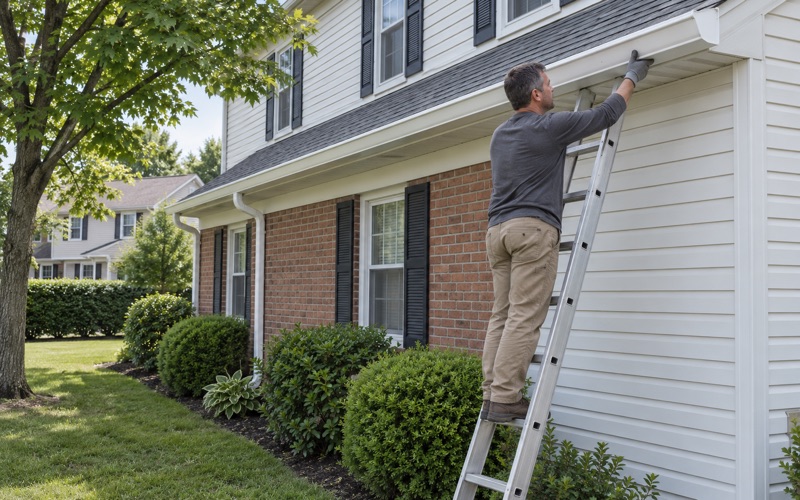
Our first visit is the same whether the house is historic or not. We go into the attic as well as onto the roof, trace any water to where it actually gets in, and tell you plainly whether the existing roof can be repaired. Replacement only comes up after that answer, never before it.
Madison’s Historic Districts and the Houses in Them
Two Districts the Commission Names
Madison’s Historic Preservation Commission names two districts listed on the State and National Registers. One is downtown, the Madison Civic and Commercial Historic District. The other is the Bottle Hill Historic District, which runs along Ridgedale Avenue. Houses and buildings inside them carry a review requirement that most homeowners elsewhere in Morris County never meet.
The commission’s own summary leaves little room for a narrower reading. Buildings in these districts require a Certificate of Historic Review for any exterior change. A new roof is about as visible an exterior change as a house goes through, which is why we treat the review as the opening step on a district job.
The Wider List of Local Sites
Beyond the two districts, the commission’s summary counts some 110 sites on the official Zoning Map, scattered around town. When one of those sites comes before the Planning Board or Zoning Board with an application for development, the boards refer it to the commission, and its review there is advisory.
We do not tell owners which side of a district line their property sits on. The borough holds that map, and checking with the borough before we price the work is part of how we start. It costs a phone call, and it keeps the rest of the plan honest.
A Borough That Has Watched Its Center Since 1993
Madison, sometimes called the Rose City, became a borough in 1889. Concern for its central business district led to the creation of the Historic Preservation Commission in 1993, and the borough’s current preservation chapter, Ordinance 39-99, followed in 1999. A roof on a district house is handled inside that framework, not around it.
Looking for roofing closer to South Orange Village? See Roofing Services in South Orange Village.
The Certificate of Historic Review: Mandatory to Attend, Voluntary to Follow
What the Review Asks of an Owner
The borough is precise about the two halves of the process. The review with the commission is mandatory, so an owner in a district brings the proposed exterior change before it. Acting on the commission’s recommendations afterward is voluntary. Those two points sit side by side in the commission’s summary, and both matter to a homeowner planning a roof.
So the commission is not a permit office, and it does not hand down a yes-or-no on a shingle. It looks at what you propose, offers its recommendations, and leaves the material decision with the owner. What it does expect is that the conversation happen before the work, not after the crew has left.
Demolition Is the Binding Exception
Demolition is where that changes. Tearing down a building in a district also requires a Certificate of Historic Review, and here the commission may attach conditions that are binding upon the applicant. A roof replacement is not a demolition, but owners sometimes hear about binding conditions and assume they reach every project.
They do not. Outside demolition, the commission’s recommendations remain recommendations. We point this out early because it shapes how an owner approaches the meeting: as a chance to hear informed advice about the house, not as a hearing that decides whether the roof goes on.
Skipping the Review Has a Cost
Work done without review can draw attention afterward. The commission’s summary says the Zoning Officer may require an immediate review of unreviewed work. In a demolition case, neglecting the review can bring fines and an order to restore what was lost.
For a re-roof, the practical cost is disruption: a review ordered after the fact, with the new roof already in place. We would rather the owner walk into the meeting with samples in hand before any material is ordered, which is the cheaper way to arrive at the same place.
The Construction Permit Is a Separate Question
The historic review is a local step, and it stands apart from the state construction code. Replacing the roof covering on a detached one- or two-family house is ordinary maintenance under the state rules, needing no construction permit, while work that affects structural or fire safety falls outside that category. Every estimate we write says which side of that line the job falls on.
That means a district owner may have no construction permit to pull and still owe the commission a review. We keep the two apart in writing, so nobody mistakes one for the other.
Bringing a Roof Material and Color to the Commission
What We Put in Front of the Owner
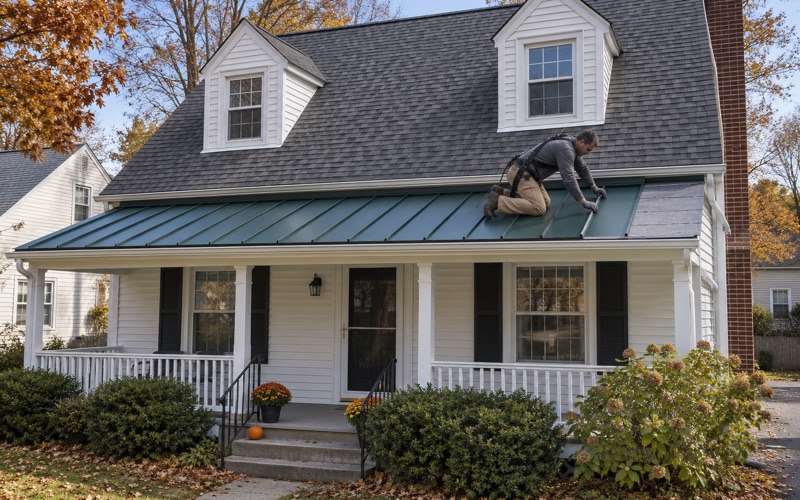
Material and color are what a commission looks at on a roof, so they are the decisions we settle first. We give the owner the product line, the color name and a physical sample where one exists, whether that is an architectural shingle such as CertainTeed Landmark or GAF Timberline HDZ, a standing seam metal panel, or something else the house calls for.
The commission’s page links a Historic Preservation Design Guidelines document, and we suggest owners read it alongside our proposal. We do not paraphrase what it says about roofs, because the document is the borough’s and the owner should hear it from the source.
A Written Scope the Commission Can Read
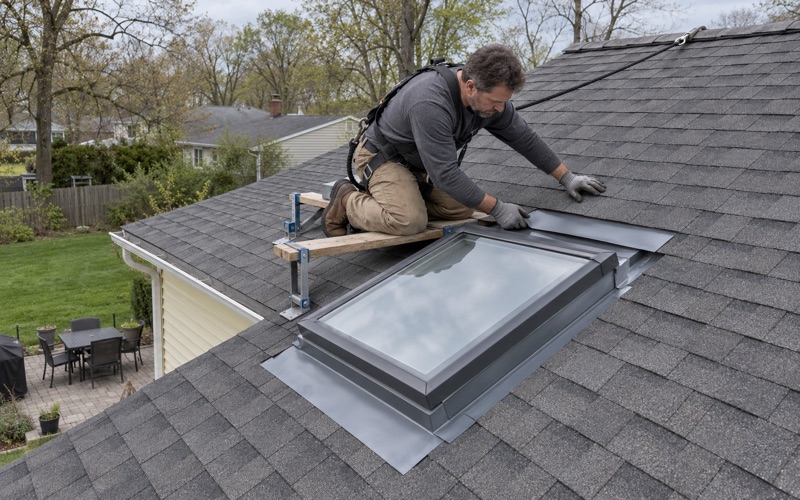
Our scopes list tear-off, decking, underlayment, flashing, ventilation and gutters as separate lines. That format exists so owners can compare two estimates item by item, and it also gives the commission a plain account of what will change on the outside of the house and what stays hidden under the new covering.
Visible details tend to draw the questions: drip edge at the eaves and rakes, the profile of a ridge vent, the color of new gutters and leaders. Listing each one lets the owner discuss them individually instead of describing the whole roof in a single sentence.
When the Owner Weighs the Recommendations
After the review, the decision is the owner’s. Some choose to follow a recommendation on color or material; others weigh cost, warranty or upkeep and go another way. We price whichever direction the owner settles on, and revise the written scope so it matches the roof that will actually be built.
Manufacturer warranty terms differ by product and by house, and lifetime coverage from GAF or Owens Corning depends on eligibility such as a single-family detached, owner-occupied home. If a recommended material changes the warranty picture, we put that in writing before the owner decides.
Timing a Re-Roof Around a Monthly Meeting
The Second Tuesday at the Hartley Dodge Memorial
The commission has seven volunteer members, at least one of whom owns property in the Madison Civic and Commercial Historic District. It meets in the evening on the second Tuesday of each month, starting at 7:30, at the Hartley Dodge Memorial on Kings Road, the building that houses the borough government.
One meeting a month sets the pace of a district job. We work backward from the next meeting date, so the estimate, the material and color choice, and the samples are ready ahead of it. Nobody should wait a further month because a single detail was missing.
Ordering Material After the Review
We hold the material order until the owner has been through the review and made a decision. Ordering first and reviewing second invites a restocking problem if the owner chooses to follow a different recommendation. Once the color is settled, the order goes in and the crew date follows.
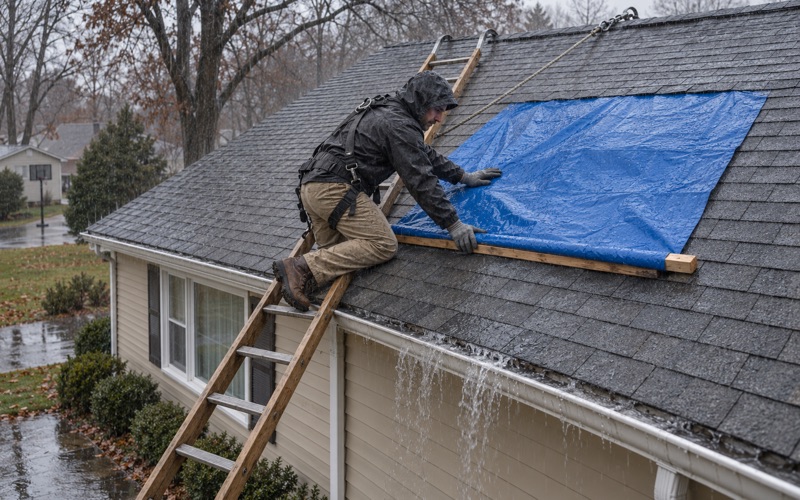
If the roof is actively leaking while the owner waits for the meeting, we talk through a temporary measure with them. Because we check the attic as well as the roof, that measure goes where the water enters rather than where the stain appears.
Working Hours and the Work Day
Once work starts, the borough’s construction hours apply. Construction activity, emergency work aside, runs on weekdays between 7:00 each morning and 6:00 each evening, and on Saturdays and federal holidays between 9:00 and 5:00. No commercial work is allowed on Sundays.
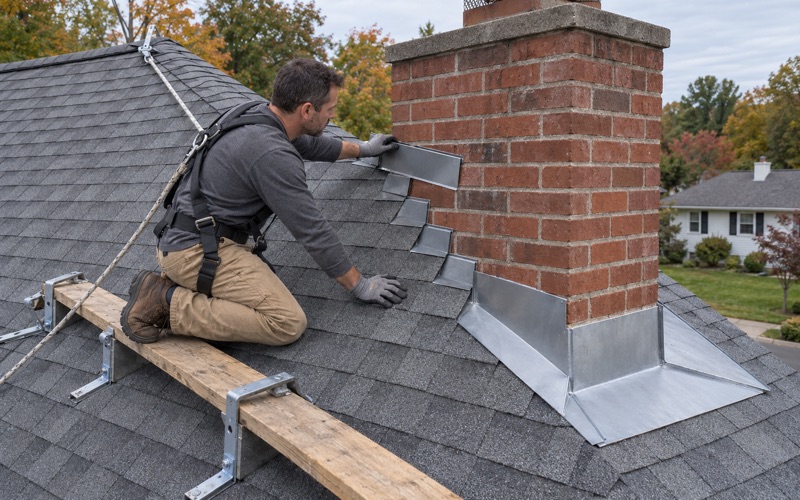
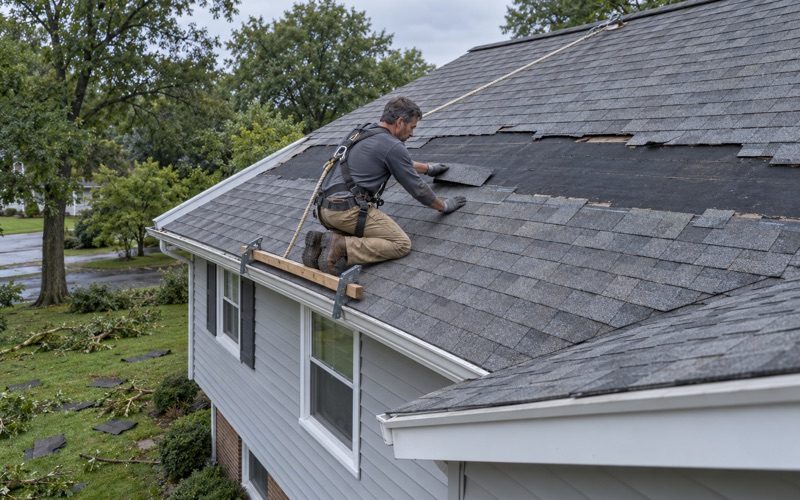
Within those hours, a tear-off on a district house follows the same discipline as any of our jobs. Damaged decking found under the old roof is photographed and shown to the owner before it is replaced, at the per-sheet price written into the contract. Step, counter and apron flashing is replaced with the roof, never reused, and attic ventilation is checked before the new covering goes on.
Closing the Job Out
The driveway, yard and gutters are cleaned at the end of every work day, including a magnet sweep for nails. Our contracts follow New Jersey’s home improvement rules, including the three-day cancellation notice, and the quote states sales tax the way the state treats it, with Form ST-8 for an exempt new roof.
If storm damage started the project, we photograph it and write it up for the owner’s own claim, and we will meet the adjuster on site when asked. The claim itself stays in the owner’s hands from start to finish.
- 20+ Years on Roofs
- Itemized Written Scopes
- Attic-First Leak Checks