East Brunswick has handled roofing in Metuchen for more than 20 years, and one question shapes nearly every job we schedule here before shingles even come up. It is the clock: when a crew may start, when it has to stop, and what changes on a weekend. Getting that right keeps a tear-off on schedule and keeps the street on good terms with the house being worked on.
When a homeowner calls about a leak, we check the attic as well as the roof surface, so the water is followed back to where it actually enters before any number goes on paper. We tell you plainly whether the roof can be repaired, and replacement only comes into the conversation when a repair is not the honest answer for that roof.
If replacement is the right call, our written scope breaks the job into separate lines for tear-off, decking, underlayment, flashing, ventilation and gutters. That lets you set our estimate beside anyone else’s and compare them item by item. The schedule attached to that scope is built around the local work hours described below, so the crew’s arrival time is settled before the contract is signed.
When a Roofing Crew Can Start Work in Metuchen
Chapter 222 and the Board of Health
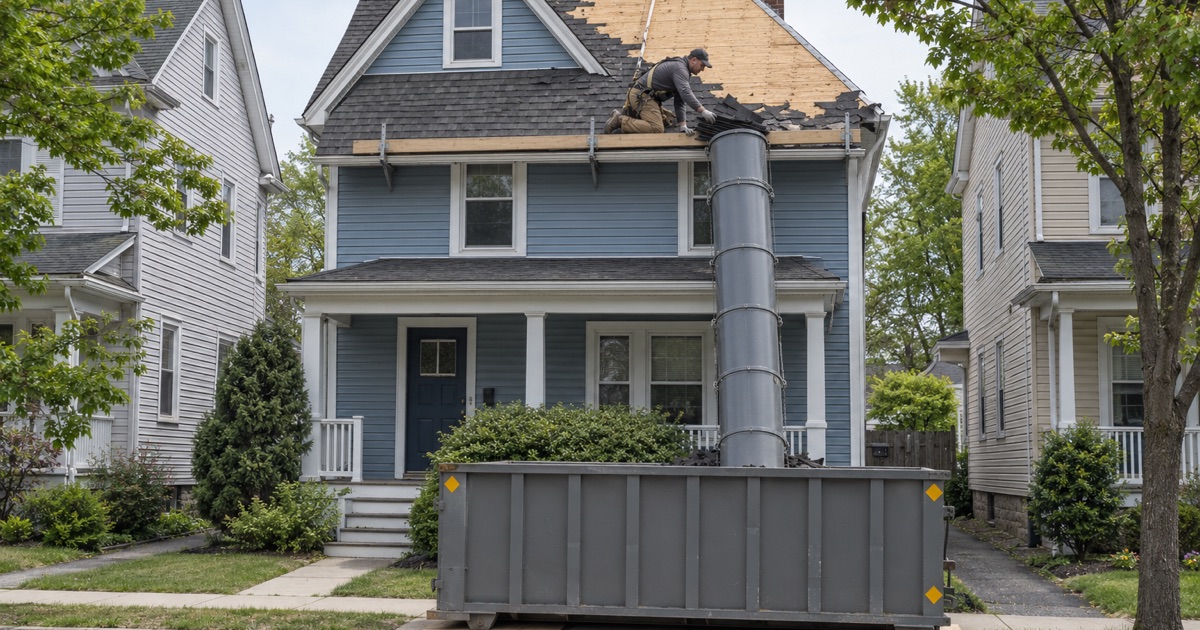
Metuchen controls construction noise through Chapter 222 of its borough code, a noise ordinance adopted by the Board of Health rather than written into the building rules. Its construction section says that all construction and demolition activity, excluding emergency work, shall not be performed between 6:00 p.m. and 7:00 a.m. on weekdays. A roof tear-off, with its pry bars, dumpster drops and nail guns, falls squarely inside that language.
That makes 7:00 a.m. the earliest a crew can begin loud work on a weekday in Metuchen, and 6:00 p.m. the point where that work has to wind down. We plan the day backward from the evening line, because the last stretch of a tear-off day is spent drying in the deck and cleaning up, not stripping more of the roof.
Built on the State Model
Chapter 222 follows the New Jersey Model Noise Control Ordinance published by the state Department of Environmental Protection. At an April 2016 meeting of the state Noise Control Council, a Metuchen resident told the council that his town had recently adopted the model. The weekday hours in the borough code track the model’s construction section.
Under the model, every municipal noise ordinance, including a verbatim adoption, has to be submitted to the Department for written approval. For a homeowner, the practical point is simpler. The hours a Metuchen crew works by are the state’s standard construction hours, not a rule a contractor picked to suit its own calendar, and every roofer working in the borough answers to the same clock.
Sound Limits, Not a Blanket Ban
The curfew is not a rule of total silence. The borough code allows construction activity during those hours when it can meet the sound limits set in the ordinance’s tables. We do not plan a tear-off around the hope of meeting those limits, since scraping shingles and running compressors are loud by nature, so we treat the curfew as the working boundary for anything above the gutter line.
Quieter tasks are a different matter in practice. Measuring a roof, photographing its condition or walking the attic with a flashlight does not carry the same noise profile as a tear-off. We still keep those visits to reasonable daytime hours, because a roofer on a ladder at dusk worries the people next door whatever the ordinance says.
Looking for roofing closer to Aberdeen? See Roofing Services in Aberdeen.
Weekday Hours, Weekends and Federal Holidays
What the Weekday Clock Means for a Tear-Off
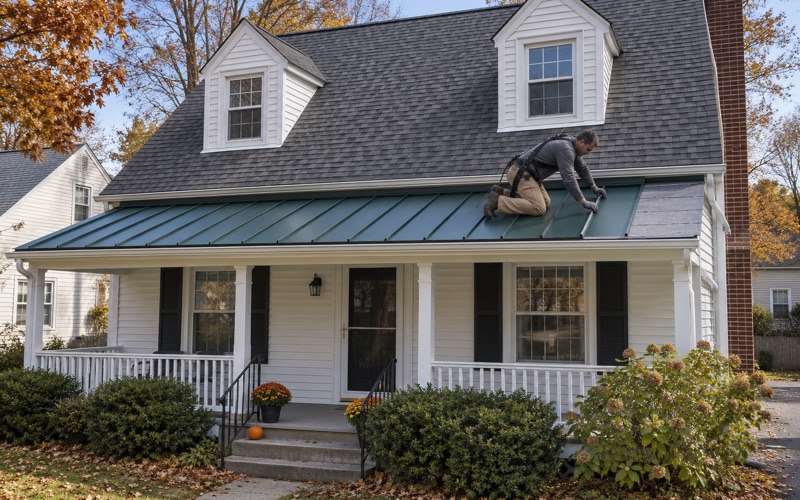
The weekday window from 7:00 a.m. to 6:00 p.m. gives a crew eleven hours of working time. On a modest detached house that is often enough to strip, inspect, repair decking and dry in the roof in a single day, while a larger or multi-layer roof runs longer. Either way, we map the job onto that window before it starts, not after the first day runs short.
When the old roof comes off and soft or broken decking shows up, we photograph it and show it to you before a single sheet is replaced. The per-sheet price is already written into the contract, so that conversation takes minutes. The crew keeps working inside the weekday window instead of standing on the roof waiting for a decision.
Weekend Starts Under the Model
Chapter 222 carries a separate clause for weekends and federal holidays. The state model the borough’s ordinance is built on sets the weekend and holiday curfew from 6:00 p.m. to 9:00 a.m., so we plan any Saturday, Sunday or federal holiday tear-off for a 9:00 a.m. start. That is two hours later than a weekday crew would begin on the same street.
That later start matters for weekend work. It trims two hours off the working day, so a roof that fits into one weekday may need a second weekend day to finish properly. We tell you that up front, in writing, rather than discovering it on a Saturday afternoon with half the deck exposed and clouds coming in.
Why Weekend Work Is Still Allowed
At the same 2016 meeting, the Noise Control Council took up a Wayne Township amendment that would have banned construction on Sundays and said it should be rejected. The council’s reasoning was that the model already allows weekend work with a curfew. It found the model fair because most homeowners can only do construction on weekends and contractors can lose other working days to poor weather.
That reasoning fits roofing closely. A week of rain can push a scheduled tear-off back, and a weekend slot is often how a delayed job gets back on track. In Metuchen, a Saturday or Sunday roof job is possible under that framework; it simply does not start at dawn, and we schedule it with that later start already counted.
Emergency Roof Work After a Storm
Emergency Work Sits Outside the Curfew
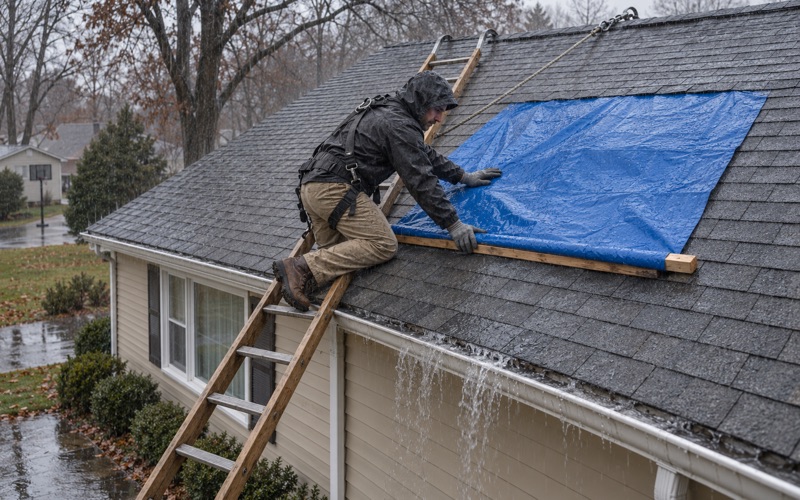
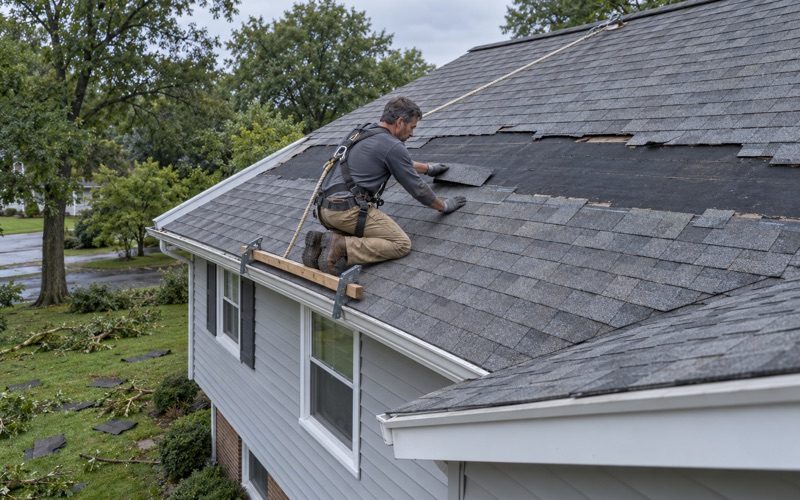
The construction clause in Chapter 222 excludes emergency work from the curfew. When a storm opens a roof at night, or before a weekend start, getting a tarp over the opening and stopping water from reaching ceilings and wiring is not held until the next morning. Emergency storm tarping does not wait for 7:00 a.m.
We keep that distinction honest. A tarp and a temporary seal are emergency work; the full tear-off and replacement that follows is not, and it goes back onto the regular weekday or weekend schedule once the house is dry. Metuchen falls in National Weather Service forecast zone NJZ012, Middlesex, issued from the Mount Holly office, and its warnings are the ones we watch.
Tracing the Leak From the Inside
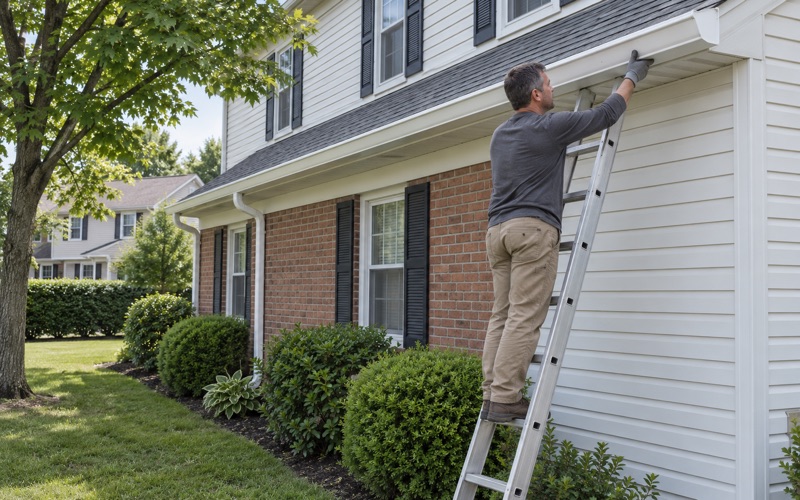
Storm water rarely shows up on a ceiling directly below the opening that let it in. It runs along rafters, decking seams and the top of the insulation before it drips. That is why every leak call includes a look in the attic as well as on the roof, so even a temporary fix covers the spot where water is really getting through.
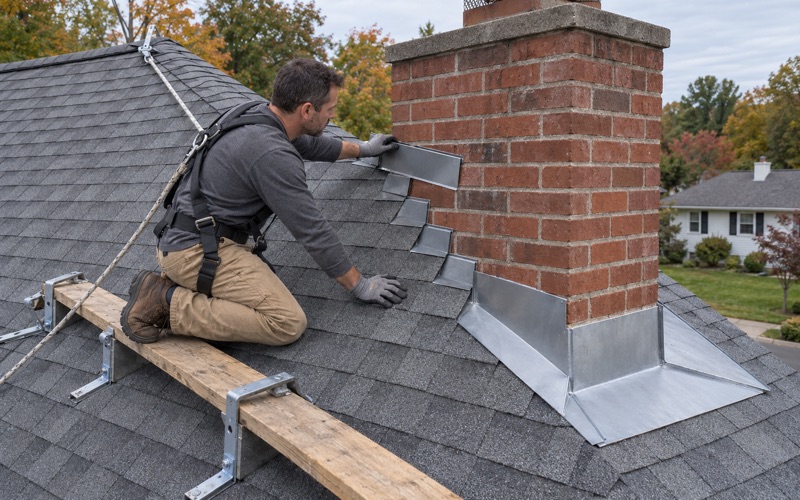
Many storm leaks turn out to start at step flashing along a sidewall, at a chimney or at a pipe boot rather than in the open field of shingles. Those points get checked first. On a replacement, we install new step, counter and chimney flashing rather than tucking the old metal back under new material, because reused flashing is a common source of the next leak.
Documentation for Your Own Claim
After a storm, we photograph the damage and write it up so you have documentation for your own insurance claim. If you ask, a crew member will meet the adjuster on site to walk the roof and point out what we found. The claim itself stays yours, since New Jersey’s Public Adjusters’ Licensing Act keeps contractors from handling or negotiating it.
That split keeps the work clean on both sides. The adjuster sees the same photographs and measurements you do, and our written scope lists the repair or replacement line by line. Whatever the insurer decides, the schedule for permanent work still follows the curfew hours, so you know when the crew can return once the paperwork settles.
Planning a Tear-Off Day Around the Curfew and the Neighbors
Settling the Day Before It Starts
On a detached one- or two-family house, replacing the roof covering is ordinary maintenance under the state construction code, so no permit stands between a signed contract and a start date. About two-thirds of Metuchen’s housing units are one-unit detached homes. Every estimate still says plainly whether a job is permit work, because structural changes, attached homes and multi-unit buildings fall outside that wording.
With that question answered, the schedule comes down to Chapter 222. We give you a start time, a target finish, the dumpster delivery window and a plan for a rain day, all in writing. Nobody has to guess when the first truck will pull up, and you can tell anyone who asks exactly how long the noise will last.
Keeping the Neighbors on Your Side
Metuchen is a borough of about 2.84 square miles and 15,049 residents at the 2020 census, and a tear-off is felt next door. We suggest letting the neighbors know the date and the start hour, especially for a weekend job on the model’s 9:00 a.m. start. A short heads-up turns a surprise at breakfast into a known project with a finish date.
At the end of every work day, the crew cleans the driveway, yard and gutters and runs a magnet sweep for roofing nails. That matters to the neighbors as much as to you, because stray nails do not respect property lines. A clean street each evening is also the easiest way to keep a multi-day job from wearing out the goodwill of the block.
Older Houses and Longer Days
Some Metuchen houses take longer than a standard asphalt roof, including older homes around Woodwild Park. Slower work means more days spent inside the curfew window, and we build those days into the schedule from the start. Every replacement also includes a check of attic ventilation, since a roof that cannot breathe ages from underneath.
If solar panels sit on the roof, their removal and reinstall go into the schedule as their own steps, planned before the tear-off rather than discovered on the day. Gutters and leaders are sized and pitched along with the roof, so water leaves the house instead of collecting at the foundation, and that work fits inside the same permitted hours.
Contracts, Taxes and Sale Reports
Our contracts follow New Jersey’s home improvement rules, including the three-day cancellation notice. Each quote states sales tax the way the state treats the work: taxable on a repair, and exempt on a new roof with Form ST-8. Both appear as plain lines on the estimate, so the total you sign is the total you pay.
If you are selling a Metuchen home, we can write a roof condition report that you hand to the buyer’s inspector. It records what we saw on the roof and in the attic, in plain terms. Paired with a schedule built around the borough’s work hours, it gives a seller one less open question during a closing timeline.
- 20+ Years on Roofs
- Itemized Written Scopes
- Attic-First Leak Checks