East Brunswick has handled roofing in Middlesex for more than 20 years, and a good share of the calls we get from the borough start with a house about to change hands. A seller has an accepted offer, or a landlord has a tenant moving out at the end of the month, and a brown ring on a bedroom ceiling suddenly matters a great deal. That ring is usually where our work begins.
We treat those calls the way we treat any leak. Someone goes into the attic as well as onto the roof, follows the water back to the point where it actually gets in, and only then puts a price on the fix. If the roof can be repaired, we say so plainly before replacement is ever on the table.
This page covers the borough’s resale and re-rent paperwork, the single line on it that a roof leak can reach, and how we sequence a repair so the house is dry and documented before anyone books the inspection. None of it is complicated, but the order matters, and getting it wrong usually costs time a seller or landlord does not have.
Middlesex’s Sale and Re-Rent Certificate Under Chapter 158
Selling or re-renting a home in Middlesex takes a Sale / Re-Rent Certificate, issued under Chapter 158, Article II of the borough code. The application comes from the Department of Code Enforcement, Zoning and Construction at 1200 Mountain Avenue. It ties two separate checks to one certificate: a borough inspection and a fire safety certificate.
Two Inspections, Two Fees
The borough inspection costs $125 per unit. On top of that, the Middlesex County Fire Marshal checks the smoke detectors, the carbon monoxide detector and the fire extinguisher, and that certificate carries its own $50 fee payable to the Fire Marshal. Both have to be satisfied before the Sale / Re-Rent Certificate is issued.
The borough code describes the $125 fee as covering re-rents, leases and re-sales that result in a change of occupancy. In other words, it is not a one-time charge tied only to the purchase of a house. It comes due every time the people living in a unit change.
Every Property Type on One Form
The application lists single-family homes, whether owner-occupied or rented, two-family houses whether owner-occupied or not, and buildings of three or more families. The inspection type is marked either Sale or Change of Occupancy (Rental). A detached house on a quiet street and a unit in a larger rental building answer to the same checklist.
That matters in a borough where most homes are owner-occupied but a real rental stock exists as well. Census figures count 1,491 renter-occupied units out of 5,718 occupied homes in Middlesex, and every one of those units turns over sooner or later, each time on the same form.
What the Checklist Asks For
Section 4 of the application lists the items that must be in compliance before a resale or leased certificate is issued. Most are what you would expect: working detectors and an extinguisher, running water, functioning electric, at least one flushable toilet, rails on steps, a bonded water heater with a discharge tube, a solid aluminum dryer vent and an anti-tilt device on the stove.
The rest are house numbers visible from the street, egress doors that open without a key, and outstanding fines or liens paid in full. One more line sits in that list, and it is the one that brings a roofer into the conversation.
Looking for roofing closer to Bound Brook? See Roofing in Bound Brook.
“No Presence of Mold and/or Water Damage”: Where a Roof Leak Shows Up
The checklist line reads “No presence of mold and/or water damage.” The roof, gutters and leaders are not named anywhere on the form. Yet the most common source of water damage on an upper-floor ceiling is a roof that let water in at some point, and that is how a roofing problem ends up on a resale inspection that never mentions roofing.
What the Line Says, and What It Does Not
We want to be careful here. The checklist names water damage, not the roof, and we have not seen how the borough’s inspector weighs an old stain that has long since dried. Nobody should hear from us that an older roof fails the certificate on its age alone, because nothing on the form says so.
What we can say is that a visible ceiling stain, a soft patch of drywall or mold on attic sheathing is the kind of thing the wording describes. Whether a dry stain passes is the inspector’s call, and the safest position is to have the cause fixed and the stain dealt with before that call is made.
Ceiling Stains, Attic Sheathing and Mold
A ceiling stain is the last stop of a leak, not the first. By the time it shows, water has usually been working through underlayment, decking and insulation for a while. In the attic, that history shows up as darkened sheathing around a vent pipe, a wet ring beside a chimney, or mold growing where warm, damp air has had nowhere to go.
That last point is why we check attic ventilation on any leak call. A roof without enough intake at the soffits and exhaust at the ridge can produce condensation that looks exactly like a leak on the sheathing, and repainting the ceiling below will not stop it from coming back.
Tracing the Source Before Anything Gets Painted
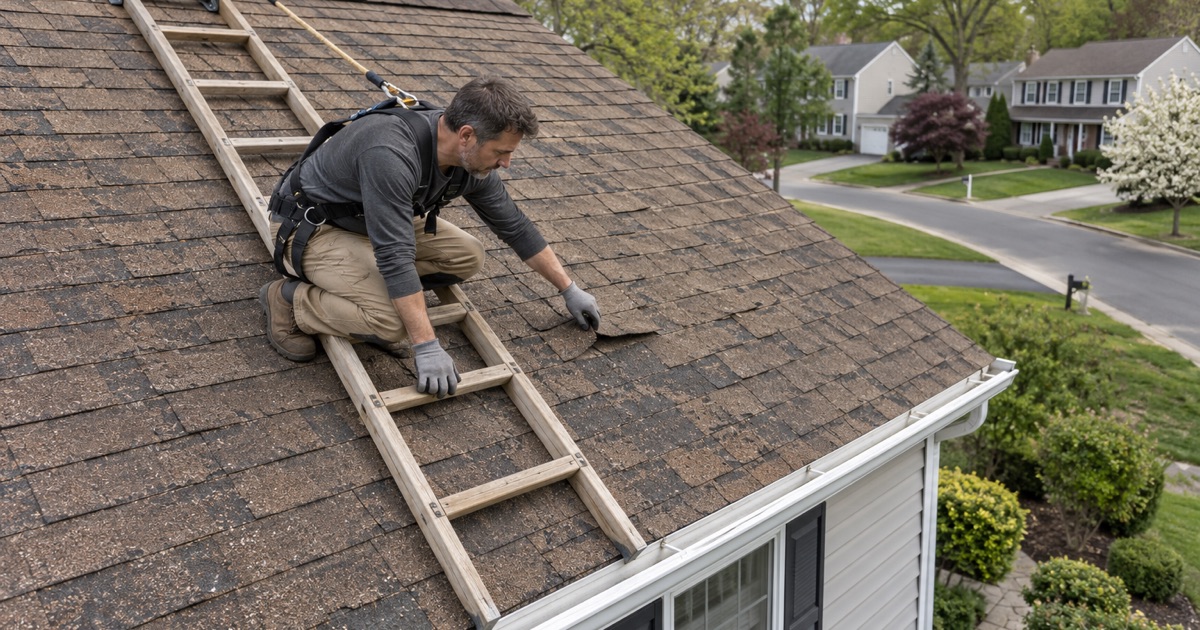
Painting over a stain before the source is found is the mistake we see most often on a house headed for sale. If the leak is still active, the stain returns, sometimes after an offer is accepted and sometimes after a tenant has moved in. We trace it first, from the attic side and from the roof, so the repair goes where the water enters.
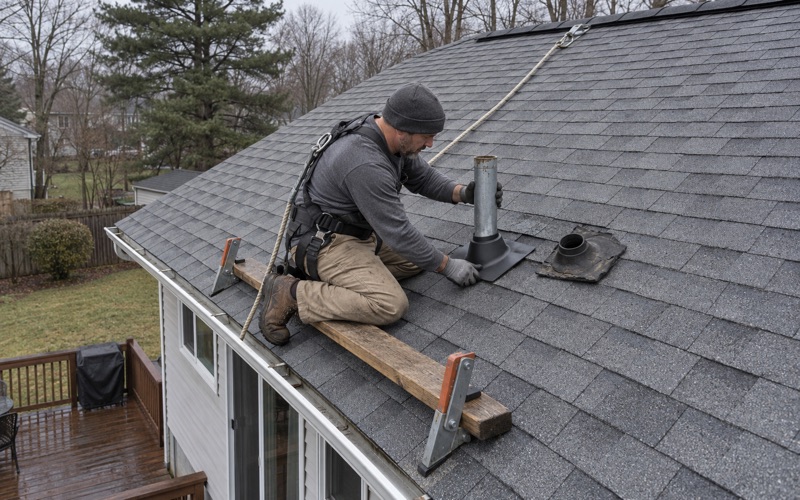
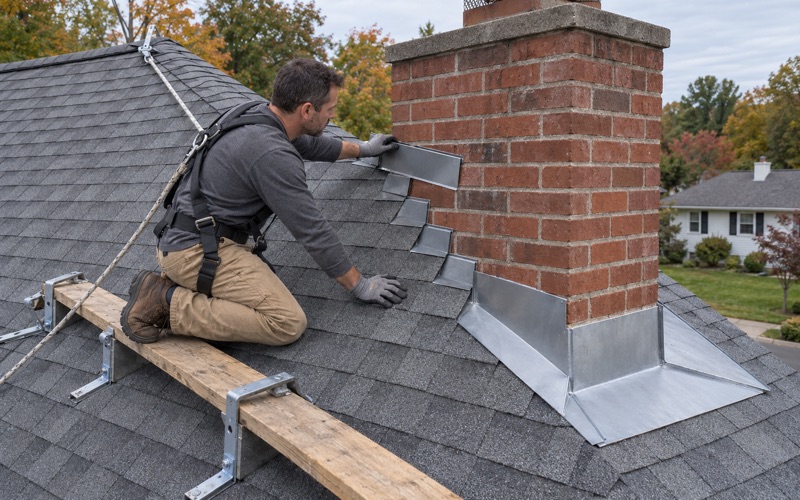
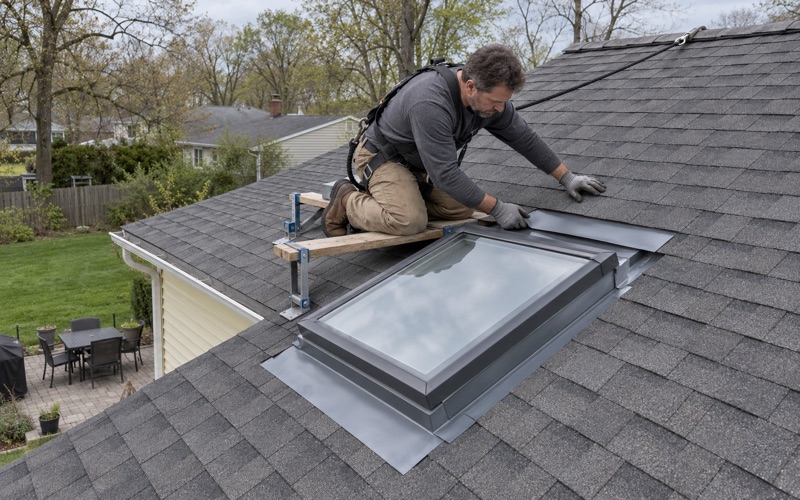
Typical entry points are worn pipe boots, failed step flashing along a sidewall, a chimney with tired counter flashing or no cricket behind it, and missing kick-out flashing where a roof edge meets a wall. Each one is a targeted repair, and none of them calls for replacing a roof that otherwise has years left in it.
Fixing the Leak Before the Listing, Not After the Inspection
The order of the work matters more than its speed. A leak found two weeks before closing leaves little room to fix it, let the framing and insulation dry out, and repair the ceiling. A leak found before the house goes on the market leaves room for all three, and for the seller to decide how to present the work to a buyer.
Repair or Replace: A Straight Answer First
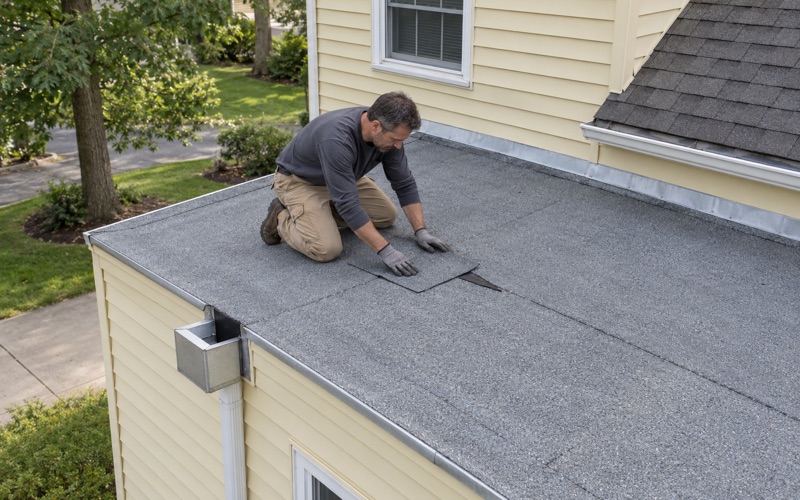
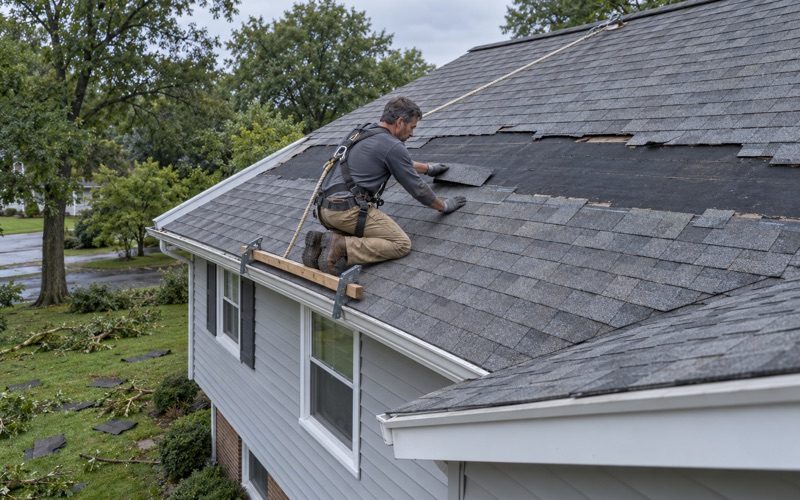
Most roofs we look at ahead of a sale need a repair, not a new roof. We tell the owner which one it is before replacement comes up, and we explain why in plain terms. If the shingles are sound and the leak traces to one flashing detail, the fix is that detail and nothing more.
When a roof really is at the end of its life, we say that too, and the written scope lists tear-off, decking, underlayment, flashing, ventilation and gutters as separate lines. A seller can then compare our number against any other estimate item by item, which helps when a buyer’s agent starts asking what was done.
Permit Questions on the Roof Itself
The borough’s construction page lists roofing among work it says needs a permit. State law governs the question: under New Jersey’s Uniform Construction Code, repairing or replacing the roof covering on a detached one- or two-family house is ordinary maintenance, with no permit, inspection or notice required. Every estimate we write says plainly whether the job is permit work.
Attached single-family homes and multi-unit buildings are a different matter. Roofing on those remains permit work through the Uniform Construction Office at 1200 Mountain Avenue, where reviews take 20 working days. On a rental building being turned over between tenants, that review time belongs in the schedule from the first conversation.
Sales Tax and a Clean Site
New Jersey treats repair and replacement differently for sales tax, and our quotes reflect that. A repair is taxable. A new roof is an exempt capital improvement when the owner provides Form ST-8, and the quote states which treatment applies before any work begins.
A house being shown to buyers or prospective tenants cannot look like a job site. The driveway, yard and gutters are cleaned at the end of every work day, including a magnet sweep for roofing nails, so a showing scheduled the same afternoon is not a problem.
Re-Renting and Selling: What to Have in Hand
The Same Checklist at Every Change of Occupancy
For a landlord, the Sale / Re-Rent Certificate is not a one-time event. Every new tenant means another Change of Occupancy inspection and another fee, and the water damage line is on the form each time. The borough’s landlord registration chapter also bars occupancy of any rental unit that is not registered.
Two-family houses deserve a particular look. Census data counts 274 renter-occupied two-unit homes in the borough, and a slow leak over an upper unit’s ceiling can go unreported by a departing tenant. It surfaces only once the unit is empty and the inspection is already on the calendar.
We suggest a look at the attic and roof between tenants rather than after the inspection is booked. A turnover is the one stretch when a landlord has full access to every ceiling in the unit, and a small repair then is far easier than a rushed one later.
A Written Roof Condition Report for the Buyer
When a house is going on the market, we write a roof condition report the seller can hand to the buyer’s inspector. It records what we found on the roof and in the attic, what was repaired, and the condition of the covering, flashing and ventilation on the day we looked.
A report like that does not replace the borough inspection or the buyer’s own inspection. What it does is answer questions before they are asked, which is far easier than explaining a fresh ceiling patch in the middle of a negotiation.
Repair Records, Photos and a Dry Attic
Keep the invoice, the scope and the photos together in one folder. If decking had to be replaced, we photograph it and show the owner before new sheets go in, at a per-sheet price set in the contract, so the file shows exactly what was wrong and what was done about it.
Our contracts follow New Jersey’s home improvement rules, including the three-day cancellation notice, which gives a seller a clean paper trail. By the time the inspection date arrives, the goal is simple: the leak is fixed, the attic is dry, and the ceiling below it has been properly repaired.
- 20+ Years on Roofs
- Itemized Written Scopes
- Attic-First Leak Checks