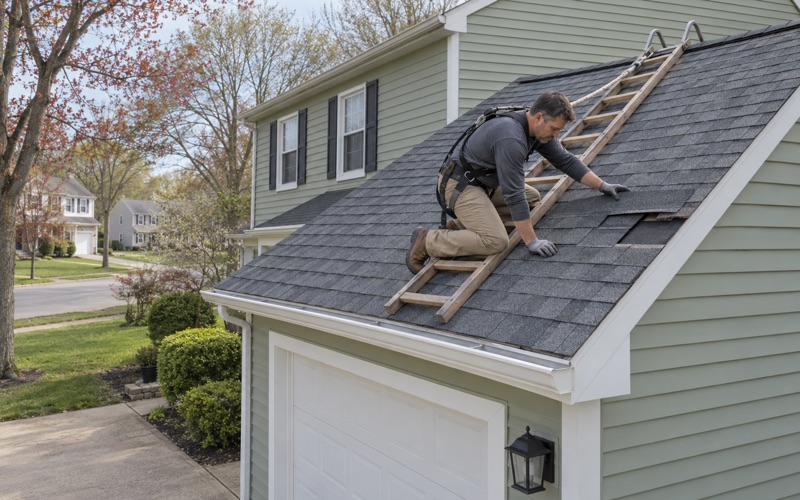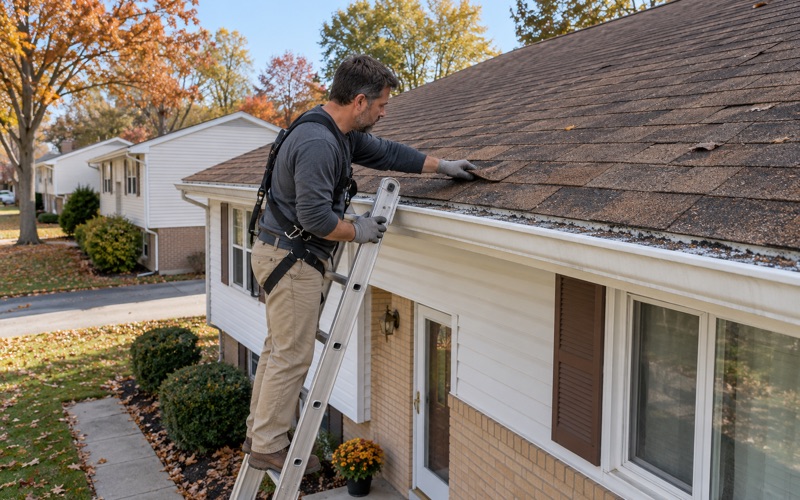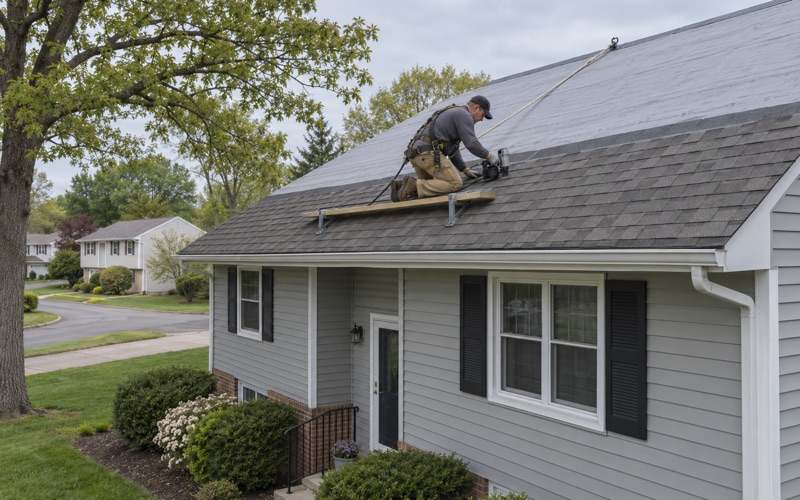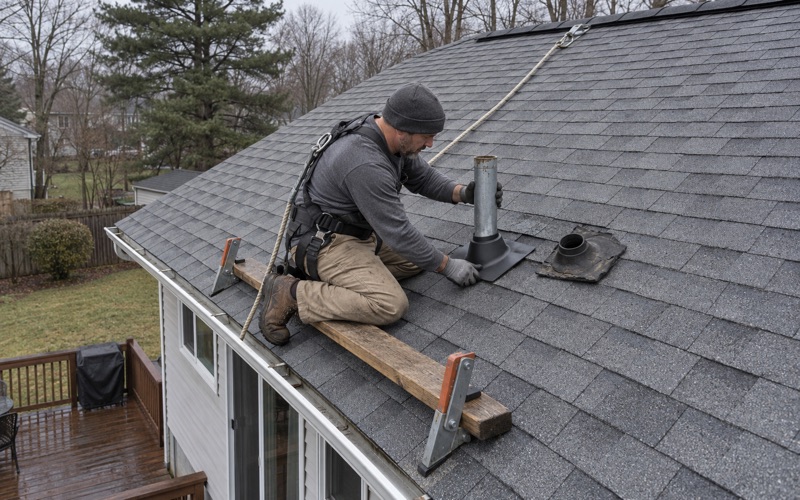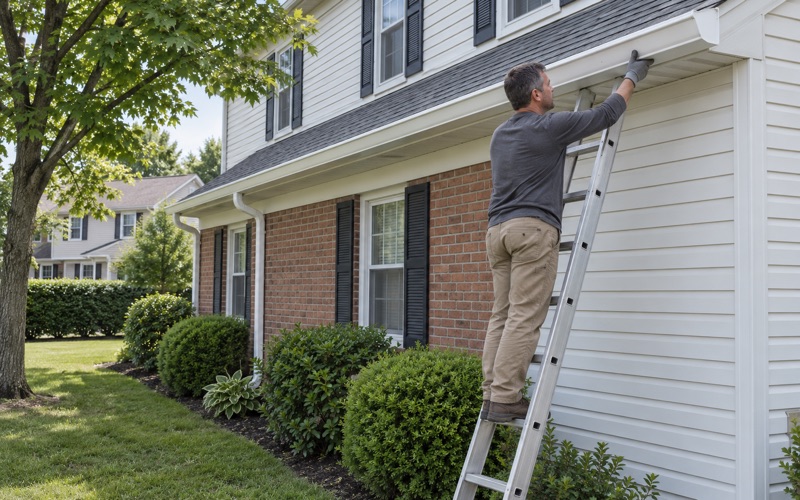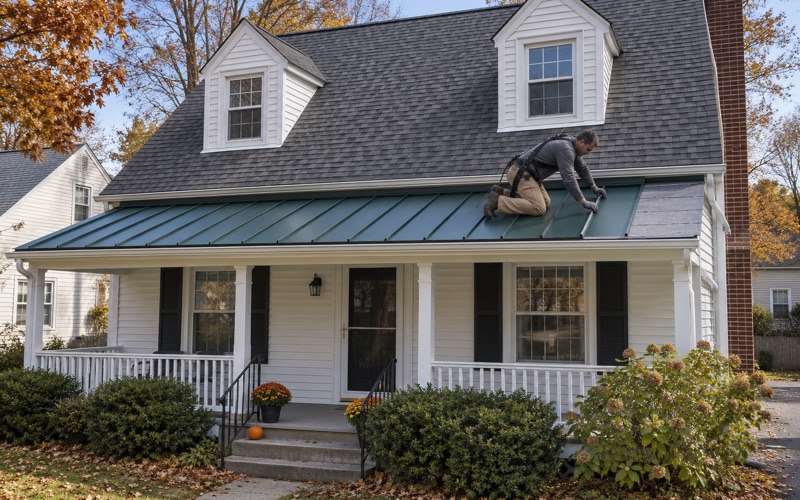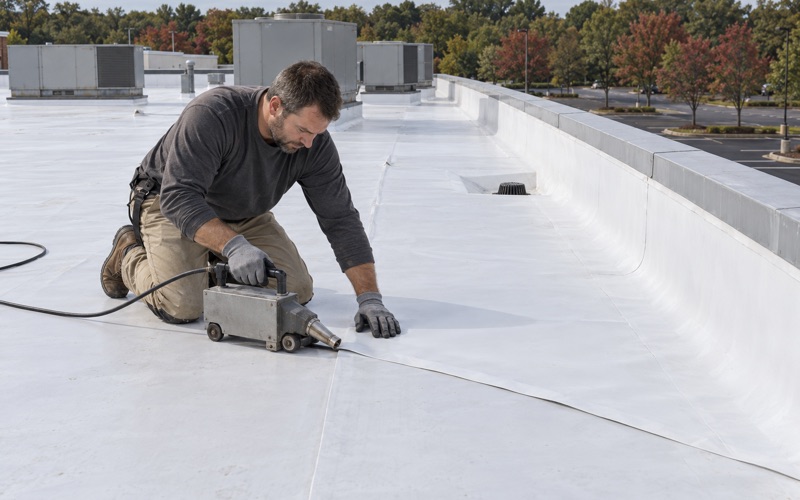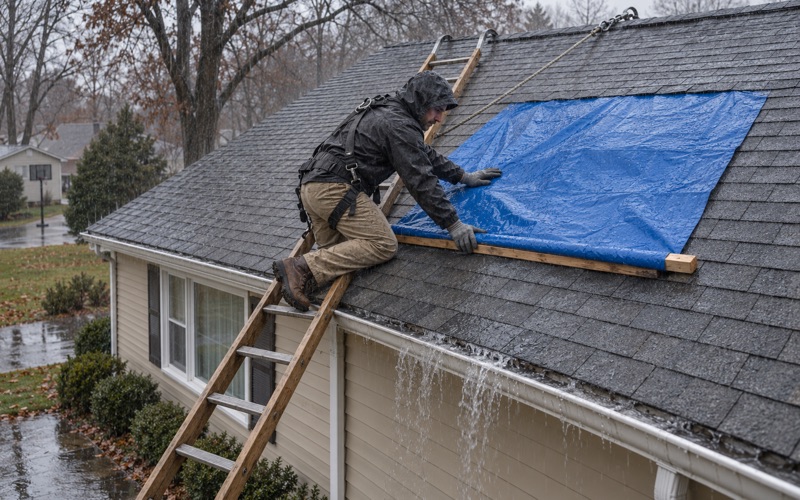
East Brunswick has spent more than 20 years on roofing in Millstone Township and across western Monmouth County, and the work always starts the same way. When a ceiling stains or a shingle lets go, we climb into the attic as well as onto the roof, so the water is followed to the spot where it actually enters before anything is priced.
The second thing every owner hears from us is a straight answer on repair. If a section of flashing, a cracked pipe boot or a run of lifted shingles is the real problem, we say so and price that fix, and replacement only comes up once a repair has honestly been ruled out.
For some households the hardest part of a failing roof is not the diagnosis but the bill. Millstone has its own answer to that question for income-eligible owners, and it is worth understanding before any contract is signed. We are not part of that program and cannot speak for it, but we can lay out what the township has published about it.
Millstone’s Own Housing Rehabilitation Program
Why the Township Stepped In
The township’s 2024 Affordable Housing Annual Monitoring Report, dated September 11, 2024 and prepared by Heyer, Gruel & Associates, explains the history. Seven Millstone homes were rehabilitated through the Monmouth County Community Development Program between 2006 and 2014, four of them in the final five years of that stretch.
The same report states that the county has since permanently suspended that program. In practical terms, the county route that once fixed a handful of Millstone houses is closed, and an owner reading older advice about applying through the county is reading about something that no longer runs.
The Affordable Housing Alliance Takes Over
On January 2, 2020, the township signed an agreement with the Affordable Housing Alliance, a Monmouth County nonprofit, to manage a township-wide rehabilitation program for owner-occupied homes. Marketing began that spring in the Star Ledger and the Asbury Park Press, and the work counts toward a court-approved rehabilitation share of 20 units.
As of August 26, 2024, the report counts six newly rehabilitated properties, two each in 2022, 2023 and 2024. The 2024 pair sit at 810 Perrineville Road and 165 Millstone Road, and three more certified projects were active or about to start at 74 Millstone Road, 75 Proedline Way and 4 Van Hise Drive.
Where the Money Sits
The report puts the township’s Affordable Housing Trust Fund at $3,310,456.48 as of August 31, 2024. That balance serves the township’s broader housing obligations, so it says nothing about what any one house will receive, and we had no part in any of the projects listed above.
What the figures do show is a program that is small, steady and still open. Six finished homes and three certified projects against a share of 20 means the township is partway to its goal, which fits the Alliance flyer that the township page links, still inviting new applications from owners.
Looking for roofing closer to Warren? See Roofing Services in Warren.
Roofs Among the Major Systems the Program Covers
What the Application Names
The program’s application coupon lists the major systems eligible for work: the roof, plumbing including wells, heating, electrical, sanitary plumbing including septic systems, load-bearing structural systems, lead paint abatement and weatherization. Weatherization on that list covers attic, exterior wall and crawl space insulation, along with siding installed for energy efficiency.
The coupon describes applicants as low- to moderate-income owners who are current on their mortgage and property taxes. Because so many houses here run on private wells and septic systems, a single application can touch more than one of those systems at once, and the program decides which ones a given house addresses.
What the Current Flyer Says
The township’s Affordable Housing page links the Alliance’s flyer for the Millstone Housing Rehabilitation Program, which announces that it is now accepting applications. Its list of eligible items reads heating, weatherization, aging in place, plumbing, life safety, code issues, structural and electrical, followed by and more.
The flyer does not name roofs, and it gives no dollar figure. The township lists the Alliance at (732) 389-2958 along with an Affordable Housing Liaison, and either one is the right first call for an owner with questions about eligibility.
What Nobody Should Assume
The income table on the application coupon dates from 2021, and we have not seen current income limits or a per-home cap in a current program document. The monitoring report also does not say which of the rehabilitated homes needed roof work, so roof funding in any particular case is a decision the program makes, not something to plan on.
Our advice is simple. If your household might be eligible and the roof is failing, ask the Alliance before you sign with any roofer, including us. A phone call keeps the option open, and the answer tells you whether you are pricing the job yourself or waiting on a program review.
Bringing a Failing Roof Up to Code
Inspection From Inside and Out
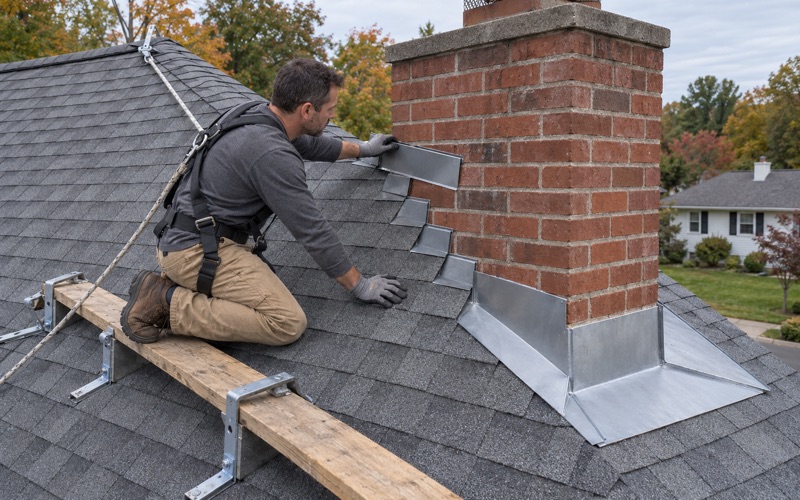
A roof that has truly failed usually shows it from below first. In the attic we look for stained or darkened sheathing, nail tips rusting through, daylight at the ridge or around a vent, and insulation matted down where water has been sitting. On the roof we check the field shingles, the drip edge, every pipe boot and every piece of chimney and wall flashing.
The program, where it applies, sets its own steps for inspecting a house, writing up the work and taking bids, and we leave the Alliance to explain those steps. Our part is the same for every owner: a clear finding on what is wrong and what bringing the roof up to code would actually involve.
A Scope You Can Compare Line by Line
Every written scope we hand over separates tear-off, decking, underlayment, flashing, ventilation and gutters into their own lines. Two estimates written that way can be compared item by item, and anyone else reviewing the job can see exactly what is included rather than reading one lump number.
If damaged decking turns up once the old roofing is off, we photograph it and show the owner before any sheet is replaced, at a per-sheet price already set in the contract. Each estimate also says plainly whether the job is permit work under the state construction code, so nobody learns it partway through.
Repair First, Replacement When It Is Due
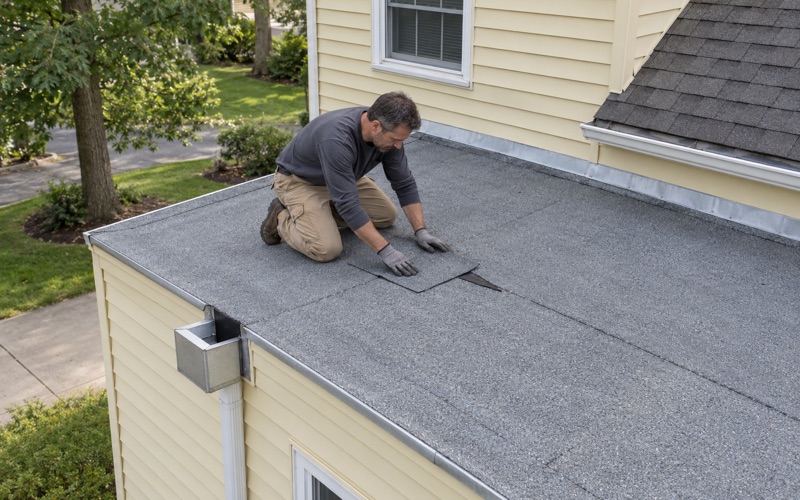
Not every roof that leaks is a roof that has failed. A missing ridge cap, a split boot on a plumbing vent or a slipped section of step flashing can put water on a ceiling while the rest of the roof still has years left, and fixing the actual fault costs far less.
When the decking is soft in several places, the shingles have lost their granules across whole slopes, or the underlayment has broken down, patching only buys a short reprieve. In that case we explain why replacement is the honest recommendation and write the scope to match.
When the Roof Is Not the Only Problem
A roof that has leaked for a long time rarely damages only itself. Wet insulation loses most of its value, ceiling drywall sags, and rafters or trusses near the leak can soften at the ends. We note every one of those findings in writing, even the ones outside our trade, so the owner has a full picture of the house.
That record matters most when a household is weighing outside help, because a program looking at several systems needs to know what the roof has already done to the rest of the structure. We stay within roofing, gutters and ventilation ourselves, and we say clearly where another trade or the program’s own inspector should take over.
Roof Repair and Replacement for Every Millstone Homeowner
What Goes Into a Replacement
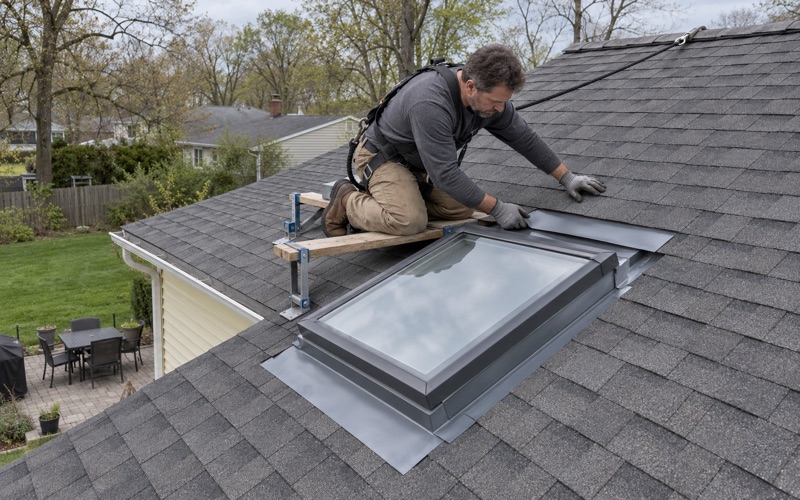
On a full replacement we install new step, counter and chimney flashing rather than reusing old metal under new material, and we lay self-adhering ice and water barrier at the eaves and in the valleys. Architectural shingles such as GAF Timberline HDZ, Owens Corning Duration and CertainTeed Landmark cover most of the houses we roof.
Attic ventilation gets checked on every job, because a roof that cannot breathe ages from underneath. We balance ridge vent against soffit intake, and we size and pitch the gutters and leaders with the roof so water leaves the house rather than the foundation. Every work day ends with the driveway, yard and gutters cleaned and a magnet sweep for nails.
Storms, Claims and the Adjuster
Millstone sits in the National Weather Service forecast zone for Western Monmouth, issued from the Mount Holly office. In August 2011 a small tornado touched down along Route 33 in the township, staying on the ground for about half a mile and bringing down trees and numerous branches, though no houses were damaged.
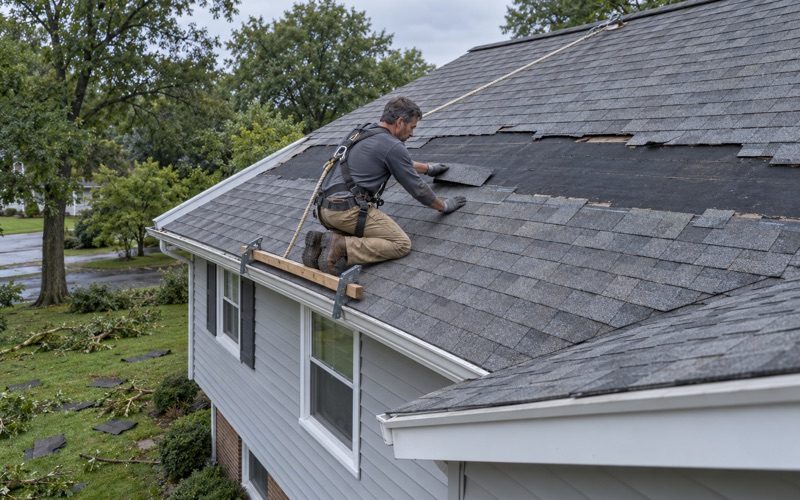
After a storm we photograph the damage and write it up for the owner’s own claim, and when asked, our crew will meet the insurance adjuster on site to walk the roof. We do not handle or negotiate claims, because state law reserves that role for licensed public adjusters, so the claim stays in the owner’s hands.
Contracts, Sales Tax and Selling a Home
Our contracts follow New Jersey’s home improvement rules, including the written three-day cancellation notice, and we work under the state’s home improvement contractor registration. Quotes show sales tax the way the state treats each job: charged on a repair, and exempt on a new roof when the owner signs Form ST-8.
Owners preparing to sell can ask for a written roof condition report to hand to the buyer’s inspector. It records what we found on the roof and in the attic, which gives both sides the same starting point before the inspection, whether the answer turns out to be a minor repair or a roof that is due.
- 20+ Years on Roofs
- Itemized Written Scopes
- Attic-First Leak Checks