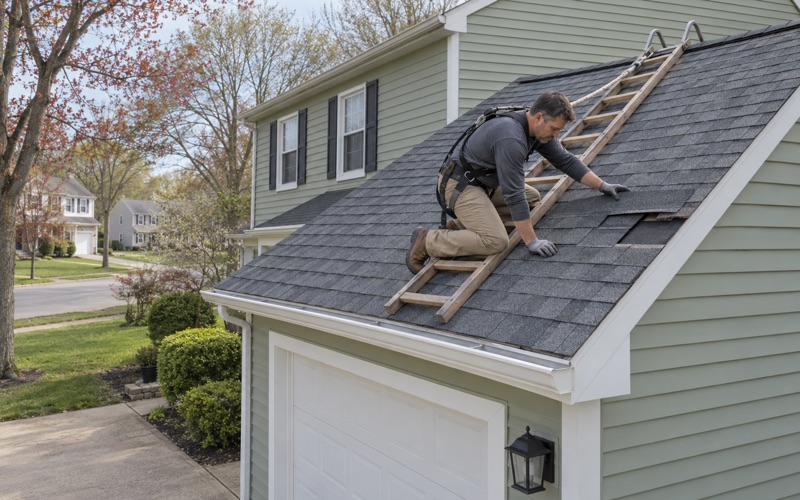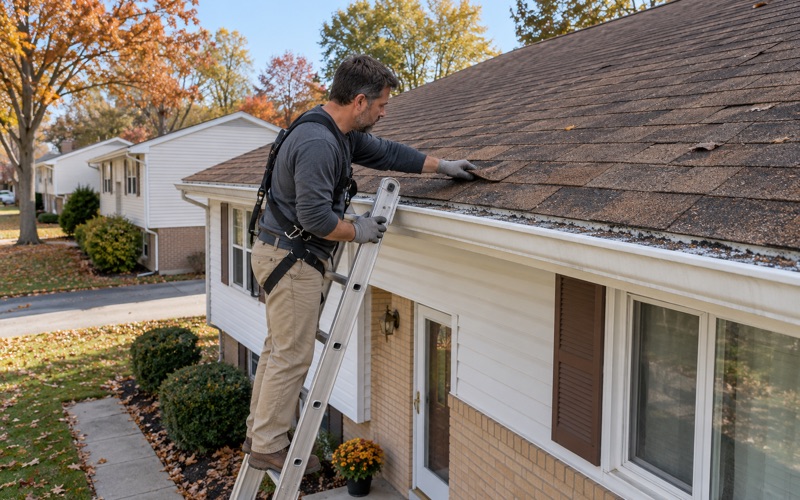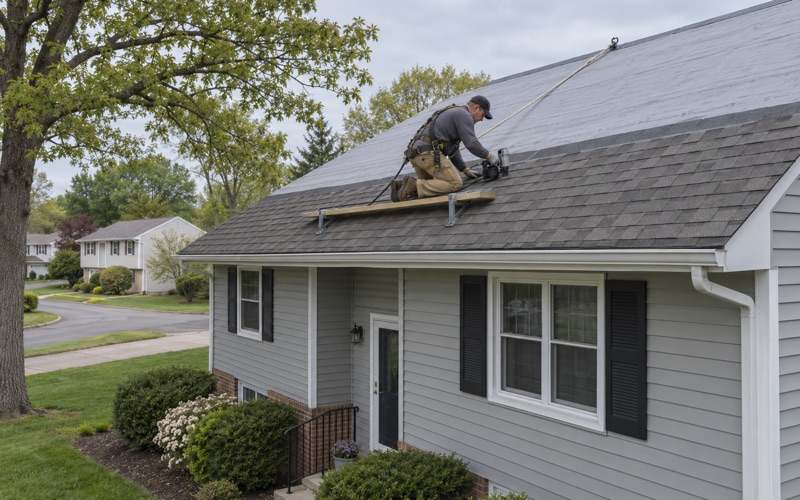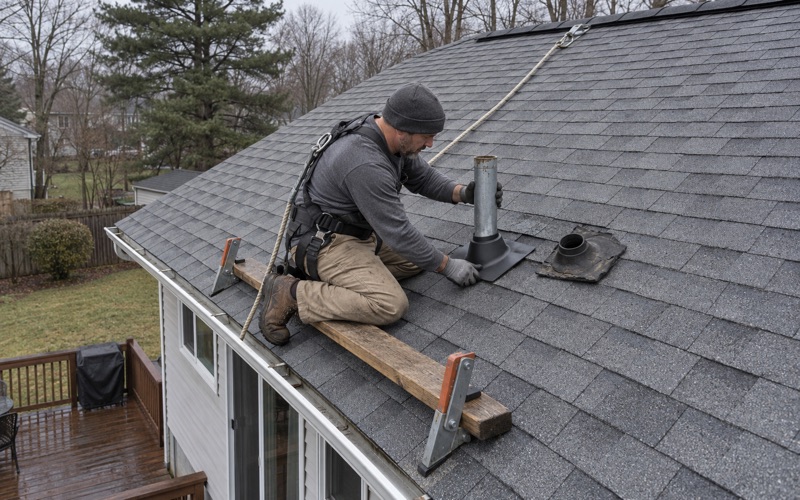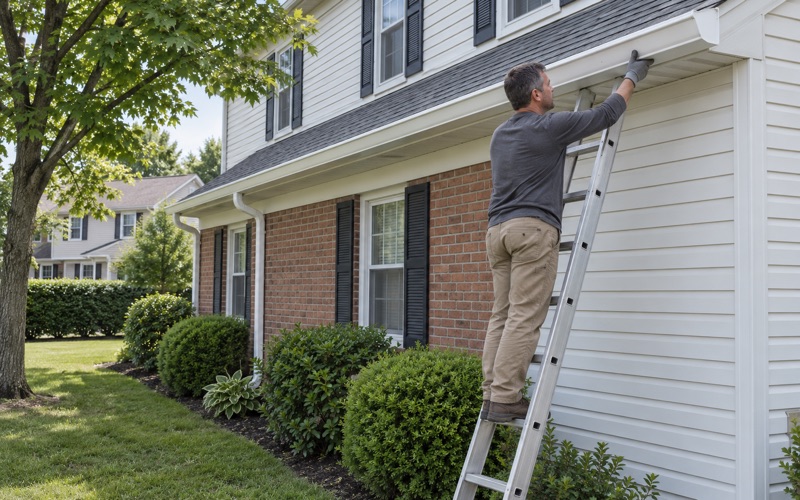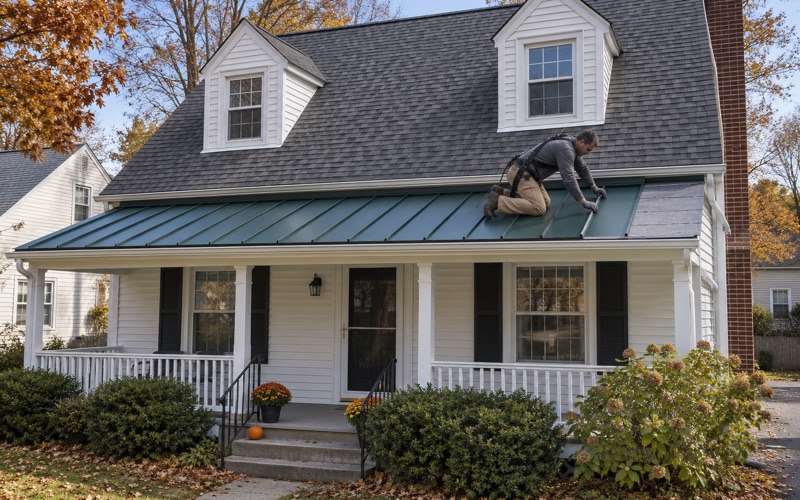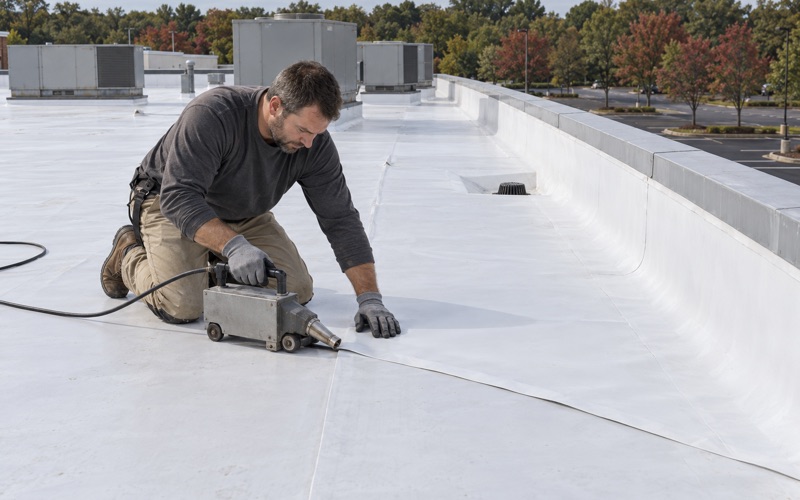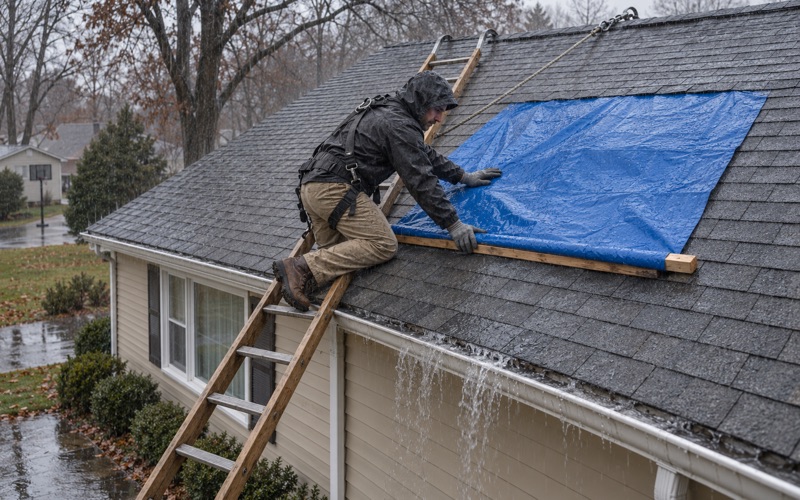
East Brunswick has spent more than 20 years on roofing in North Arlington and the surrounding part of New Jersey, and most calls begin the same way: water showing up somewhere it should not. We look in the attic as well as on the roof before anything is priced, because a stain on a ceiling is rarely sitting directly under the spot where water gets in.
Once the source is found, you get a straight answer on whether the roof can be repaired before anyone mentions replacement. When replacement is the right call, our written scope breaks tear-off, decking, underlayment, flashing, ventilation and gutters into separate lines, so a second estimate can be laid beside ours and compared item by item.
The borough’s largest roofing story is not on a residential street, though. It sits on cemetery ground, where the biggest roofed buildings in town keep growing. Looking at how that kind of institutional project is designed and approved is a useful way to see what makes a house roof a different job altogether, and what we actually bring to one.
Holy Cross Cemetery and North Arlington’s Largest Roofs
A 208-Acre Cemetery Between Two Streets
Holy Cross Cemetery is the Archdiocese of Newark’s cemetery in North Arlington, opened in 1915 and spread across 208 acres between Ridge Road on the west and Schuyler Avenue on the east. Its address is 340 Ridge Road, and about 300,000 people are buried there, which makes it one of the few very large parcels in the borough.
That open ground, along with Riverside County Park, stands out in a borough that counted 16,457 residents at the 2020 census and is otherwise built up with houses and small apartment buildings. The cemetery’s buildings, not its lawns, are where the roofing scale shows, and they belong to a different world of design and approval than the homes nearby.
A 250,000-Square-Foot Mausoleum, Nearly Full
The existing mausoleum covers 250,000 square feet and was designed for 35,747 spaces, with its latest addition opened in 2012. When the Archdiocese presented new plans to the mayor and Borough Council in July 2022, that building was described as nearly full. By April 2024, Jersey Catholic reported it 95 percent reserved.
A building that size keeps a very large interior dry, and the roof over it protects tens of thousands of crypts rather than one family’s belongings. Nothing published describes what covers that roof, how steep it is or who maintains it, so we will not guess. What can be said is that the duty it carries is unlike anything asked of a roof on a house.
Two New Buildings on the Existing Footprint
Rather than spread onto open ground, the Archdiocese planned both new buildings on the existing footprint. Michael Saul, the architect who directs construction, planning and development for the Office of Catholic Cemeteries, presented the designs. The exteriors call for polished and honed granite veneer with rough ashlar accents, chosen to match the face of the older mausoleum.
That choice tells you how the project was approached. Every surface was specified to sit beside an existing building, and the roofs and skylights had to work with granite walls that were designed rather than simply ordered. It is the opposite of a house re-roof, where an owner picks a shingle color from a sample board.
Looking for roofing closer to Madison? See Roofing in Madison.
Two New Mausoleums: Skylights, Granite and a Wood Cathedral Ceiling
The Open-Air Mausoleum of the Holy Spirit
The smaller building covers 8,945 square feet and holds 1,600 crypts and 500 urn niches. Its central committal space sits under a wood cathedral ceiling, and the 2022 plans estimated about 18 months of construction. Cardinal Tobin blessed the groundbreaking in April 2024, and the cemetery now lists the building as open, with glass skylights, mosaics and cremation niches.
The phrase open-air is the telling detail for anyone who works on roofs. Jersey Catholic described granite-covered crypts and fixed skylights, and in a structure that is not sealed on every side, the roof and the ceiling under it are protecting finishes that people walk up to and touch. A wood ceiling over that space has to stay dry for decades.
The Chapel Mausoleum of Our Lady
The second building is the larger of the two at 22,000 square feet, fully enclosed and climate-controlled, with room for 2,600 caskets and up to 3,500 urns. The 2022 presentation estimated about 30 months to build. The cemetery’s own page lists it as under construction and available for advance selection, with stained-glass windows, an Assumption mosaic and two glass cremation niche chapels.
No completion date has been published, so we will not suggest one. What matters for this page is the design brief: a conditioned interior under a roof, wrapped in granite to match the older building, with decorative glass and mosaic work that a single roof leak could damage.
What Skylights Ask of Any Roof
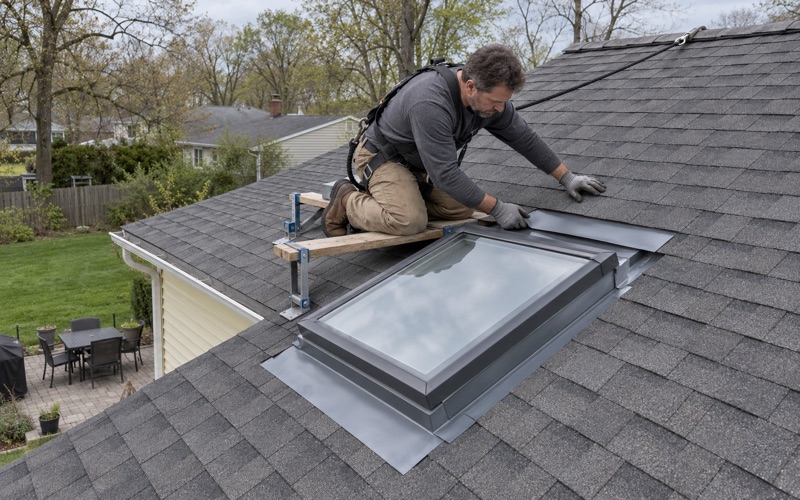
The fixed skylights at the cemetery are a reminder that every opening in a roof is a joint that has to be detailed. On any building, a skylight is either curb-mounted, sitting on a raised frame flashed into the roof, or deck-mounted, set close to the roof plane with its own flashing kit. Either way, the water-shedding work happens at the edges.
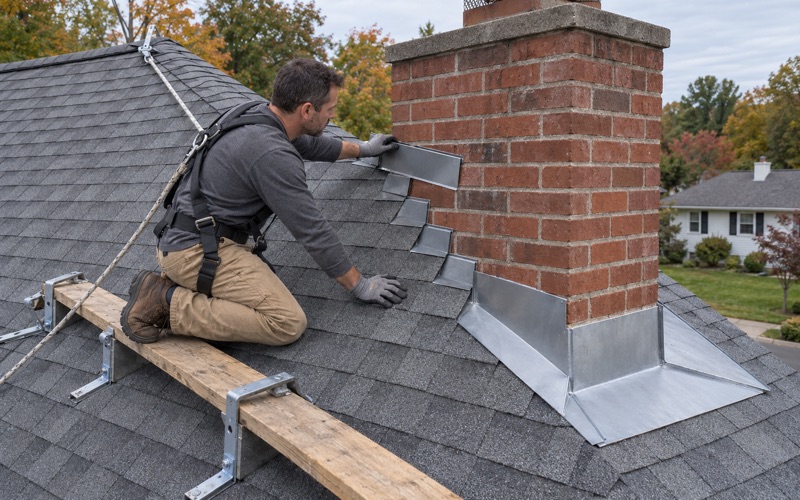
On houses, older skylights are a common leak source, and the glass is rarely the culprit. The flashing around the unit, the seal between frame and curb and the shingle courses above it are where we look first. During a replacement, step and counter flashing at walls, chimneys and skylights is replaced with the roof rather than bent back into service under new material.
Institutional Roofs in the Ridge Road Redevelopment Area
The Borough Council’s Final Say
Holy Cross Cemetery lies inside the Ridge Road Redevelopment Area, a zone that appears on the North Arlington zoning map alongside the residential and commercial districts. Because of that placement, the new mausoleum designs went to the borough’s land-use board for review, with the Borough Council holding the final say on the project.
Redevelopment status shapes what a building looks like, not only whether it gets built. The matching granite, the ashlar accents and the overall form were part of a public review, which is normal for institutional buildings. A homeowner re-shingling a house a few blocks away never stands before a governing body to defend a roofline.
Commercial Permit Work
Re-roofing a mausoleum, a church or a school is commercial permit work in New Jersey, outside the ordinary-maintenance treatment the state construction code gives roof covering on detached one- and two-family houses. Institutional owners typically bring in design professionals to specify the roof system and to watch the installation on their behalf.
For a house, our estimate states in writing whether the job is permit work under the state construction code, instead of repeating an outdated percentage rule passed along by word of mouth. Buildings with three or four units, which hold 12.6 percent of the borough’s housing units, are treated differently from a detached house, since a permit or minor-work notice applies there.
The Construction Department and the Meadowlands District
Construction permits in the borough run through the Construction Department at 214 Ridge Road. The Building Sub-Code Inspector keeps inspection hours on Tuesday, Wednesday and Thursday around midday, so building inspections are booked into those windows. Fees depend on several variables and are quoted by phone or at the counter.
North Arlington is also one of the 14 municipalities in the Hackensack Meadowlands District. Inside the District, state rules call for a zoning certificate from the New Jersey Sports and Exposition Authority before construction, remodeling or reconstruction begins, with demolition and maintenance excepted. Whether a particular re-roof counts as maintenance there is a question for the authority’s Zoning Officer of the Day.
Why a Mausoleum Roof Is Not a House Roof
Climate Control Changes the Stakes
An enclosed, climate-controlled interior like the chapel mausoleum’s depends on its roof as part of a sealed envelope. A leak there threatens mosaics and granite finishes while mechanical equipment works to hold the air steady. That is work for architects and commercial roofing crews, not a project a residential contractor should present as familiar ground.
We say that plainly because it is true: we have no connection to the cemetery, its builders or the Archdiocese, and we did not work on any of these buildings. Our work is the roofs on the houses around them, where the scale is smaller but the questions are every bit as specific.
Where a House Roof Earns Its Own Care
A house roof skips the public design review, but it still has details that decide whether it lasts. Attic ventilation gets checked on every replacement, because a roof that cannot breathe ages from underneath. Gutters and leaders are sized and pitched along with the roof, so water leaves the house instead of collecting at the foundation.
When old roofing comes off and the decking underneath is damaged, we photograph it and show the owner before it is replaced, at a per-sheet price already written into the contract. Contracts follow New Jersey’s home improvement rules, including the three-day cancellation notice, and the yard, driveway and gutters are cleaned each day with a magnet sweep for nails.
Storms, Sales and Solar Panels
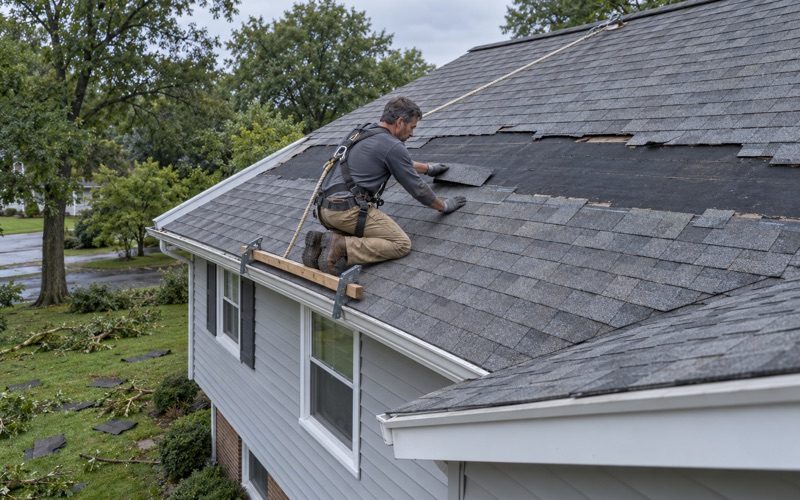
After a storm, we photograph the damage and write it up for the owner’s own claim, and a member of our crew will meet the adjuster on site when asked. The claim itself stays in the owner’s hands. For a house going on the market, we can prepare a written roof condition report the seller can pass to the buyer’s inspector.
Quotes treat New Jersey sales tax the way the state does: a repair is taxable, while a new roof is exempt with Form ST-8. Where solar panels sit on the roof, their removal and reinstallation go into the schedule from the start, rather than turning up as a surprise on the first morning of the job.
- 20+ Years on Roofs
- Itemized Written Scopes
- Attic-First Leak Checks