East Brunswick has been doing roofing in Red Bank and across central New Jersey for more than 20 years, and on the river side of this borough one question shapes an estimate before shingles ever come up: does the building sit in a mapped flood hazard area? For most houses the answer changes nothing about the work. For a riverfront owner, it decides who looks at the job before it starts and how its price has to be written.
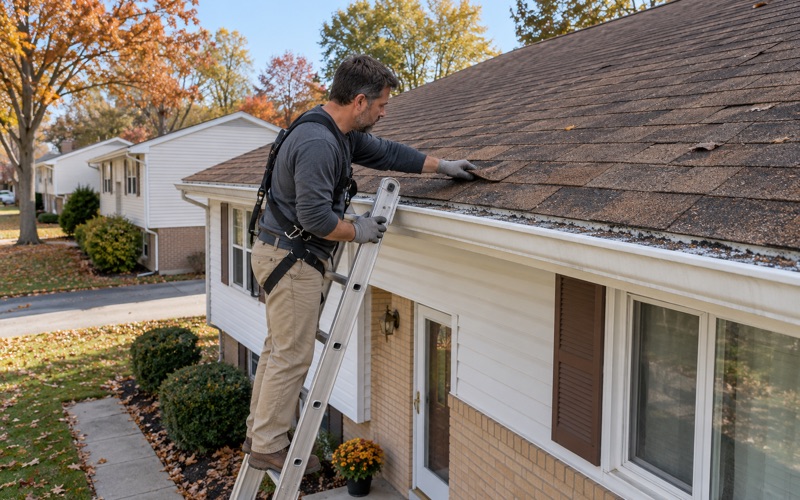
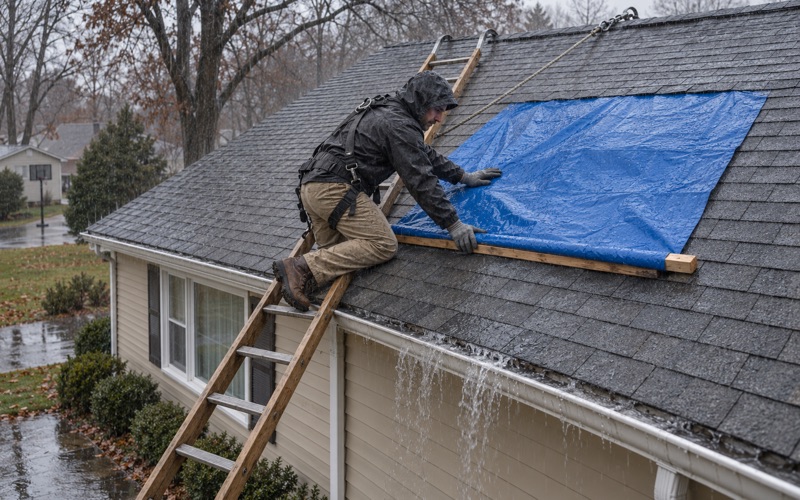
We begin every leak call in the attic as well as on the roof, so the water is traced to the place it actually gets in before anything is priced. Then we give a straight answer on whether the roof can be repaired. Replacement only enters the conversation when a repair would be money spent on a roof that is already finished.
Every estimate we write says in plain terms whether the job is permit work under the state construction code. On a property near the water it also flags the separate local floodplain step, because that review runs on rules of its own, and the dollar figure on our paperwork becomes part of what the borough weighs.
The Navesink Edge and Red Bank’s 2022 Flood Ordinance
Red Bank sits on the southern bank of the Navesink River, the area’s original transportation route to the Atlantic Ocean and to other ports. The river still sets the terms for property along its edge. During Hurricane Sandy the Navesink overtopped the Marine Park bulkhead and covered the shoreline at Maple Cove, a reminder of how far the water can reach when a big storm pushes it.
What Ordinance 2022-10 replaced
On June 8, 2022 the borough adopted Ordinance 2022-10, which repealed its old flood hazard chapter and put a new Chapter 364, Flood Damage Prevention, in its place. It took effect on passage. Red Bank has taken part in the National Flood Insurance Program since May 19, 1981, and the rewrite changed how the borough handles building work of every size inside a flood hazard area.
The ordinance adopts FEMA flood map panels dated 2009, 2018 and 2022, along with preliminary panels from 2014 and 2015 used as best available data. It lists the Swimming River as a State-studied water. It also sets the local design flood elevation at the best available flood elevation plus one foot of freeboard, which is the height the flood-resistant rules build toward.
Why roofing is named on the permit list
Section 101.5 is the line a roofer needs to read. It takes the items the Uniform Construction Code treats as ordinary maintenance and minor work, including non-structural replacement-in-kind of windows, doors, decks, flooring and roofing, and says they ‘shall be evaluated by the Floodplain Administrator through the floodplain development permit’. Roofing is not implied there. It is written on the list by name.
Section 103.1 makes the Borough Engineer the Floodplain Administrator. So for a building inside a flood hazard area, a like-for-like re-roof that the state treats as routine still has a local reviewer. The purpose of that review is to test the job against the ordinance’s substantial damage and substantial improvement section, which is where the money question begins.
What the ordinance leaves to the map
The ordinance does not say which Red Bank houses sit in a mapped flood hazard area, and we have not mapped any of them. That answer comes from the FEMA panels the borough adopted and from the Borough Engineer’s office. If your property is close to the river, check it before the estimate is final rather than after a crew date is set, and we will plan around what you learn.
Looking for roofing closer to Springfield Township? See Springfield Township Roofing.
How a Roof’s Cost Counts Toward the 50 Percent Line
The borough wants to see a roof job for a reason that comes down to arithmetic. Under the ordinance’s definitions, substantial improvement and substantial damage both begin where the cost of work equals or exceeds 50 percent of the building’s market value. Crossing that line brings the building under the flood-resistant construction rules, and those reach well beyond the roof itself.
Market value is set before the work
Section 103.14(1) measures against the building’s market value before the work starts, or before the damage happened when a storm is the cause. The comparison is the cost of the work against that earlier figure. An owner who knows roughly where the value stands can read the rest of the review with far fewer surprises.
We do not set that value, and we never guess at it on an estimate. The borough decides what market value it accepts. What we can do is make sure the cost side of the comparison is accurate, complete and easy to check, so the number the Floodplain Administrator works from matches the job the owner is actually buying.
Ordinary maintenance is counted, not set aside
Section 103.14(2) directs the Floodplain Administrator, working with the Construction Official, to determine and include the costs of all ordinary maintenance and minor work performed in the floodplain. A re-roof is not waved through as routine upkeep. Its cost is added to the regulated work on the same building when the 50 percent test is run.
That is why a roof is rarely the whole story. A roof replacement is one line in the calculation, and we never tell an owner that it decides the outcome by itself. What the borough weighs is the full value of the work it reviews against a market value it accepts, and that determination belongs to the borough.
No look-back period is written in
The ordinance text we have read sets no multi-year window in its definitions of substantial damage and substantial improvement. We do not quote one, and we would be cautious of anyone who does without pointing to the clause. Questions about timing and earlier projects on the same building belong with the Floodplain Administrator, and we would rather send an owner there than guess.
Pricing a Riverfront Roof for the Floodplain Administrator
Section 104.2(5) says the floodplain development permit application states the valuation of the proposed work, including the valuation of ordinary maintenance and minor work. On a riverfront re-roof, our estimate is the natural source for that figure. That raises the bar on how it is written, because a vague lump sum is hard to explain to a reviewer.
Line items a reviewer can follow
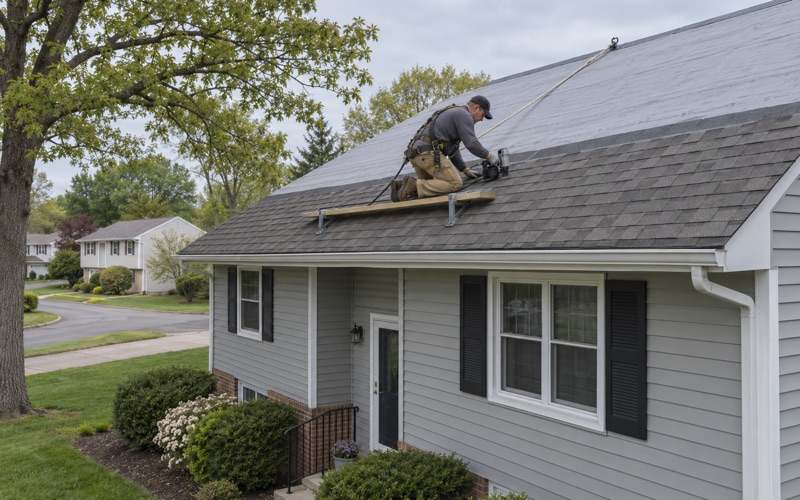
Our written scopes break a roof into separate lines for tear-off, decking, underlayment, flashing, ventilation and gutters. The format exists so a homeowner can compare two estimates item by item. Near the Navesink it serves a second purpose, because the owner can show the Floodplain Administrator exactly what is being replaced and what each part is worth.
We price the job as the work actually stands. We do not shave a figure to keep it under a line, and we do not pad it either. An honest valuation is what the application asks for, and the ordinance sets fines of up to $1,250 for violations, with each day counted as a separate one.
Decking and flashing priced ahead of time
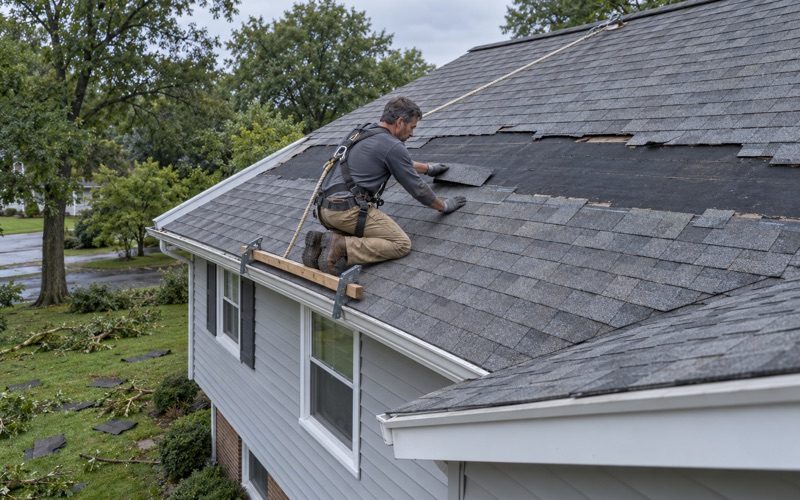
Rotten decking only shows itself once the old roof comes off. When we find it, we photograph the damage and show the owner before replacing a single board, at a per-sheet price already set in the contract. On a floodplain file that keeps the final cost predictable instead of an addition that surfaces after the application has stated a value.
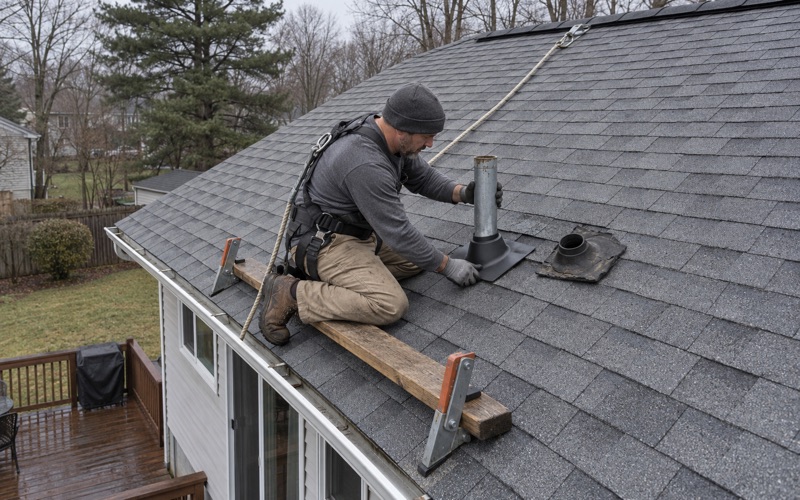
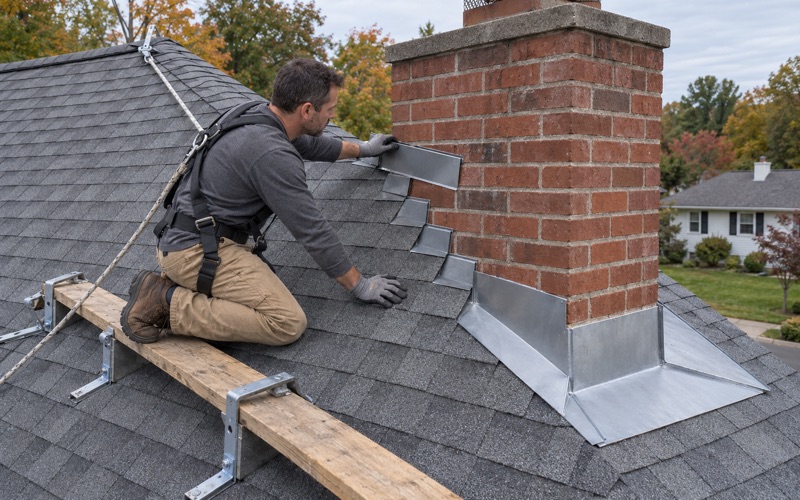
Step, counter and chimney flashing is replaced with the roof rather than reused under new material, and it appears on the estimate as its own priced line. Attic ventilation gets the same treatment. We check it on every replacement, because a roof that cannot breathe ages from underneath, and a known ventilation cost is easier to state correctly than one discovered midway.
Gutters, leaders and storm records
Gutters and leaders are sized and pitched together with the roof, so water leaves the house instead of collecting at the foundation, which matters on any lot near the water. They are priced as part of the same scope. That way the valuation the owner reports covers the drainage work too, instead of leaving it as a separate job that never made it onto the application.
When a storm has already done damage, we photograph it and write it up for the owner’s own claim, and our crew will meet the adjuster on site when asked. The record serves the borough as well. Because substantial damage is measured against the value before the damage, a clear account of what the storm did and what the repair costs gives the owner documents to answer with.
When No Construction Permit Still Means a Floodplain Review
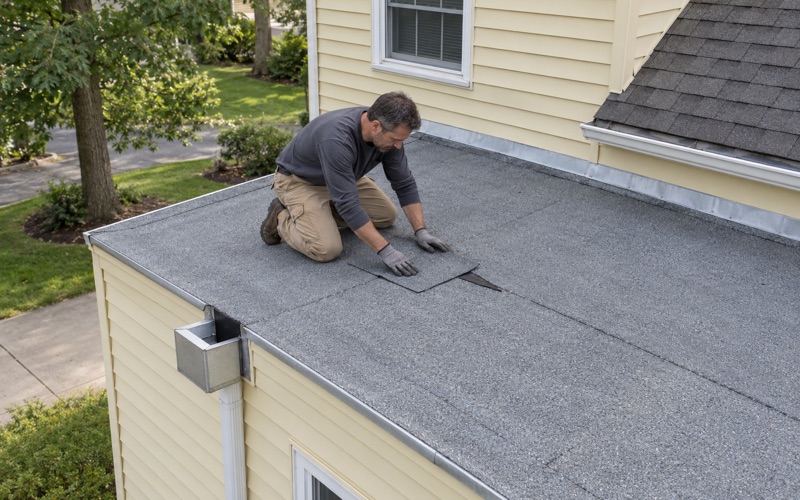
For a detached one- or two-family house, New Jersey’s Uniform Construction Code treats repair or replacement of existing roof covering as ordinary maintenance. It needs no construction permit, inspection or notice, as long as the work leaves structural and fire safety elements alone. That state rule applies in Red Bank exactly as it does in every other New Jersey town.
Two separate questions on one estimate
The floodplain development permit is not a construction permit, and Ordinance 2022-10 does not turn one into the other. One question is whether the state code calls the job permit work. The other is whether the building sits in a flood hazard area where the borough reviews ordinary maintenance. Each estimate we write answers the first and flags the second for the owner to confirm.
We also do not repeat the outdated percentage rule some contractors still quote for New Jersey re-roofs. Whether a job is permit work depends on what the job involves, and that call is made under the current state code, one roof at a time. We put the answer in writing so the owner is never relying on a remark made on the driveway.
When the roof job becomes construction work
Some roof jobs go beyond ordinary maintenance. Replacing rotted rafters, reframing a section or changing the roof structure is work the code excludes from the maintenance exemption, and then a construction permit through the Red Bank Building Department at 90 Monmouth Street becomes part of the job. We say so in writing before any contract is signed, so the schedule allows for it.
Contracts, tax and timing near the river
Our contracts follow New Jersey’s home improvement rules, including the three-day cancellation notice. On a riverfront property we plan the start date around the floodplain step rather than beginning before the owner has the borough’s answer. Under section 104.4 a floodplain permit lapses if work is not commenced within 180 days, so timing matters at both ends of the process.
Sales tax is stated the way New Jersey treats each kind of job. A repair is taxable, while a new roof can be exempt as a capital improvement with Form ST-8. Between the code question, the floodplain question and the tax question, an owner close to the Navesink should see every answer on paper before the first shingle comes off.
- 20+ Years on Roofs
- Itemized Written Scopes
- Attic-First Leak Checks