East Brunswick has handled roofing in Robbinsville for more than 20 years, and the work here carries a wrinkle few towns share. Some of the houses we are asked to look at stand on land whose development rights were sold to the public. On those properties the roof is ours to repair or replace like any other, but the building beneath it answers to a recorded deed as well as to the township.
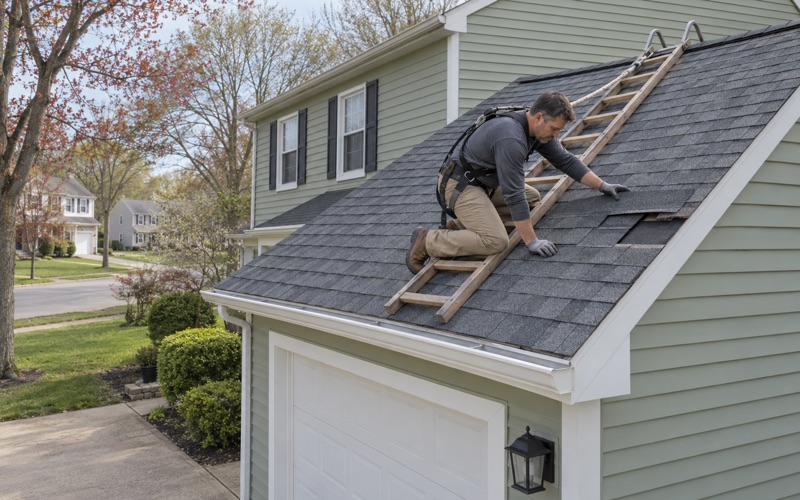
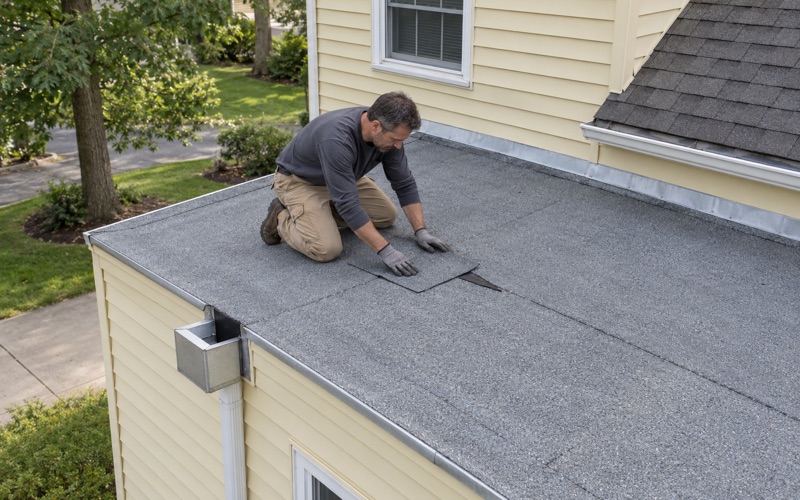
Our first stop on any leak call is the attic, not the ladder. Water rarely gets in where the ceiling stain shows, so we follow wet sheathing and darkened rafters back to the actual opening before a single number goes on paper. Once we know where the leak lives, we tell you straight whether a repair will hold, and only then is a new roof part of the conversation.
This page walks through what changes when the house sits on a preserved farm, where the easement holder’s role begins and ends, how solar fits under the state’s farm rules, and what the rest of the township’s homes usually need from a roofer. We stick to what the published guidance actually says, and we point out the places where it goes quiet.
Preserved Farms in Robbinsville and the Deed That Stays With the Land
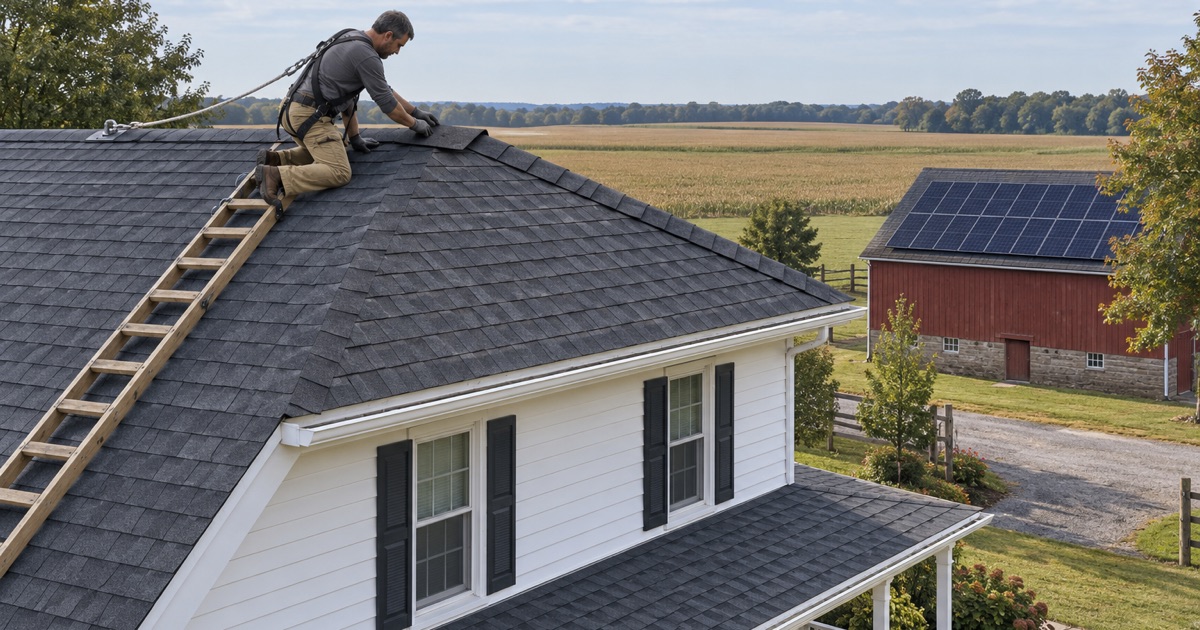
Robbinsville Township in Mercer County sits on the border between the New York and Philadelphia metropolitan areas, and its 2020 census count of 15,476 was the highest in its history. Growth has not erased the farm belt. A good deal of open ground in the township is made up of preserved farms, held in agriculture by a deed of easement that runs with the land rather than with whoever owns it this year.
What the State Counts, and Through When
The Garden State Preservation Trust tallies farmland preservation town by town. Its table covering May 1985 through fiscal year 2020 lists 23 Robbinsville farms on 1,363 acres preserved with State money. That figure stops at 2020 and leaves out farms preserved by donation, by transfer of development rights, or without State payment, so it describes one funding stream over one period rather than every protected acre.
Within Mercer County, the same table puts Robbinsville behind Hopewell Township and Hamilton in preserved acreage, and ahead of East Windsor, Lawrence and West Windsor. For a township of about 20 square miles, that is a meaningful amount of land where the house on the property lives under easement terms alongside the usual local rules.
The Township Keeps Buying Development Rights
The purchases did not end in 2020. Robbinsville’s Ordinance 2024-11 authorized buying the development rights on about 12.34 acres at 44 Tindall Road for $1.7 million. Each acquisition like that adds another property where the owner keeps the farm and the farmhouse, while the right to turn the ground into building lots has been bought by the public.
What the Easement Guidance Says About Houses
The State Agriculture Development Committee, the state agency that runs the farmland preservation program, publishes guidance on homes inside the easement area. Its version updated in March 2025 says existing residences may remain, and that existing residential buildings and ancillary residential structures, such as a garage, may be improved, subject to municipal ordinances. It also says non-agricultural uses may not take place inside those structures.
Every farm’s deed is its own document. Some carve out exception areas, and the guidance allows one residual dwelling site opportunity per 100 acres where no house or exception area exists, with approvals required before anything is built. We never guess at what a particular deed says. If you have yours, bring it to the estimate and we will plan the roof work with it on the table.
Looking for roofing closer to Berkeley Heights? See Roofing in Berkeley Heights.
Re-Roofing the Farmhouse Versus Replacing It
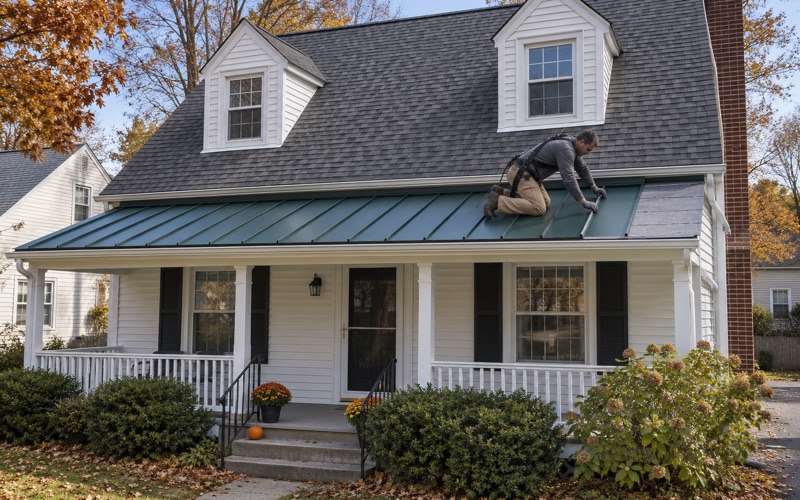
The line the guidance draws matters more than anything else on a preserved farm. Improving an existing house is subject to municipal ordinances, while relocating or replacing it is subject to approval from the Committee, the county and the township. On that wording, a new roof on the house you already have reads as an improvement. The State text never mentions roofs by name, so we treat that as our reading of the guidance rather than a ruling.
A New Roof as Ordinary Upkeep
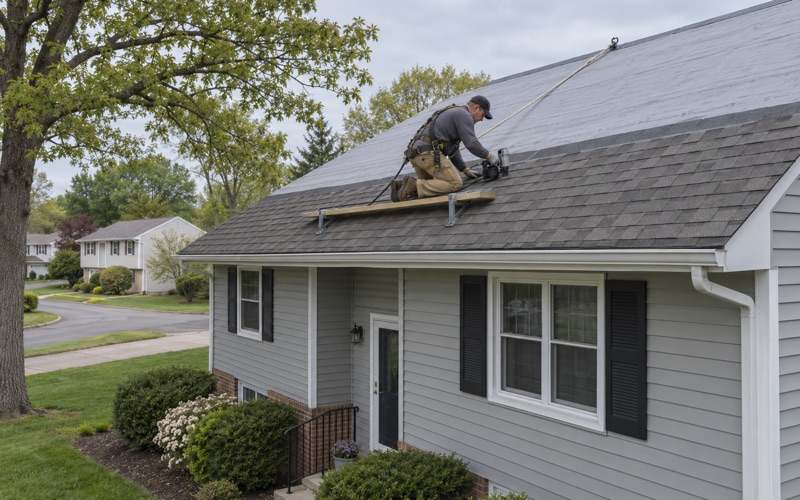
Under the state construction code, repairing or replacing the roof covering on a detached one- or two-family dwelling is ordinary maintenance. A farmhouse standing on its own is a detached dwelling, so a straightforward tear-off and new shingle roof is upkeep rather than a building project. Our written estimate still says plainly whether a given job is permit work, because new framing or a structural change is a different matter.
A farmhouse roof can hide more history than a newer house. When the old layers come off and soft or broken decking shows up, we photograph it and show you before anything is replaced, at the per-sheet price already written into the contract. The state’s rehabilitation subcode also calls for a full tear-off where the roof already carries two or more layers, or is slate, wood shake or tile.
Flashing, Ventilation and Gutters
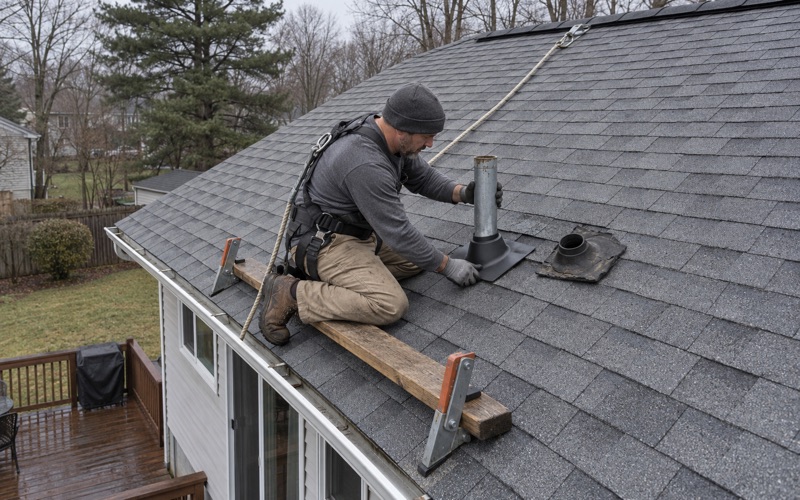
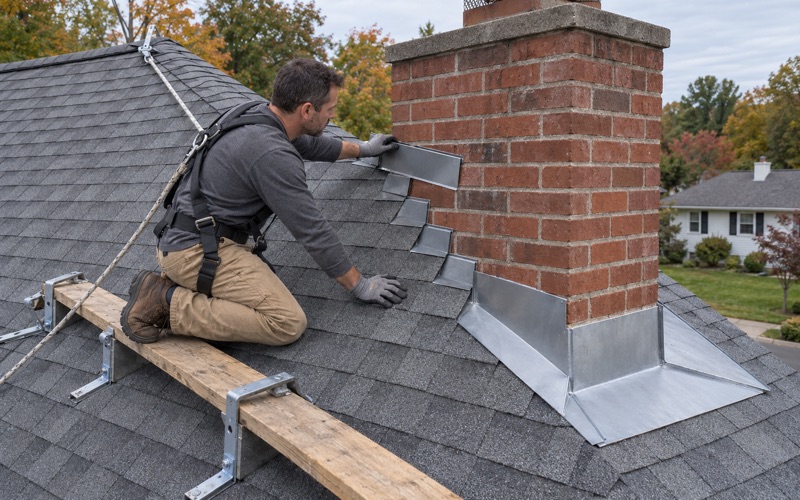
Older houses tend to have chimneys, dormers and porch tie-ins where water likes to sneak in. We replace step, counter and chimney flashing along with the roof instead of bending the old metal back into place under new shingles. A chimney wider than 30 inches gets a cricket behind it, so water is steered around the stack instead of pooling against the brick.
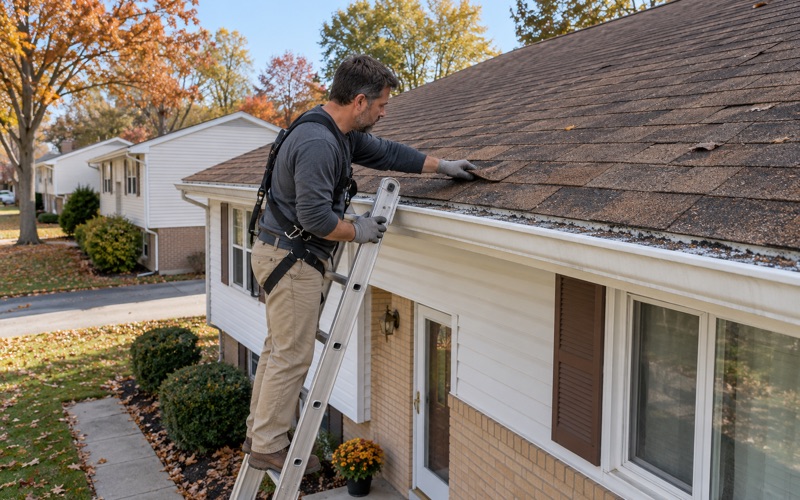
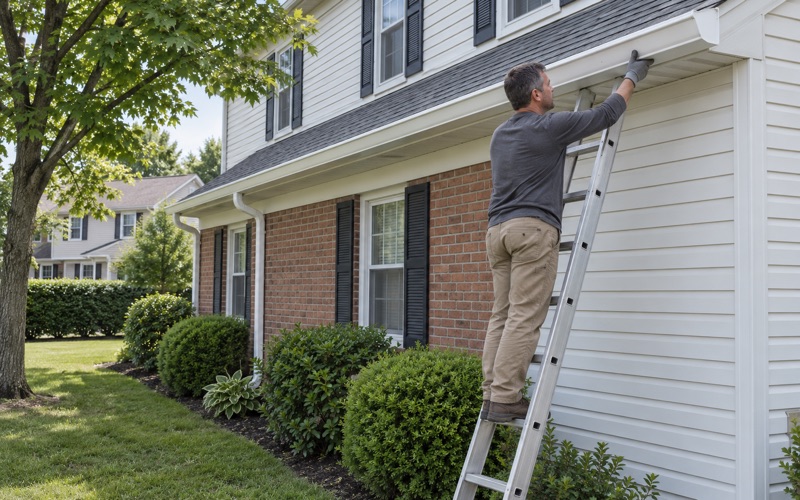
Every replacement also includes a check of the attic ventilation, since a roof starved of airflow ages its shingles from underneath. A ridge vent only works when enough soffit intake feeds it. Gutters and leaders are sized and pitched as part of the same job, so the runoff from a broad farmhouse roof is carried away from the foundation rather than dumped beside it.
When the House Itself Would Change
Replacing a farmhouse outright, or moving it, is where the easement holder comes first. That path runs through the State Agriculture Development Committee, the county and the township before construction starts, and no roofing estimate settles it. If an inspection turns up framing so far gone that replacing the building is on the table, we put our findings in writing and leave the approvals to you and the agencies involved.
Solar Panels on a Preserved Farm’s Roofs
Solar on preserved farmland has its own regulation, chapter 2:76-24 of the New Jersey Administrative Code. A farm owner applies to the Committee, and the rule limits annual generation to the farm’s prior-year energy demand plus 10 percent. It also offers an alternative limit tied to occupying no more than one percent of the farm, and holds solar facilities to no more than one acre of impervious cover.
Panels Already on the Roof in 2010
That generation cap sits on top of whatever was already producing power from the roofs of the farm’s buildings on January 16, 2010. Rooftop panels in place on that date do not count against the newer allowance. Anything added since then goes through an application the Committee reviews, so the farm’s own energy use, not the size of a roof, sets what is possible.
We do not size systems or tell anyone that a particular roof qualifies. That is a question for the application and the farm’s records. Our part is making sure the roof under any planned array is sound enough to outlast the panels, because tearing off shingles from beneath a working array a few years later costs far more than doing it first.
Re-Roofing Under Existing Panels
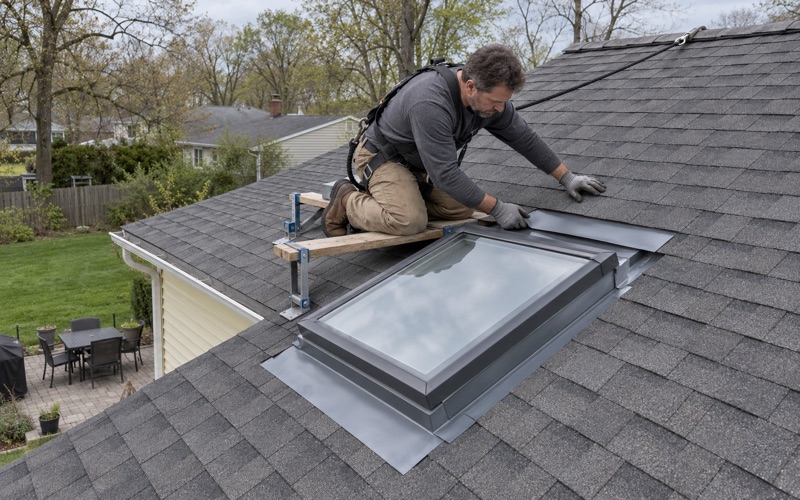
If panels already sit on the farmhouse or a residential garage, the re-roof has to plan around them. We build the panel removal and reinstall into the schedule from the first conversation, coordinated with whoever services the array, rather than discovering the racking on the morning of tear-off. Every penetration the racking makes is flashed as part of the new roof.
Timing matters on a working property. A roof left stripped for an extra day because the solar crew was not booked is a roof exposed to weather, and on a farm it also means equipment, deliveries and people moving around a jobsite longer than anyone wants.
Roof Repair and Replacement Across Robbinsville
Most Robbinsville homes are nowhere near a farm field. The Census Bureau’s 2024 five-year survey counts 2,928 detached houses and 1,607 one-unit attached homes in the township, and about three in four housing units were built between 1980 and 2009. That is a large stock of houses whose roofs have now been through decades of New Jersey weather.
Detached Houses and Attached Homes
A re-roof on a detached house is ordinary maintenance under the state code. Attached townhomes fall outside that rule, so re-roofing one is permit work. In townhouse, condominium and 55+ communities, the association’s documents may assign the roof to the association rather than the owner, so we confirm who holds the roof before writing any estimate.
Estimates You Can Compare
Our written scopes break tear-off, decking, underlayment, flashing, ventilation and gutters into separate lines, so a second bid can be laid beside ours item by item. Sales tax is shown the way New Jersey treats each job: charged on a repair, and exempt on a new roof when the owner completes Form ST-8, the certificate for an exempt capital improvement.
Contracts follow the state’s home improvement rules, including the three-business-day cancellation notice. New Jersey does not issue a roofing license; home improvement contractors register with the state under the Contractors’ Business Registration Act, and that registration number belongs on any contract you sign.
Storm Calls, Home Sales and Cleanup
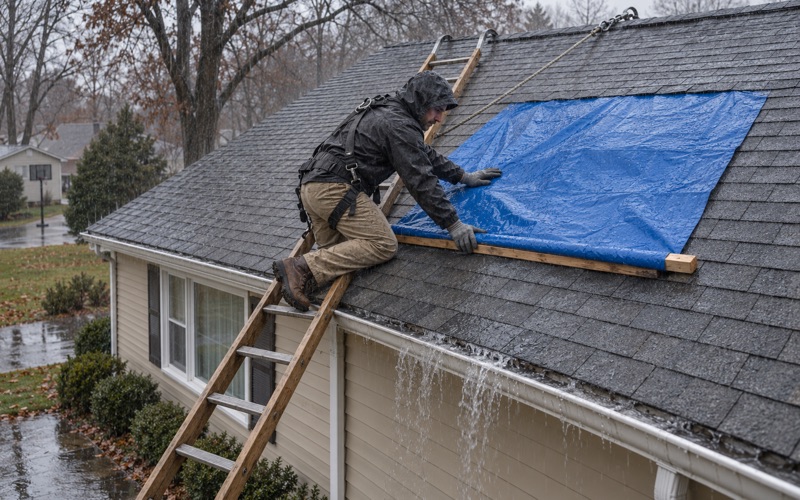
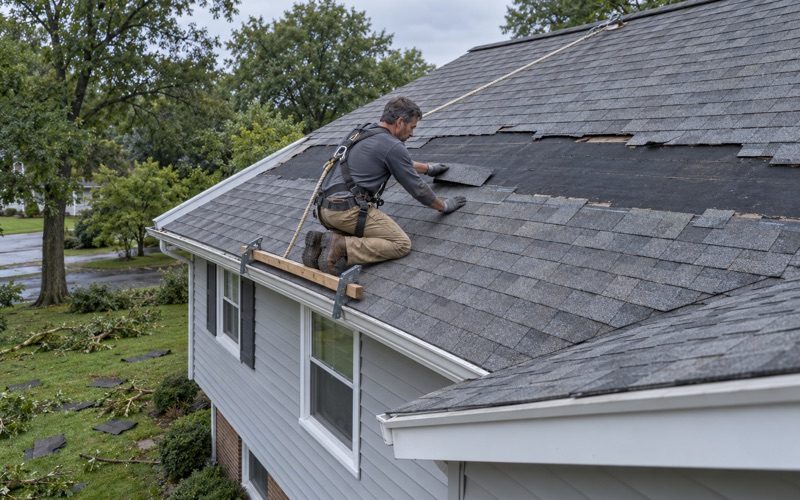
After wind or a falling limb, we photograph the damage and write it up for your own insurance claim, and we will meet your adjuster on site when you ask. The claim itself stays between you and your insurer. Selling a house in Robbinsville? We provide a written roof condition report you can hand to the buyer’s inspector.
At the end of every work day the driveway, yard and gutters are cleaned, with a magnet sweep for stray nails. That holds whether the job is a farmhouse set back on a country road or an attached home closer to the middle of town, because a roofing nail in a tire is the same headache anywhere.
- 20+ Years on Roofs
- Itemized Written Scopes
- Attic-First Leak Checks