East Brunswick provides roof inspection in East Brunswick, NJ, serving surrounding cities including East Hanover, Highland Park, South Amboy, Metuchen and Aberdeen. In more than 20 years on local roofs, we have learned that the most important part of an inspection happens under the roof, in the attic, where sheathing, ventilation and moisture show what the shingles above are hiding.
Every inspection covers both sides of the roof deck. Outside, we check shingles, flashing, penetrations, valleys, edges and gutters. Inside, we look at the underside of the sheathing, the rafters, the insulation and the airflow, because water stains and frost marks there tell us where a roof is failing before a ceiling ever shows it.
The result is a written report with photographs and a straight conclusion. If the roof is sound, we say so. If it needs a repair, we name the repair, and if it is near the end of its life we explain why, without turning an inspection into a sales call.
What a Roof Inspection Covers
Shingles, Granules and Seal Strips
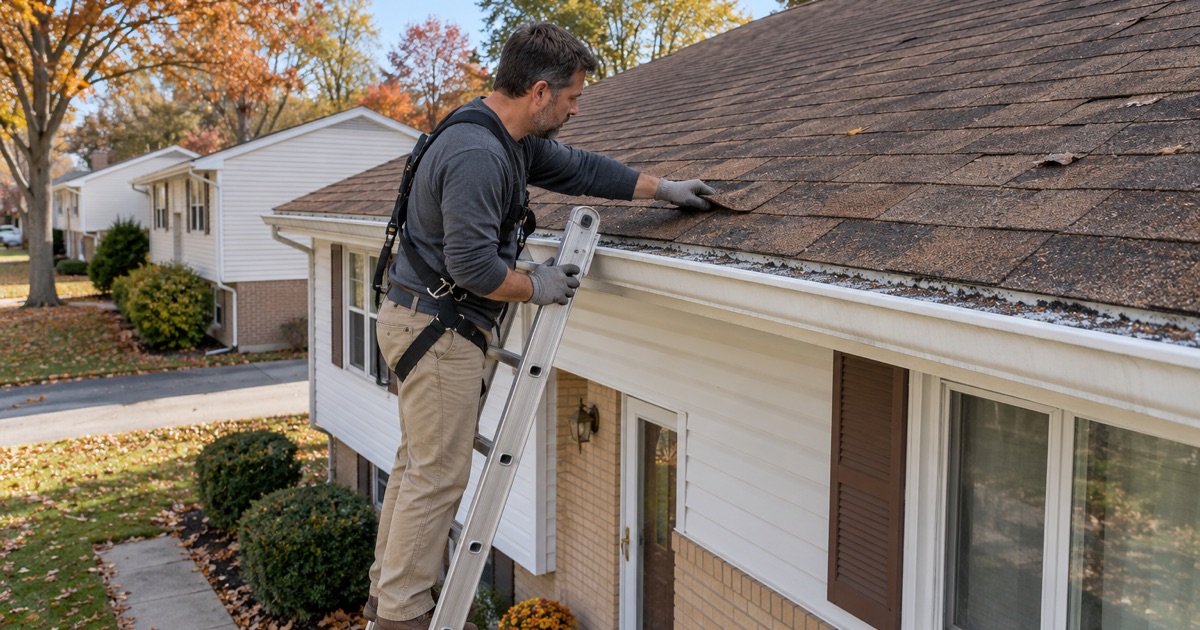
We check shingles for curling, cracking, creasing and granule loss, and we lift tabs by hand in several spots to test the seal strips. Granules collecting in gutters and bare patches on the shingle surface are signs of aging that sunlight speeds up. The report notes the shingle type, the approximate number of layers and how much life the surface shows.
Wind damage gets its own attention. A shingle with a broken seal strip or a crease across it may still be in place but will not survive the next strong gust. Finding those early means a small repair now instead of missing shingles and a leak after the next storm.
Flashing and Penetrations
Flashing is where most leaks begin, so we inspect every chimney, wall, skylight, vent and pipe. Step flashing should be woven into the shingle courses, counter flashing should be set into the masonry, and pipe boots should be intact rather than cracked. Caulk used as a substitute for flashing is noted as a defect, not a fix.
We also look for missing kick-out flashing where a roof edge meets a wall, and for chimneys wider than 30 inches that lack a cricket. Both details are commonly skipped on older homes, and both send water where it does damage out of sight. The report marks each problem location on the photos.
Attic Ventilation and Moisture
In the attic we check whether soffit vents are open, whether the ridge or roof vents are working and whether insulation is blocking airflow at the eaves. Poor ventilation traps heat that ages shingles from below and moisture that condenses on the sheathing in winter. Rusty nail tips and dark staining on the underside of the deck are the tell-tale signs.
Bathroom and kitchen fans that vent into the attic instead of outside are a common find, and they can drip on ceilings in a way that looks exactly like a roof leak. We note them separately, so you know which problems need a roofer and which need a simple duct extension.
Decking, Gutters and Edges
Walking the roof tells us whether the decking is soft, delaminated or sagging between rafters, which affects any future repair or replacement price. We also check drip edge, fascia condition and how gutters are attached and pitched. Rotted fascia behind a gutter often signals years of water running where it should not.
Gutters and leaders are judged on size, pitch and discharge. Water that spills over undersized gutters or empties beside the foundation is a roofing issue as much as a drainage one. The report notes whether the gutter system is matched to the roof it serves.
Inspections for Specific Situations
Selling or Buying a House
East Brunswick does not require a certificate of occupancy when a house changes hands, so the roof is judged by the buyer’s home inspector rather than the township. Sellers can give buyers our written roof condition report early, which answers questions about age, layers and flashing before they become negotiating points. Buyers can order an inspection to understand what they are taking on.
The report is written for people who are not roofers. It describes what was found, what needs attention now, what can wait and what is simply normal for a roof of that age. Clear photos make it easy for a buyer’s inspector to verify each point.
After a Windstorm or Hail
After a storm, an inspection documents what changed. We photograph missing and creased shingles, damaged flashing, dented metal and debris impacts, and we describe each in writing for your own insurance claim. Separating new storm damage from older wear matters, because insurers deny claims that read as ordinary aging.
If you ask, a member of the crew will meet your insurance adjuster on site and walk through the damage we documented. We do not handle or negotiate claims, since New Jersey reserves that role for licensed public adjusters. Our job is an accurate record of the roof.
Before Solar Panels Are Installed
A solar array can sit on a roof for decades, and removing it to replace shingles later adds cost and scheduling. Before installation, we check how much life the shingles have left, the condition of the decking and whether the rafters show any sag. If the roof is near the end of its life, replacing it first is usually the cheaper path.
When panels are already installed, we inspect around the mounts and the wiring penetrations, where leaks tend to start. We coordinate any repair work with your solar provider, so panels are not disturbed without the right people involved.
New Homes Under Warranty
New Jersey’s new home warranty performance standards cover certain roofing defects only during the first year after closing. Owners of newer homes in the township benefit from an inspection before that first anniversary, while builder responsibility still applies. We document what we find so you can raise it with the builder through the warranty process.
Townhouse and 55+ Community Roofs
Attached homes share ridges, valleys and party-wall flashing with their neighbors, so a problem over one unit often starts at a seam between two. We inspect the shared details as well as your section of roof and note where a defect crosses a unit line. That helps owners and boards see whose repair it is.
In condominium and 55+ communities such as The Club at East Brunswick, the roof may be a common element held by the association. We check the governing documents before recommending any work, and we can provide the inspection report to the board or management company when the owner asks.
Commercial and Multifamily Roof Inspections
Low-Slope Membranes and Drains
Commercial roofs with modified bitumen, EPDM or TPO membranes are inspected for open seams, blisters, punctures, failed flashing at walls and curbs, and ponding water. Clogged drains and scuppers cause more commercial roof damage than almost anything else, so we check each one. The report includes a marked roof plan showing every defect we found.
Rooftop equipment brings its own risks. HVAC units, conduit supports and walkway pads all sit on the membrane, and maintenance traffic around them causes punctures. We note each location where equipment or foot traffic is wearing the roof surface.
Apartment Buildings and Owner Obligations
Multiple dwellings in New Jersey fall under the state’s maintenance code for multiple dwellings, which requires owners to keep roofs and leaders in good repair. Regular inspections give property owners and managers documentation that the roof is being maintained. The report can also help budget for repairs or replacement ahead of time.
For managed properties, we schedule inspections with tenant access in mind and coordinate with the manager on top-floor units where leaks are most likely to be reported. Findings are organized by urgency, so the owner can address the critical items first.
- 20+ Years on Roofs
- Itemized Written Scopes
- Attic-First Leak Checks