East Brunswick handles skylight installation in East Brunswick, NJ, serving surrounding cities including East Hanover, Highland Park, South Amboy, Metuchen and Aberdeen. A skylight brings daylight deep into a kitchen, bathroom or upstairs hall, but it also puts a hole in the roof that has to stay watertight for decades. In more than 20 years of roofing, we have found that how a skylight is flashed matters more than which brand is installed.
We install new skylights, replace failing units, reflash sound ones and remove skylights homeowners no longer want. Each of those jobs depends on matching the flashing method to the unit type and tying it into the shingles around it. Shortcuts there are why skylights have a reputation for leaking.
The best time for skylight work is during a roof replacement, when the shingles around the opening are coming off anyway. On a sound roof, we can still install or replace a skylight as a standalone project.
Types of Skylights
Deck-Mounted Skylights
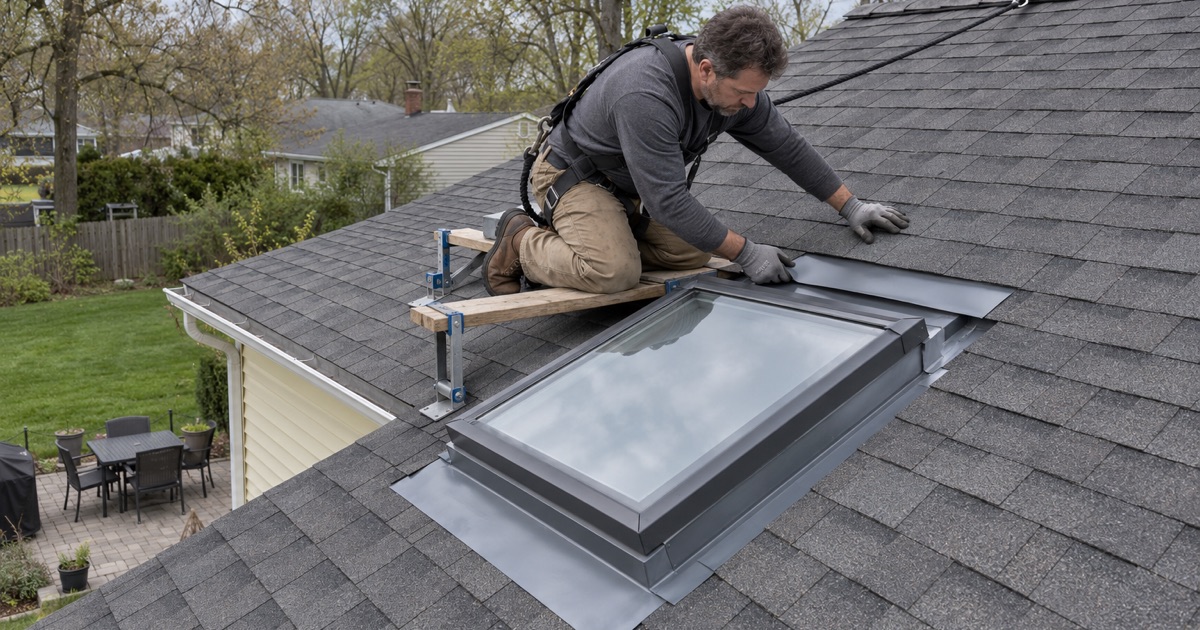
Deck-mounted skylights attach directly to the roof deck with a built-in flange and come with flashing kits designed for that unit. They sit lower on the roof and suit most residential shingle roofs. Because the flashing kit is made for the unit, installation follows the maker’s instructions closely.
These units are the usual choice for new installations on pitched roofs. The low profile looks tidy, and the flashing integrates neatly with shingle courses.
Curb-Mounted Skylights
Curb-mounted skylights sit on a raised wooden frame built on the deck. The curb is flashed first, and the skylight then mounts on top. This style is common on older homes and on low-slope roofs, where the curb lifts the unit above standing water.
When replacing a curb-mounted skylight, we inspect the curb for rot before setting a new unit. A rotted curb must be rebuilt, since the new skylight is only as watertight as the frame under it.
Fixed and Venting Units
Fixed skylights let in light only, while venting units open to release heat and moisture. Venting skylights are popular in bathrooms and kitchens, where steam needs a way out. Some open manually and others with motors or remote controls.
We help you choose based on the room, the light you want and whether ventilation matters there. Each type uses the same careful flashing approach on the roof.
Installing a New Skylight
Planning the Opening
A new skylight starts with checking the rafters above the room. The opening is located to fall between rafters where possible, and where a rafter must be cut, it is headed off with proper framing. We confirm placement from the attic before cutting anything.
Size and position also affect how light reaches the room. A unit facing north gives softer, even light, while one facing south brings more direct sun and heat.
Flashing the Unit
Flashing starts with ice and water barrier wrapped up the sides of the opening and curb. The flashing kit then goes on in sequence, with step flashing woven into the shingle courses along the sides and a head flashing above that sheds water around the unit. The bottom apron laps over the shingles below.
This order matters. Flashing installed out of sequence, or sealed with caulk instead of lapped, is the most common reason new skylights leak.
Light Shafts Through the Attic
In rooms with an attic above, a light shaft carries daylight from the roof opening down to the ceiling. The shaft is framed, insulated and finished with drywall. Proper insulation keeps the shaft from becoming a cold spot where condensation forms in winter.
We frame and insulate the shaft as part of the job. Finishing the interior walls can be done by us or by your own painter, and the estimate lists both parts separately.
Replacing, Reflashing or Removing Skylights
Fogged and Cracked Units
Skylights with broken seals fog between the glass panes, and older plastic domes crack and yellow. Once the unit fails, reflashing alone will not help. Replacing the unit restores clarity, efficiency and a watertight seal.
Reflashing a Sound Skylight
When the skylight itself is in good condition but water gets in around it, new flashing is often the only fix needed. We remove the shingles around the unit, install new ice barrier and flashing and reshingle. This costs far less than a new skylight.
Before recommending reflashing, we water-test the area to confirm the leak is coming from around the unit rather than through its seals. That test separates a flashing job from a replacement, and it keeps you from paying for new flashing on a unit that will still leak through the glass.
Skylights on Low-Slope Roofs
Additions and porches with low-slope roofs need skylights mounted on raised curbs so the unit sits above any water that lingers on the membrane. The membrane is turned up the curb and covered with metal flashing, the same way it is at a wall. A deck-mounted unit set flush on a nearly flat roof is a leak waiting to happen.
Removing an Unwanted Skylight
Some homeowners prefer to remove a skylight that leaks often or overheats a room. We remove the unit, frame and deck the opening to match the rafters, and shingle over it. Inside, the ceiling opening is closed so it can be finished smoothly.
Skylights and the Rest of the Roof
Timing With a Roof Replacement
During a re-roof, the shingles around every skylight come off anyway, so replacing or reflashing then saves labor. New flashing ties into new shingles, giving the whole roof a consistent life. Waiting means cutting into a new roof later.
Condensation Versus Leaks
Water on the inside of a skylight in winter is often condensation, not a leak. Warm moist air from bathrooms and kitchens condenses on cold glass and drips. Venting units, better ventilation and an insulated shaft help reduce it.
We check for both causes before quoting. If the issue is condensation, a roof repair will not solve it, and we will tell you so.
Written Scopes for Skylight Work
Every skylight estimate names the unit, the flashing kit and any framing or interior shaft work as separate lines. Contracts follow New Jersey’s home improvement rules, including the three-day cancellation notice, so you have time to review before work starts.
- 20+ Years on Roofs
- Itemized Written Scopes
- Attic-First Leak Checks