East Brunswick has spent more than 20 years on roofing in South Orange Village and the towns around it, and here a growing share of the calls come from buildings that hold many households under one roof. That changes who calls us, who signs the work order and how a repair gets scheduled, even when the leak itself looks ordinary.
Every leak visit pairs a look from the roof with a look from below, whether that means an attic, a top-floor ceiling or a mechanical room, so the water is followed to where it actually enters. You get a straight answer on whether a repair will hold before anyone raises replacement, and that answer is written so a manager can forward it.
Our written scopes break tear-off, decking, underlayment, flashing, ventilation and gutters into separate lines. On a building where an owner, a property manager and sometimes a board all read the same estimate, line items let each of them compare our numbers against another bid without guessing what was left out.
Roofing Around South Orange’s Transit Village
A Station Area Rebuilt Upward
In 1999, the New Jersey Department of Transportation named South Orange one of the state’s first five Transit Villages, a designation meant to encourage growth near rail stations. The blocks around the South Orange station have since filled with mid-rise housing, and the roofs over those buildings are a different job from the houses on the surrounding streets.
Census figures show the scale. The 2024 American Community Survey counts 1,099 housing units in buildings of 50 or more, about 17.7 percent of all units in the village, and 1,011 of those are rented. Another 524 units date from 2010 through 2019, the decade that saw two of the largest station-area projects finished.
Gaslight Commons and The Avenue
Gaslight Commons on West Third Street came first, opening with 200 rental units during 2002. The Avenue at South Orange followed on Vose Avenue beside the NJ Transit station, completed during 2010 as three stories with 79 condominiums over 4,200 square feet of ground-floor retail.
Those two buildings show the two ownership patterns that matter most for a roof here. A rental building has one owner making decisions through a manager, while a condominium building spreads ownership across dozens of households and a governing association. We sort out which kind of building we are standing on before we discuss the roof at all.
Third & Valley by the Rail Line
Third & Valley, completed during 2016 on the former rescue-squad site one block from the station, holds 215 mixed-income rental units on a 2.7-acre parcel. It steps from three stories along Valley Street up to five at the railway tracks, and it is a LEED Silver rental community with structured parking for 513 cars.
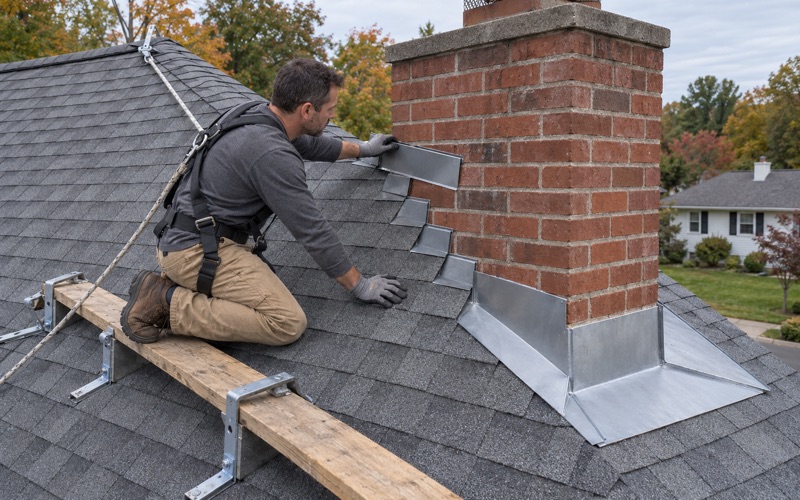
A building that steps in height usually has roof sections at more than one level, and every place a lower roof meets a taller wall is a flashing joint. We have done no work on Third & Valley and have not seen its roof, so the point is a general one. LEED Silver describes the project overall and says nothing specific about what covers the roof.
Looking for roofing closer to Florham Park? See Florham Park Roofing.
Multifamily Roofs Sit Outside the House Rules
Ordinary Maintenance Covers Houses Only
New Jersey treats replacing the roof covering on a detached one- or two-family house as ordinary maintenance under the state construction code, and no permit is needed for that. The rule’s own wording limits it to those dwellings. A mid-rise apartment building or a condominium over shops is multifamily and mixed-use work, so it falls outside that rule.
That is why every estimate we write states plainly whether the job is permit work under the state construction code. On a building like the ones near the station, the answer starts from the building type, not from the old percentage-of-roof rule that owners still hear repeated by contractors who have not kept up.
Low-Slope Systems and What We Check
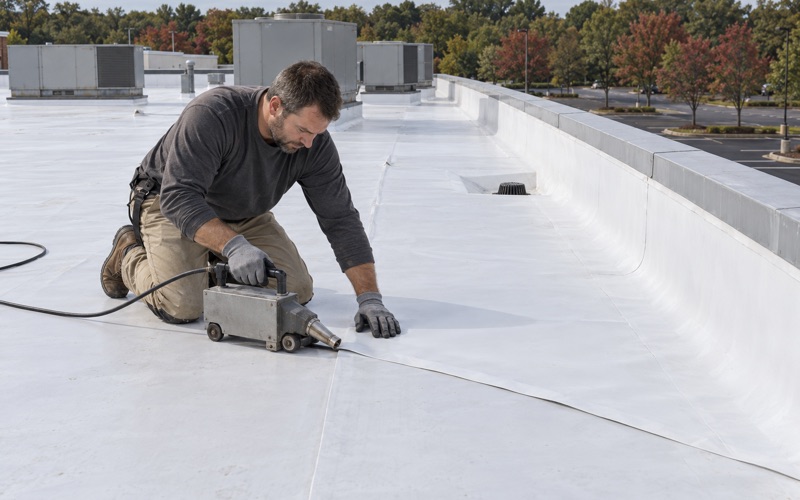
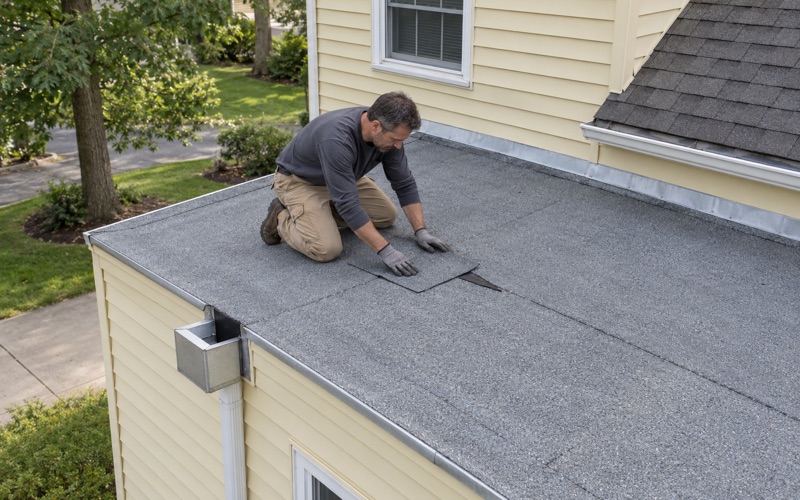
Mid-rise buildings commonly carry low-slope roofs covered with single-ply membranes such as TPO, PVC or EPDM, or with torch-down modified bitumen. We have not read the covering on any South Orange building, so an assessment begins with identifying what is actually there, how it drains and how many layers sit underneath it.
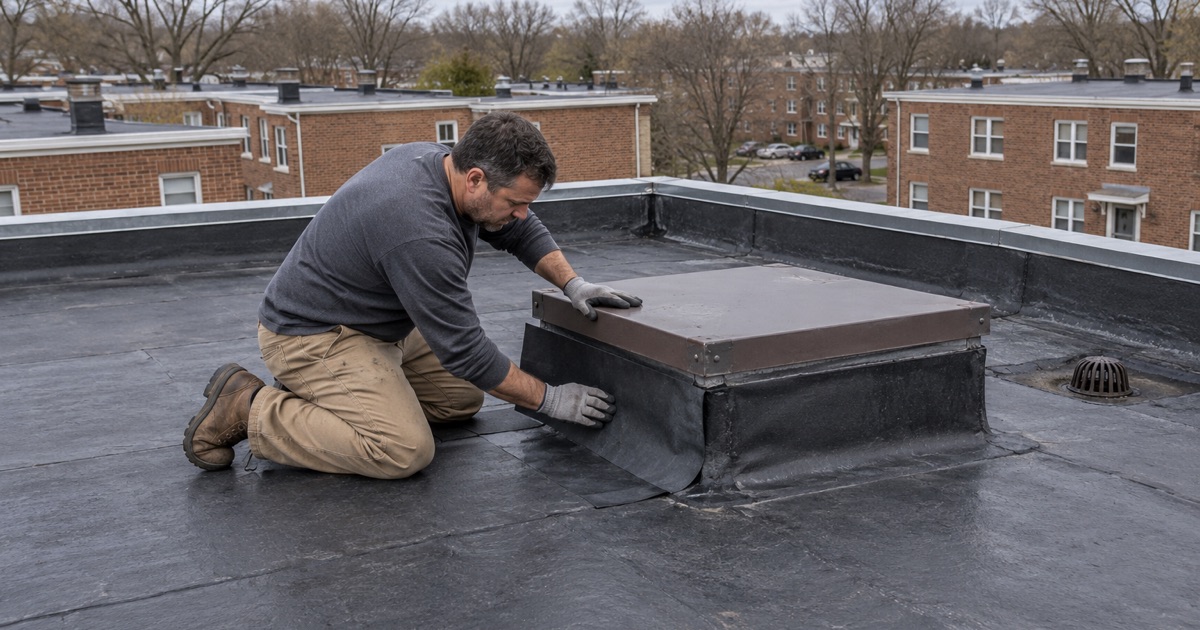
Rooftop mechanical units, vent stacks, parapet walls and drains are where low-slope roofs most often leak, more than the open field of membrane. We look at each penetration and each wall joint, check counter flashing and edge terminations, and note any area that still holds water after rain, because standing water speeds wear on most coverings.
Maintenance Duties on Rental Buildings
Apartment buildings fall under New Jersey’s maintenance code for multiple dwellings, which addresses roofs and leaders along with other building elements. For a rental owner, a roof problem is a code matter as well as a tenant-relations one, and the paperwork should show clearly what was found and what was done about it.
Our reports are written for that reader. Photographs show the condition before work starts, the written scope lists each item separately, and gutters and leaders are sized and pitched as part of the roof work, so water leaves the building instead of collecting at the foundation or in front of a ground-floor storefront.
Who Decides on the Roof: Owners, Managers and Associations
Rental Buildings Answer to an Owner
In a rental building such as Gaslight Commons or Third & Valley, a tenant with a leak reports it to management, and the decision on the roof sits with the rental owner acting through that manager. When a tenant calls us directly, we explain that we can describe what we would look for but cannot authorize work on a building the caller does not own.
For a manager, we keep the visit efficient and the findings clear. You get photographs, the likely entry point traced from inside and out, and a plain answer on repair versus replacement, so the owner can decide without sending someone back to the roof just to understand what we saw.
Condominium Buildings Answer to Their Documents
At The Avenue and other condominium buildings, the roof is a shared structure over many separately owned homes. Responsibility for it is set by the association’s own governing documents, and we have not read the master deed for any building in the village, so we never guess at who holds it.
Before writing an estimate in a condominium, we check who holds the roof against the association’s documents and confirm who can sign. The owner on the top floor is usually the first to see a stain but may not be the party who can approve work, and settling that early saves everyone a wasted proposal and a second meeting.
Contracts, Cancellation and Sales Tax
Our contracts are written to New Jersey’s home improvement rules, including the three-day cancellation notice. Quotes state sales tax the way the state treats each kind of job: taxable on a repair, and exempt on a new roof when the owner provides Form ST-8, the Certificate of Exempt Capital Improvement.
For a board or an owner with an accountant reviewing the numbers, that distinction matters. A repair and a replacement on the same building can carry different tax treatment, and having it stated on the estimate itself means nobody discovers the difference when the final invoice arrives.
Top-Floor Leaks in a Building With Many Households
Water Travels Before It Shows
On a mid-rise roof, water that gets past a flashing or a drain can run along the deck or a structural member before it drips, so the stain on a top-floor ceiling may sit well away from the opening. That is why we trace leaks from both sides rather than patching whatever spot sits directly above the stain.
In a building with many units, one leak can appear in two apartments, or in a hallway and a unit at the same time. We map every reported spot, compare them with what we find on the roof, and write the likely path down so the manager can tell affected residents what is happening and when.
Repair First, Replacement When It Is Time
Most top-floor leaks come from a failed detail rather than a failed roof. We say so when that is the case, and we say so just as plainly when the covering has reached the end of its useful life, so an owner or board can budget for replacement instead of paying for one patch after another.
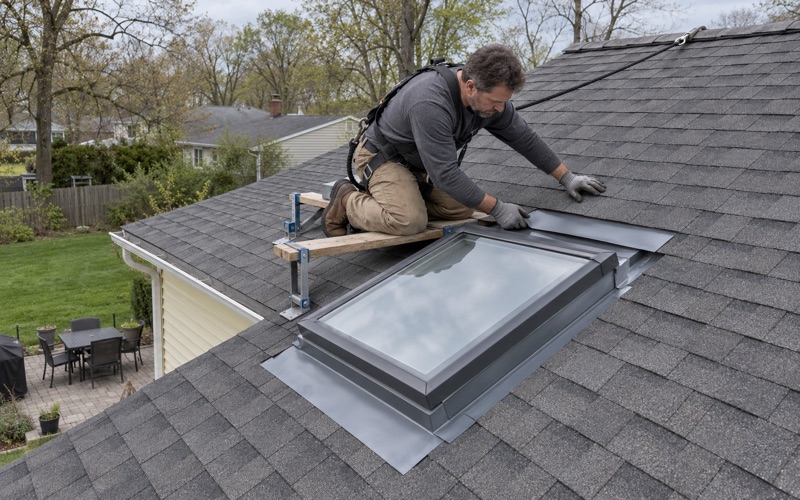
When a replacement goes ahead, damaged decking found under the old roof is photographed and shown to the decision-maker before it is replaced, at a per-sheet price set in the contract. Flashing at walls, curbs and penetrations is replaced with the roof rather than reused, and ventilation is checked, because a roof that cannot breathe ages from underneath.
Storms, Claims and Working Around Residents
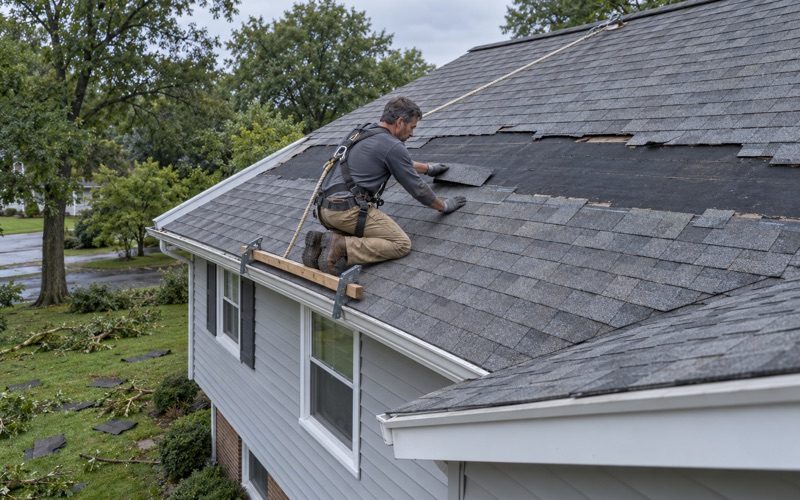
After a storm, we photograph the damage and write it up for the owner’s or the association’s own insurance claim, and we will meet the adjuster on site when asked. The claim itself stays with the policyholder; our part is documenting what the roof shows, clearly enough that an adjuster can follow it.
Work over occupied homes needs care at ground level too. Sidewalks, entrances and any parking areas we use are cleaned at the end of every work day, including a magnet sweep for roofing nails, so residents and shoppers walking past the building are not stepping around our debris or finding nails near their tires.
- 20+ Years on Roofs
- Itemized Written Scopes
- Attic-First Leak Checks