East Brunswick has worked on roofing in Tinton Falls and the rest of central New Jersey for more than 20 years, and this page is about one narrow question that matters on a newer house. When a roof leaks or shingles start to lift, is the repair the builder’s job or the owner’s? The answer depends almost entirely on how old the house is.
New Jersey’s new home warranty rules treat the roof differently from the frame and the mechanical systems. The roofing standards sit in a short window, and once that window closes, a complaint that used to belong to the builder usually becomes an ordinary repair the homeowner pays for. Knowing which side of that line you stand on saves time and an awkward phone call.
Below we walk through what the state rule actually says about roofs, what it leaves out, and how we look at a newer roof when an owner calls us. We are not a builder or a warrantor, and we do not file or negotiate claims, but we can show you what is happening on the roof and in the attic so you can take the next step yourself.
Newer Tinton Falls Houses and the State Warranty Rule
Hundreds of homes built since 2010
Tinton Falls is not a finished town. The Census Bureau’s 2024 five-year American Community Survey counts 9,124 housing units in the borough, and 991 of them were built in 2010 or later. Of those, 827 date from 2010 through 2019 and 164 from 2020 or later, so a meaningful number of households live under roofs that are still only a few years old.
For most of those owners the roof has not needed anything yet, and that is exactly when the warranty question is easiest to miss. A first stain on a bedroom ceiling or a few shingles lifting along a rake edge looks minor. On a house this new it can be a builder item, and on a slightly older one it almost never is.
What counts as a new home and when the clock starts
The state’s new-home warranty regulations, chapter 5:25 of the New Jersey Administrative Code, define a new home as a dwelling unit not previously occupied. Units constructed solely for lease are excluded, so a rented townhouse that was never sold to an owner sits outside the definition from the start, whatever its age.
The warranty date is the date the owner first occupied the home or the settlement date, whichever came sooner. Every tier of coverage counts from that one date, not from the day the shingles went on. If you are unsure of yours, your closing documents are the place to look before you assume anything about what is still covered.
Where the roof sits in the rule
The rule sets three tiers. For one year from the warranty date, each new home must be free of performance standard defects, along with appliance, fixture and equipment defects, mechanical and electrical system defects and major structural defects. The roofing standards are performance standards, which means they appear only in that first-year list and nowhere after it.
That placement is the whole story for a roof. The longer tiers are real, but they are written for other parts of the house, and nothing in them repeats the roofing language. An owner who hears that a new house carries a ten-year warranty and assumes the shingles are included for a decade is reading more into the rule than it says.
Looking for roofing closer to Chatham Township? See Roofing Services in Chatham Township.
Leaks, Lifted Shingles and the First-Year Clock
Leaks under normal weather
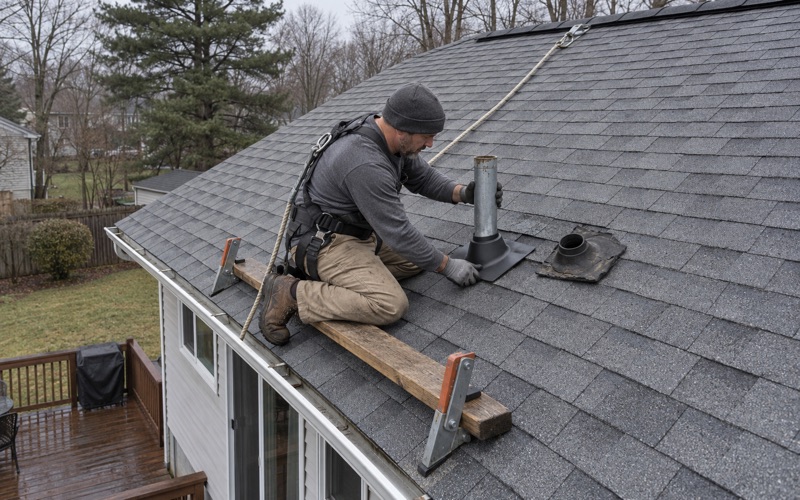
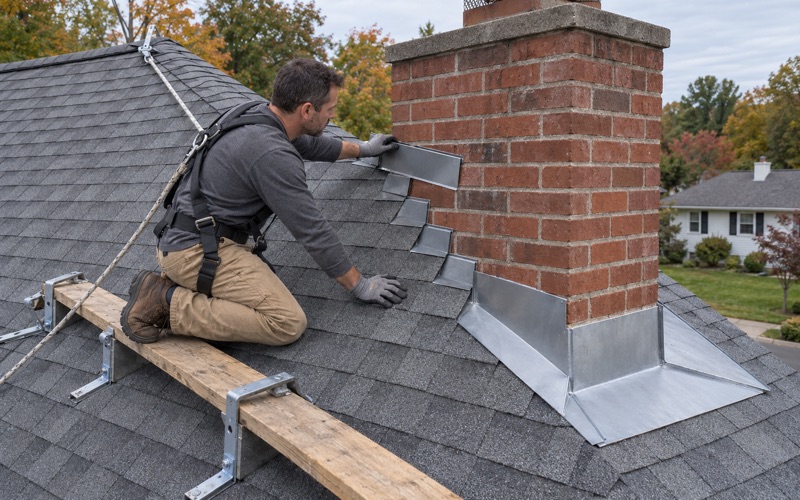
The roofing item says that roof or flashing leaks that occur under normal weather conditions are a deficiency, and the builder or warrantor must correct any such leak once it is verified. Our reading is that an ordinary rain finding a gap at a vent pipe, or a badly set piece of wall flashing, is the kind of leak this item describes.
The word verified matters. Someone has to establish that the weather was normal and that the water came through the roof or flashing, rather than through a window, a siding joint or condensation in the attic. That is why we trace water from inside the attic as well as on the roof surface before we say anything about where a leak starts.
Shingles that lift, curl or tear loose
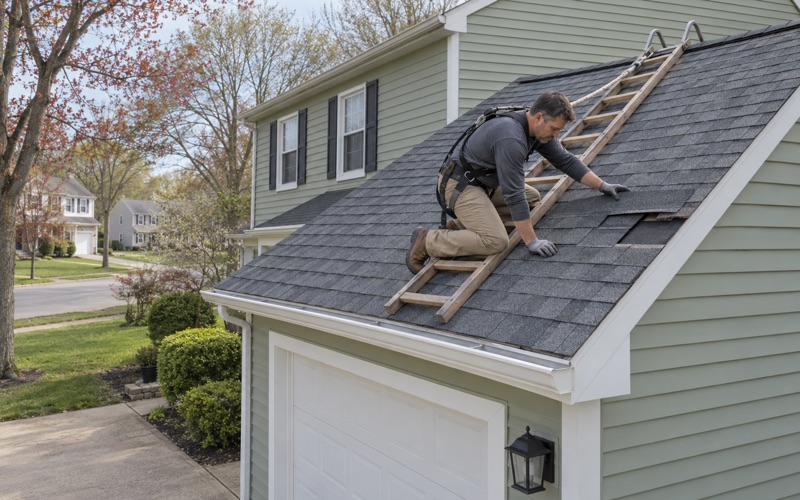
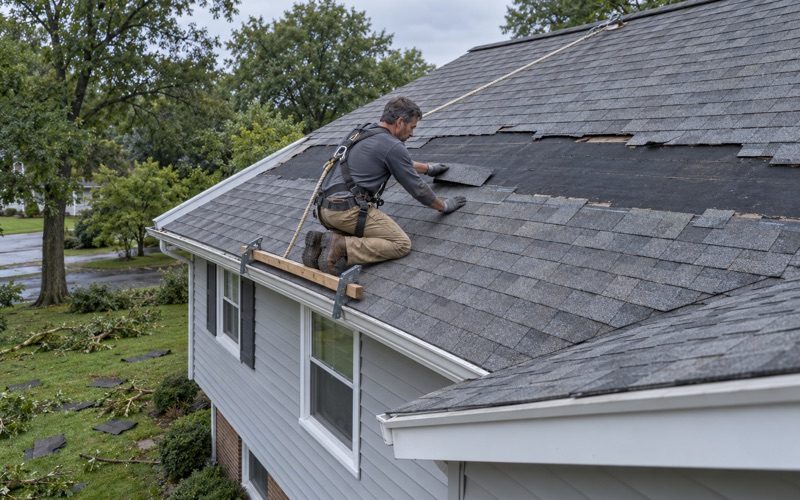
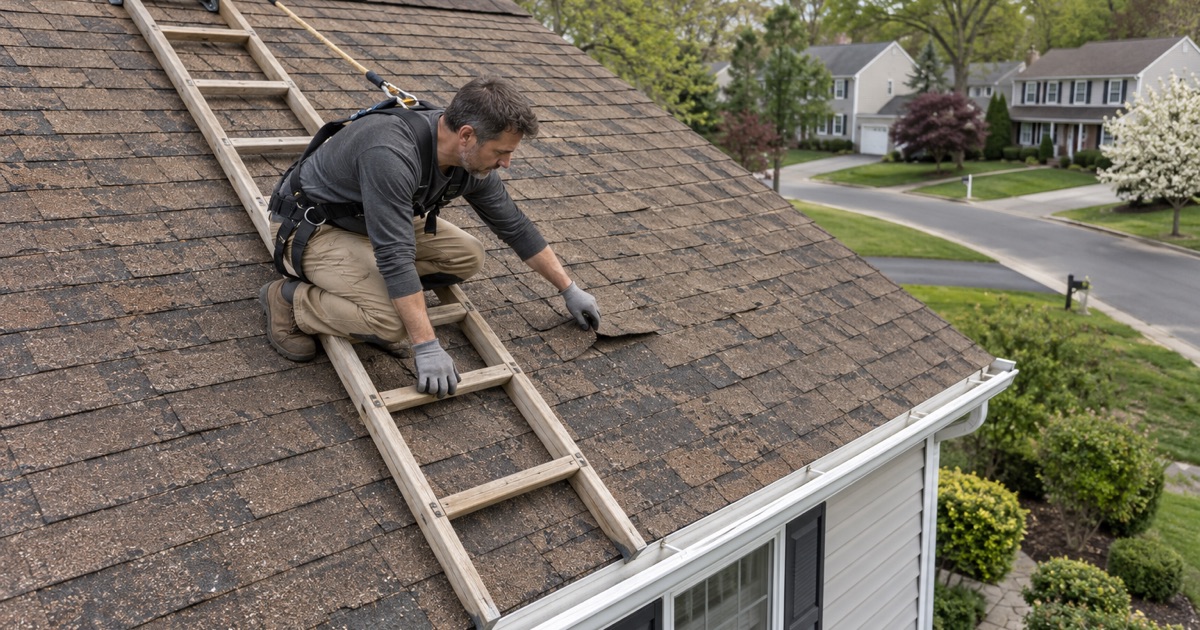
A second line covers shingles. Roof shingles that lift or curl during the first year of warranty coverage, or tear loose during normal weather conditions, are a deficiency, and the builder or warrantor is responsible to repair or replace lifted, curled or torn shingles. That language is specific to the first year, which makes the date you notice the problem important.
Lifting tends to show first at eaves, rakes and ridges, where wind can get under an edge that never sealed down. If you see it in the first year, take dated photos from the ground and write down when you noticed it. The timing is what places the problem inside or outside the first-year window, and memory is a poor record.
Low-slope sections and ponding
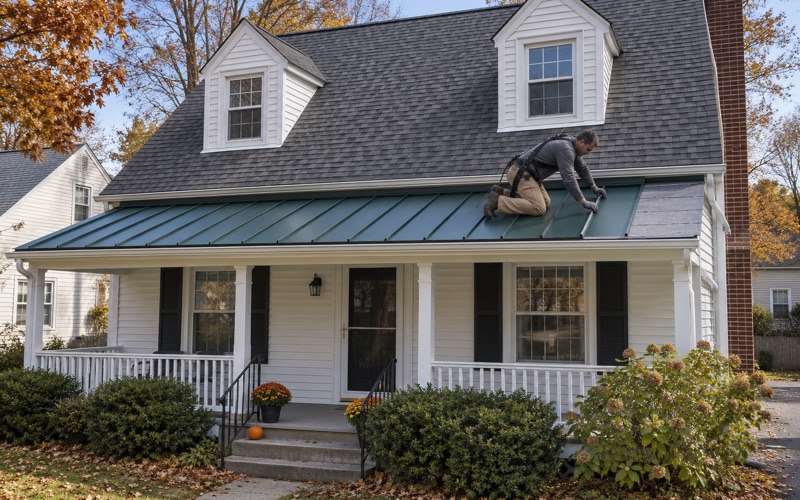
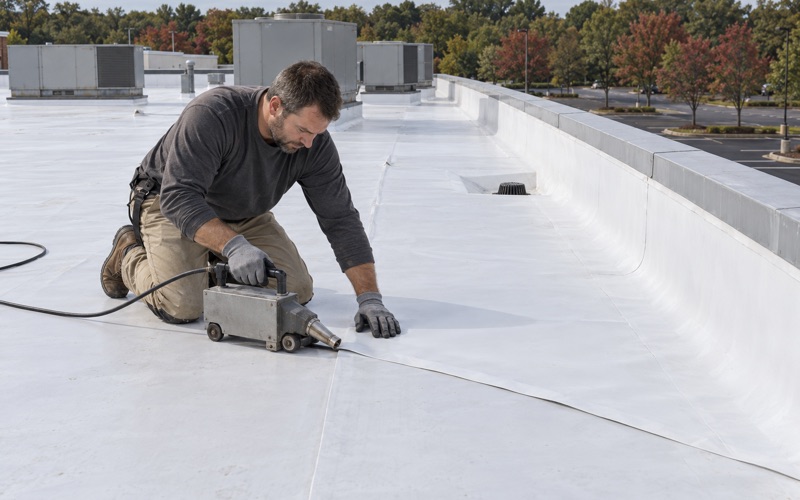
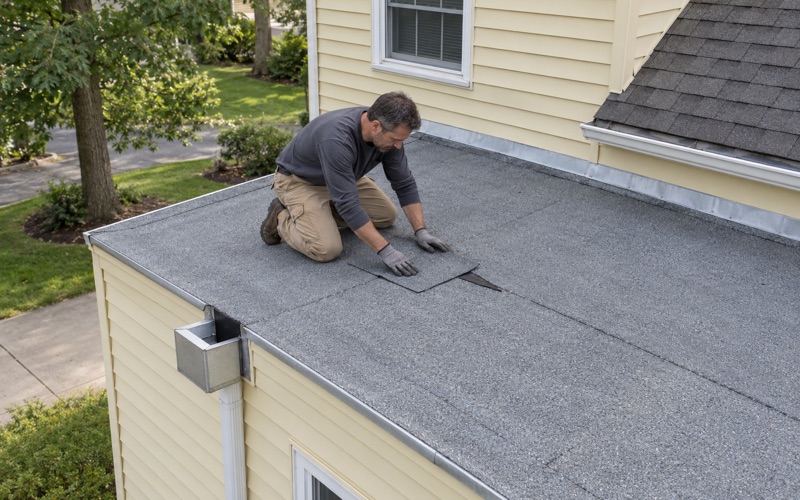
Some newer houses and townhomes carry a flat or low-slope section over a porch, an entry or a rear addition. The rule says a properly pitched built-up roof is to drain water except for minor ponding, and standing or ponding water by itself is not considered a deficiency. Leaking caused by excessive ponding is a different matter.
So a puddle that sits after rain and then dries is not a warranty item on its own, while water coming through the ceiling beneath it may be. On a low-slope area we check the drainage path, the seams and the edge metal, then tell the owner plainly whether it is a repair, a maintenance habit or something worth raising with the builder.
What the Two-Year and Ten-Year Tiers Do Not Cover
The second year
In the second year the rule keeps mechanical and electrical system defects and major structural defects, plus appliances only where a manufacturer’s warranty covers them. Performance standards drop out, and the roofing standards go with them. A shingle problem first noticed in month fourteen sits outside the roofing language even though the house still has coverage for other systems.
This is easy to misread, because the paperwork still says the house is under warranty. It is, for wiring, plumbing and similar systems. The roof surface, the flashing and the shingles are not named in that tier, and nothing in the second-year list brings them back for a leak that starts after the first anniversary.
Major structural defects only, through year ten
After that, the only thing the rule covers through year ten is major structural defects. It defines a major structural defect as any actual damage to the load-bearing portion of the home. In roofing terms we read that as rafters, trusses or bearing walls that have actually been damaged, not shingles, underlayment, flashing or a stain on drywall.
Read together, our understanding of the text is that a roof leak after the first year is not a builder item unless it has caused real damage to the load-bearing structure. That is a reading of the rule, not a ruling, and only the builder or the warranty plan can say how a specific complaint on a specific house will be treated.
When a later leak becomes your repair
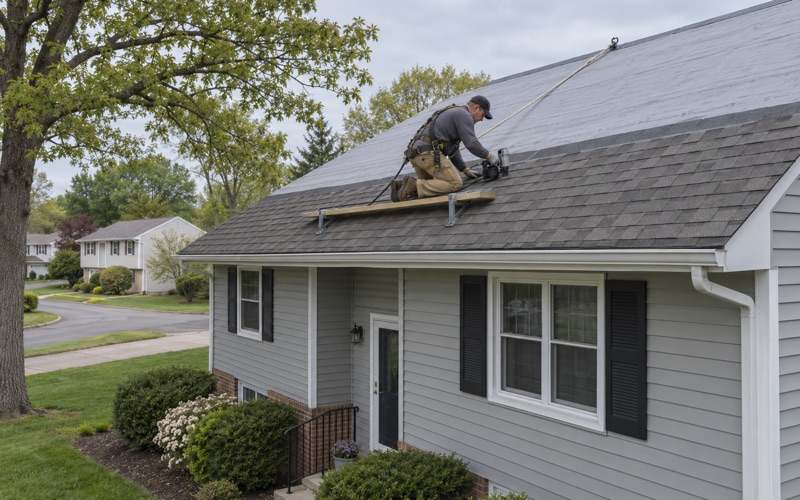
For most owners past the first year, a leak becomes an ordinary repair, and that is where our approach matters. We tell you whether the roof can be repaired before replacement ever comes up. A newer roof with one failed pipe boot or a short run of loose step flashing is usually a repair conversation, not a tear-off.
When a repair is the answer, the quote says so, and it states New Jersey sales tax the way the state treats a repair, which is taxable, rather than the exemption that applies to a new roof with Form ST-8. An owner should not discover the tax line after the work is finished and the crew has left.
Storm Exclusions, Gutters and Our First Visit
Ice, high wind and driven rain
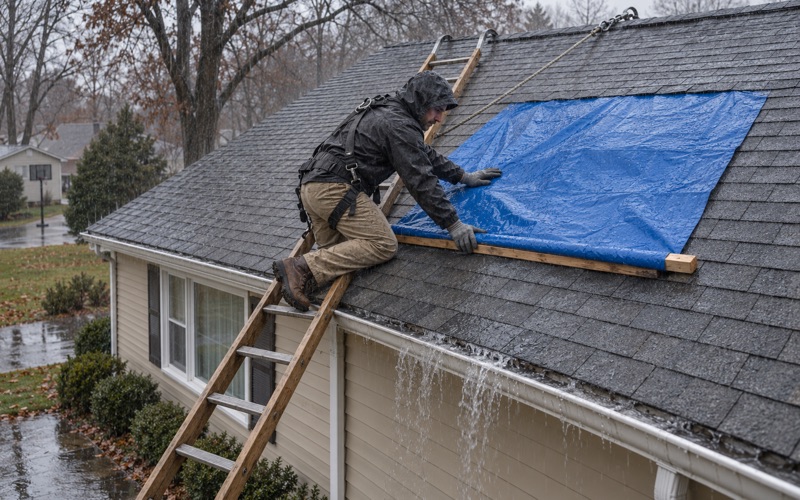
Even inside the first year, the leak item excludes cases where the cause is determined to be severe weather, and the rule names ice and snow build-up, high winds and driven rains. A leak that appears after a hard wind event or a heavy winter may fall outside the warranty no matter how new the roof is.
That is usually where homeowners insurance becomes the question instead. If storm damage is part of the picture, we photograph it and write it up for your own claim, and we will meet the adjuster on site when you ask. We do not file or negotiate claims, and we cannot tell you what a policy or a warranty plan will pay.
Gutters are their own item
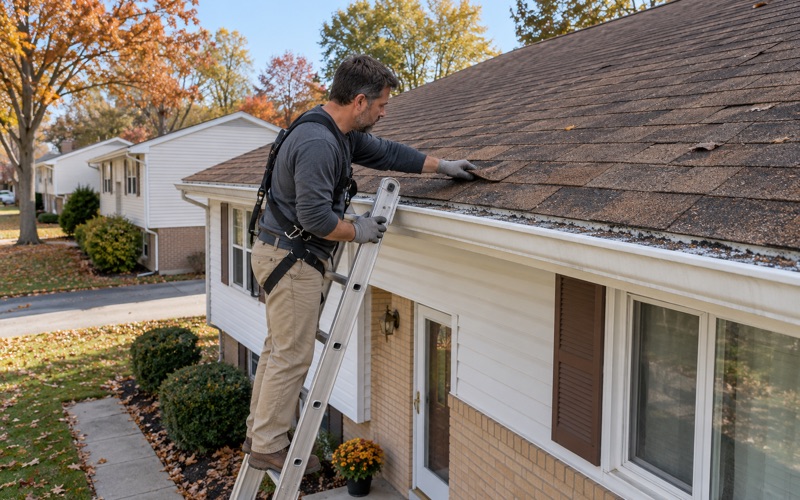
Gutters and downspouts are not part of the roofing item at all; they sit under sheet metal. Leaking or improperly pitched gutters are a deficiency, while standing water in a gutter is acceptable if it does not exceed one inch of depth. The owner is responsible for keeping gutters and downspouts free of leaves and debris to prevent overflow.
That owner duty cuts both ways. Overflow from a clogged gutter that backs water under the first course of shingles is hard to pin on the builder when the rule makes clearing them the owner’s job. When we replace or adjust gutters, we size and pitch them with the roof so water leaves the house instead of collecting at the foundation.
What we check on a newer roof
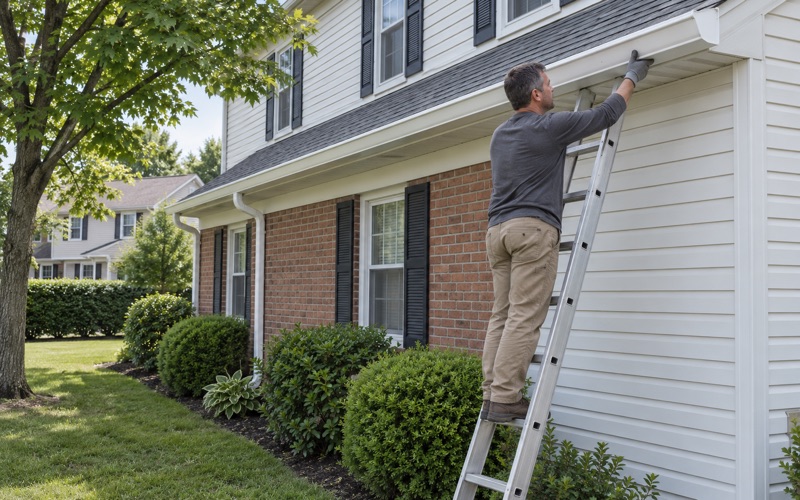
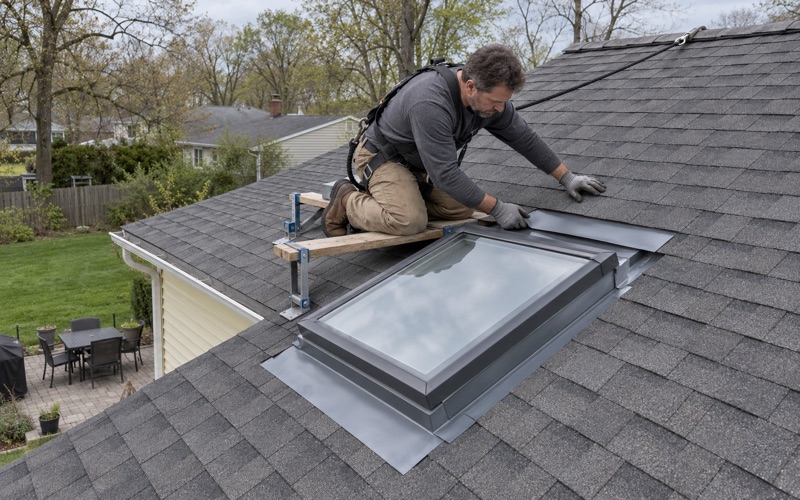
When an owner calls us about a newer Tinton Falls house, we start in the attic, because water often travels along a rafter or the underside of the deck before it shows on a ceiling. Then we go on the roof and match the entry point to what we saw inside. Only after that do we talk about repair or cost.
If the house is still inside its first year, we give you dated photos and written notes on what we found, which you can attach to your own notice to the builder or warrantor. Putting that notice in writing is sensible general practice rather than a step quoted from the rule, and when to send it is your decision.
- 20+ Years on Roofs
- Itemized Written Scopes
- Attic-First Leak Checks