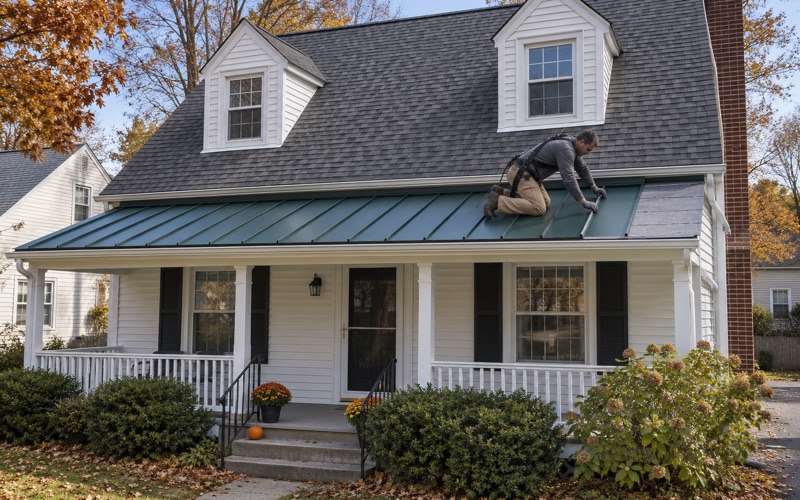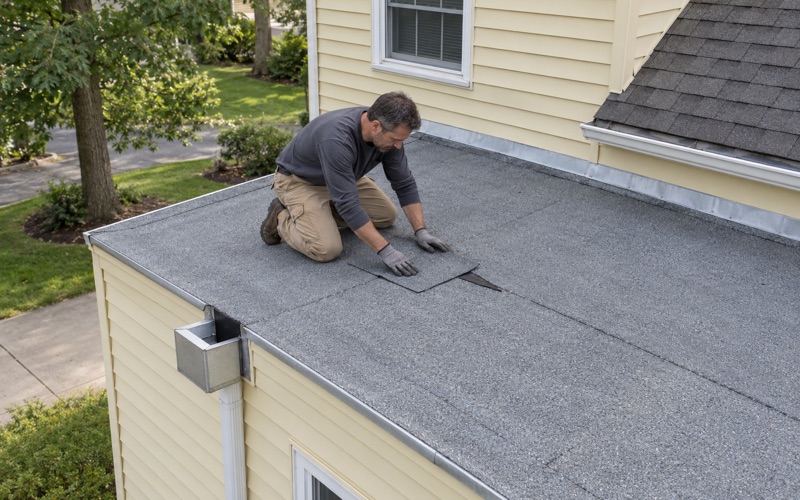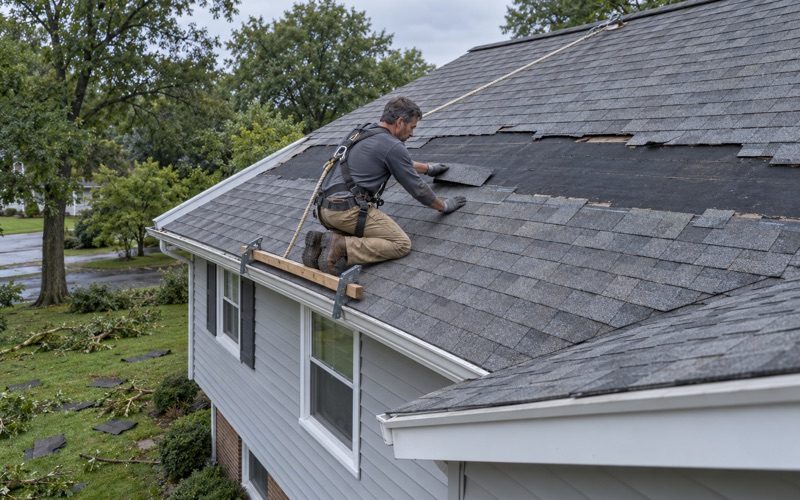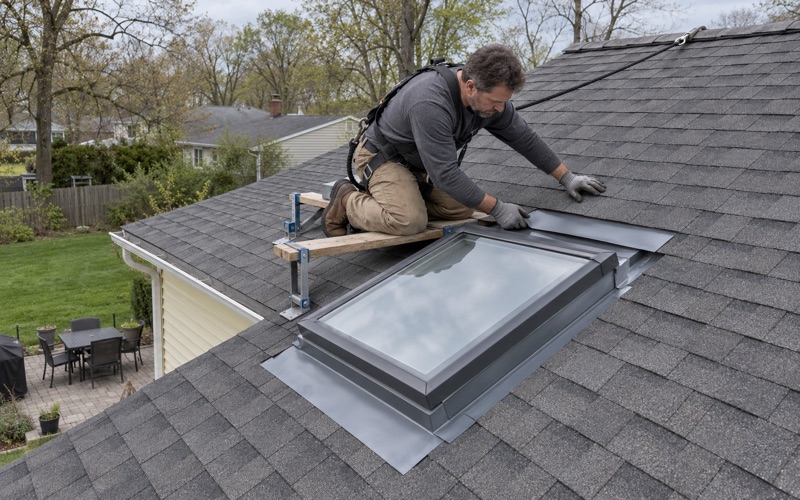
East Brunswick handles roofing in Verona for homeowners who want a clear plan for the whole job, from the first inspection to the last nail swept off the driveway. With more than 20 years on New Jersey roofs, we price repairs and replacements in writing, and every quote says where the old roof is going once it comes off. That question matters more here than most owners expect.
A tear-off produces a surprising volume of material: shingles, felt or synthetic underlayment, rusted flashing, nails and sometimes sections of rotted decking. None of it is household trash, and the local rules treat it that way. Our estimates carry disposal as its own line, so the cost is visible before you sign rather than discovered when the truck arrives.
We also start with the question of whether the roof needs replacing at all. A leak call includes a look in the attic as well as on the shingles, so the water is traced to the place it actually gets in. If a repair will honestly do the job, you hear that first, and replacement only comes up when the roof has genuinely run out of life.
Roofing in Verona, Essex County, and What the Curb Will Not Take
A Township Chapter That Speaks to Contractors
Verona is a township in Essex County, run under a council-manager form of government, with Bloomfield Avenue as its main street. Its rules for trash and recycling sit in Ordinance 2020-08, which repealed and re-established Chapter 111 and took effect on March 29, 2020. We read that chapter in full because it bears directly on what happens to a roof after tear-off.
Section 111-32D lists what the Township Collection System will not collect. Bulky waste, dirt, stones and broken concrete are on it, and so is “other construction material resulting from new construction or remodeling by a contractor.” Those items are not to be put out for collection at all, and the chapter says they are disposed of at the expense of the owner or possessor.
Why Old Shingles Do Not Go Out With the Trash
A re-roof is remodeling work done by a contractor, so torn-off shingles, underlayment and damaged sheathing fall squarely inside that exclusion. Bagging them and setting them beside the cans is not something the chapter allows. The material needs its own disposal route, arranged and paid for as part of the job rather than left for the weekly pickup.
Even small amounts run into practical limits. The same chapter caps curbside receptacles at 35 gallons and 50 pounds filled, a weight that a modest pile of wet tear-off reaches quickly. We plan around those rules from the start, so nothing from your roof ends up waiting at the curb for a truck that will not take it.
Who Carries the Duty
Section 111-36 places the chapter’s duties on owners, business operators, landlords and tenants, and it states that a contract between parties does not alter them. In plain terms, hiring a roofer does not hand the township’s rules to someone else. That is a strong reason to ask, in writing, exactly where your old roof is going before work begins.
We answer that question on the estimate itself. Disposal sits beside tear-off, decking, underlayment, flashing, ventilation and gutters as a separate line item, so you can set our number next to another company’s and see whether theirs includes hauling at all. A quote that is silent on debris is a quote with a cost still missing.
Looking for roofing closer to Readington? See Roofing Services in Readington.
Where a Verona Tear-Off Actually Goes
Hauled Out, Not Left Behind
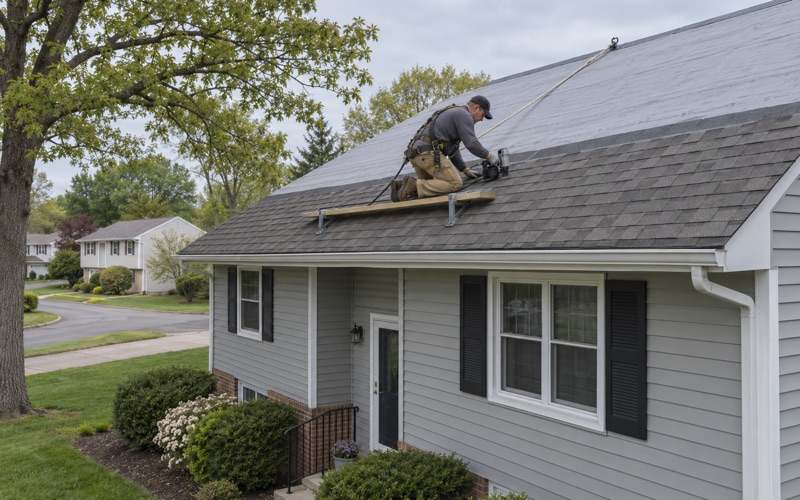
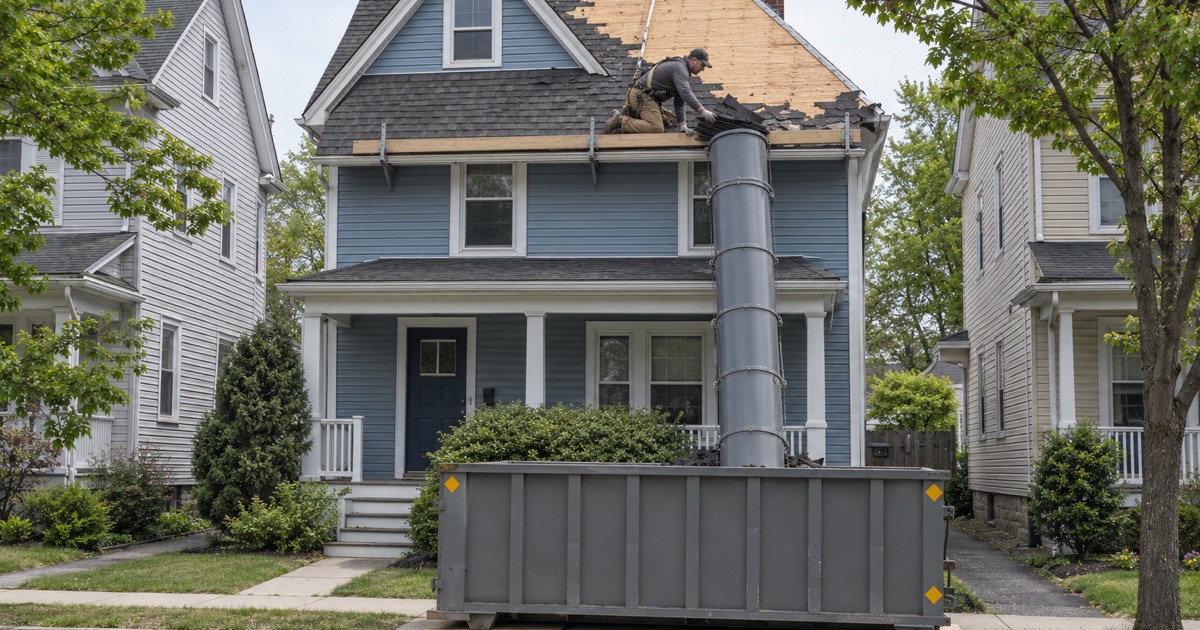
On a Verona replacement, old roofing comes off in sections and goes straight into a container or our own truck rather than piling up on the lawn. At the end of each work day the driveway, yard and gutters are cleaned, and a magnet sweep picks up stray nails. The debris leaves the property with us and goes to a facility that accepts construction material.
We do not quote a placement permit or fee for a container here, because we have not found a Verona Township rule that sets one. Where a container would sit, how long it stays and whether the driveway can carry it are settled with you during the estimate, and the hauling cost appears on the written scope alongside every other line.
What Comes Off an Older Verona Roof
Census figures show how much older housing the township holds. Of the 6,012 housing units counted in the 2024 American Community Survey five-year estimates, 5,292 were built before 1980. Older roofs are more likely to carry worn flashing, tired decking and patched sections, and each of those adds weight and volume to the load we have to remove.
Decking is the part owners worry about most. When the old roof is off and a sheet of plywood or plank proves soft, we photograph it and show it to you before replacing it, at a per-sheet price already written into the contract. The rotted wood joins the rest of the tear-off and leaves the site the same day.
Flashing and Ventilation Go Too
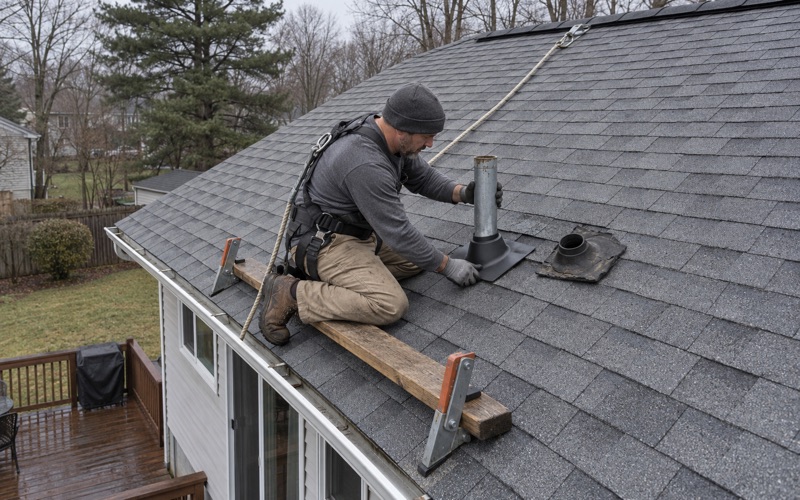
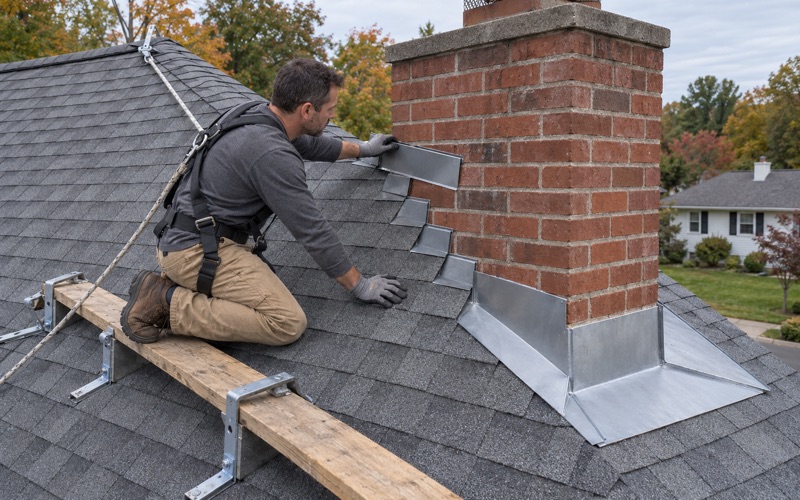
Step, counter and chimney flashing are replaced with the roof rather than bent back into service under new shingles, so that old metal joins the disposal load as well. We also check attic ventilation on every replacement. A roof that cannot breathe ages from underneath, and correcting intake or exhaust while the deck is open is far easier than after the new shingles are down.
The new system goes on over a clean deck: drip edge at eaves and rakes, ASTM D1970 ice and water barrier where it belongs, synthetic underlayment and an architectural shingle chosen with you. Products such as GAF Timberline HDZ, Owens Corning Duration and CertainTeed Landmark all fit that approach, and we review manufacturer warranty terms with you before you choose.
Recycling Center and Disposal Area Rules for Contractors
The Township Recycling Center
Ordinance 2020-08 does allow some contractor use of the Township Recycling Center, but on narrow terms. Section 111-11B bars a contractor from using it except for material generated at a property within the Township of Verona, and the contractor must provide paperwork naming the Verona property the material came from. A load hauled in from another town has no place there.
That paperwork rule means the source of every contractor load is on record. When we work in Verona, our disposal plan names your address as the origin of the material and confirms that anything we bring is something the center actually accepts. Roofing material outside its scope goes to an outside facility that takes construction waste.
The Yard-Waste Area and Public Works Permits
The township’s disposal area is a separate site with a narrower purpose. Section 111-24 limits it to yard waste and says no concrete, cinder block, boulders, fencing, stumps, garbage or other materials not provided for may be dumped there. Shingles and underlayment are plainly outside that list, so a roofing crew has no reason to bring tear-off to the yard-waste area.
Even for accepted material, a contractor needs a permit from the Department of Public Works under Section 111-27B, and the chapter is explicit that a separate permit is required for each load. Section 111-6 adds that every contractor providing collection services in the township must register with Public Works. Those are the township’s own controls on who brings what, and how often.
Penalties Written Into the Chapter
The chapter puts real numbers on violations. A general violation carries a fine of up to $2,000 under Section 111-37A. Unlawful solid waste disposal is treated more seriously: Sections 111-37B and 111-37D set a minimum fine of $2,500 and a maximum of $10,000 on conviction, under the state statute that authorizes municipal penalties.
We mention those figures not to alarm anyone but to explain why debris planning belongs on the estimate. Dumping tear-off where it does not belong is exactly the conduct the chapter targets, and a responsible roofer builds a lawful disposal route into the price from the first conversation rather than improvising one on the last day.
Asking About Debris Before You Sign a Verona Roofing Quote
Questions Worth Putting in Writing
Before signing with anyone, ask where the tear-off will go and whether that facility takes construction material. Ask whether hauling is a separate line on the estimate or folded into a single number, and who handles cleanup each day while the old roof is coming off? Clear answers protect you, and vague ones usually mean the cost appears later.
Our contracts follow New Jersey’s home improvement rules, including notice of your three-day right to cancel. Each estimate says plainly whether the work counts as permit work under the state construction code, and sales tax is shown the way the state treats it: charged on a repair, and exempt on a new roof when you provide Form ST-8.
Storm Damage, Solar Panels and Shared Roofs
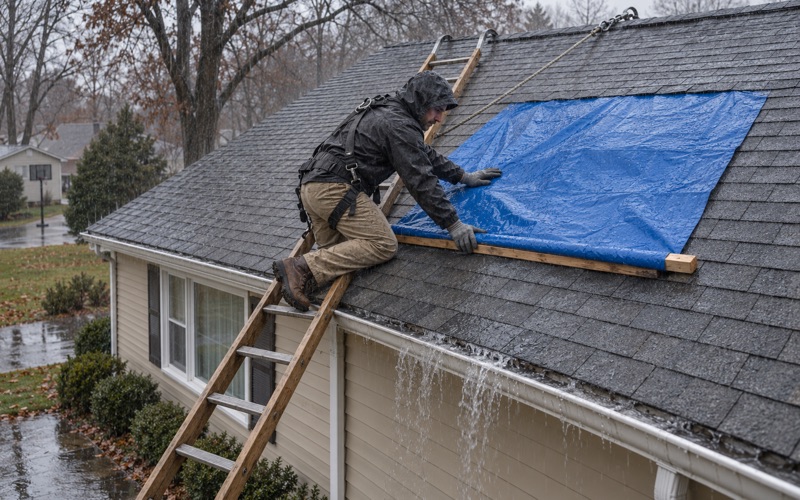
After a storm, we photograph the damage and write it up for your own insurance claim, and our crew will meet your adjuster on site when you ask. The claim itself stays yours, while we document what is on the roof. Storm tear-off follows the same disposal rules as any other job, so the debris plan does not change because the work is urgent.
Roofs carrying solar panels are scheduled with removal and reinstallation built in, so the panels never become a surprise on the first morning. In townhouse and condominium communities, we check the association documents to confirm who holds the roof before writing any estimate. Gutters are sized and pitched along with the new roof, so water leaves the house instead of the foundation.
Selling a Home Near Verona Park
Owners preparing to sell can ask for a written roof condition report to hand to the buyer’s inspector. Whether your house sits near Verona Park, down in the Peckman River valley or close to Bloomfield Avenue, the report describes the roof as it stands today, so the inspection conversation starts from documented facts rather than guesses.
If you are planning roof work this season, call us for an attic-and-roof inspection and a written estimate that names the disposal route along with every other line. You will know what comes off, where it goes and what it costs before a single shingle is lifted.
- 20+ Years on Roofs
- Itemized Written Scopes
- Attic-First Leak Checks